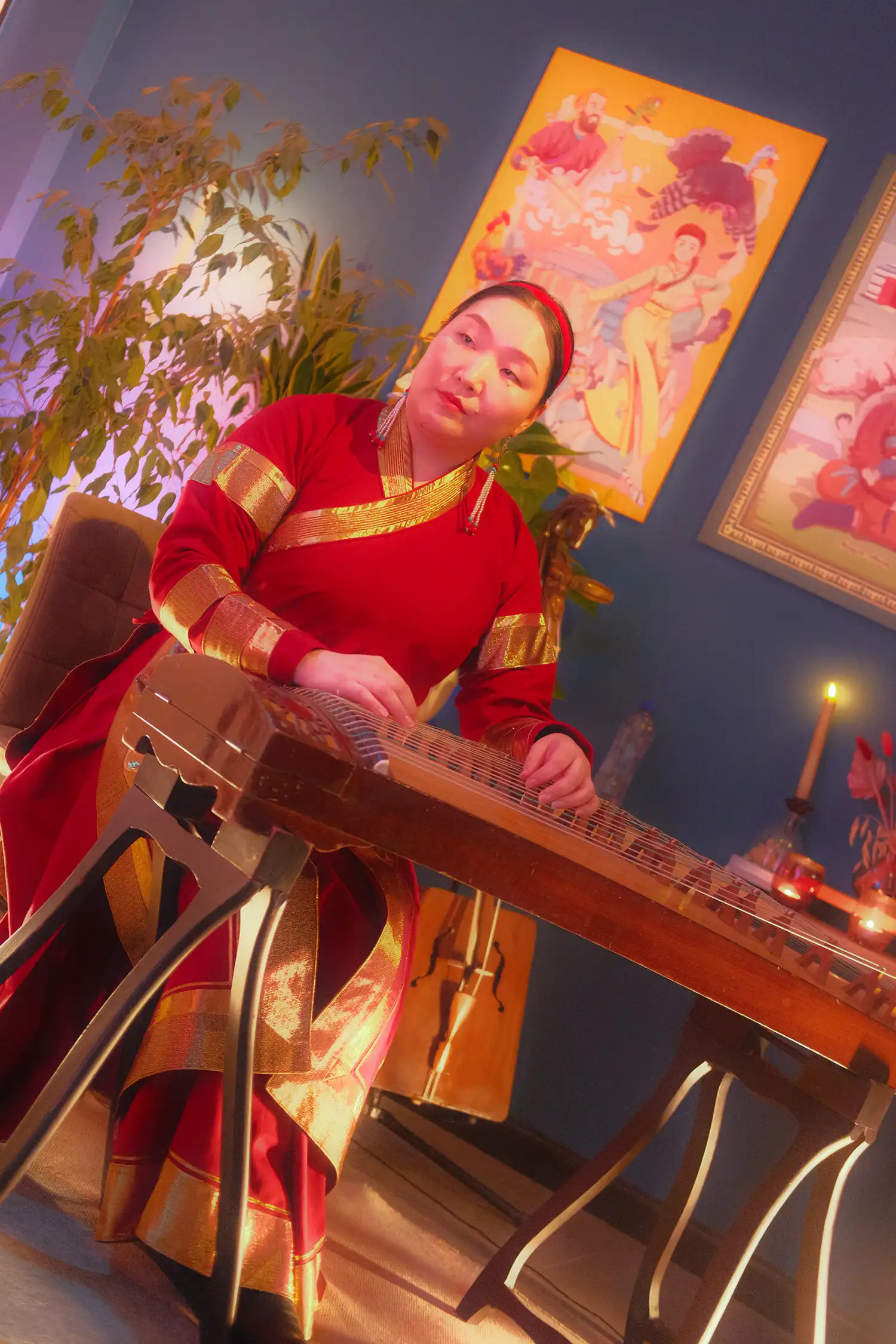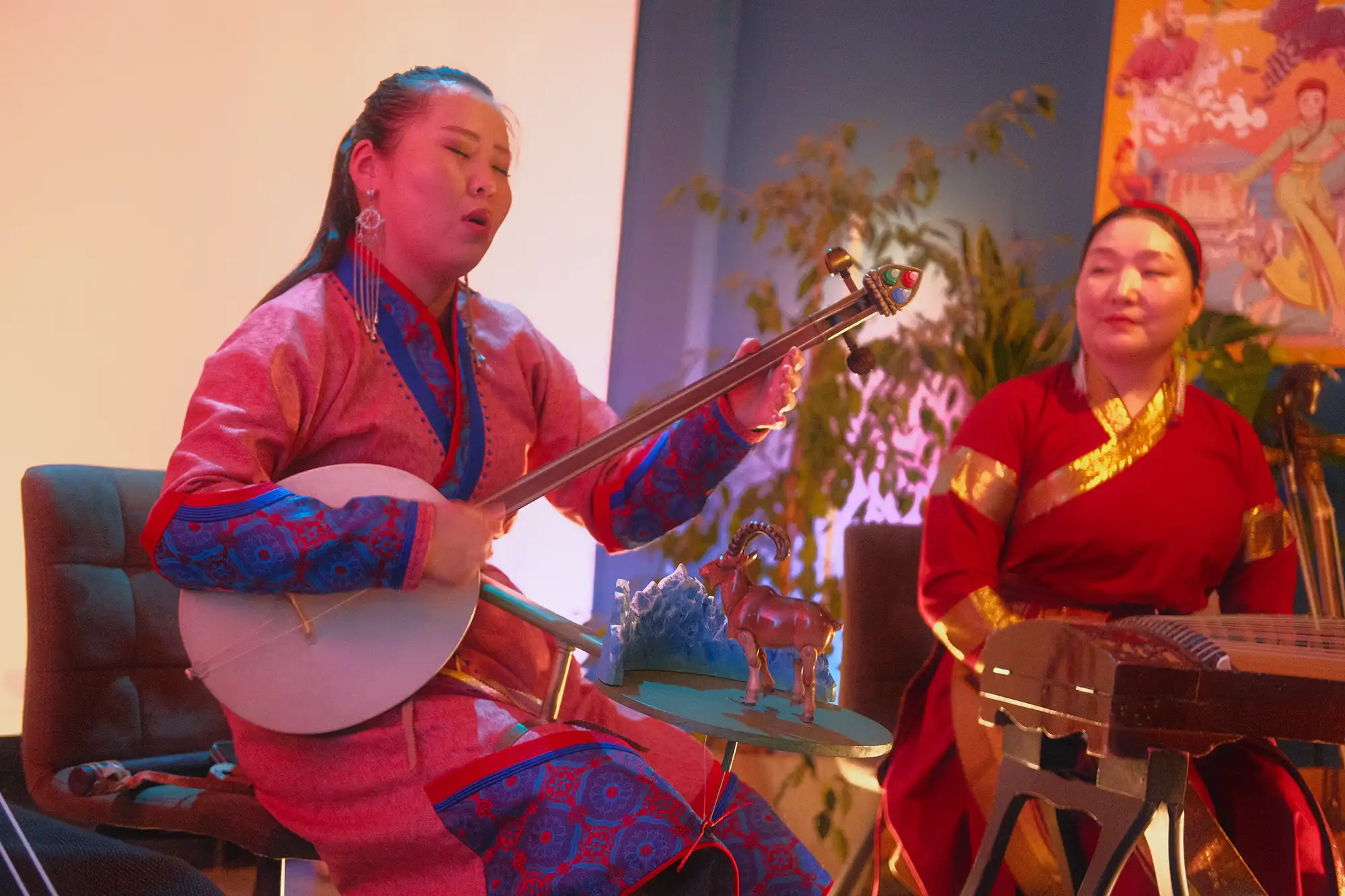

The Power of the Female Voice — female throat singing in Europe
A male-dominated art, where women are slowly finding their voice as well
For many years, we have been working with musicians from Mongolia and surrounding regions, with a clear focus on throat singing. We organize monthly throat singing and overtone singing workshops, often together with Mongolian teachers and musicians. But to be honest: almost always, these are men! And that is striking, because attendance at our activities is usually beautifully balanced—men and women are curious, enthusiastic, and deeply moved by this art form. Yet for years we kept hearing the same question: “Can women actually master throat singing as well?”
That question lingered. And the more often we heard it, the more I thought: I need to do something with this. Something specific. Something that makes the female perspective within this tradition visible.
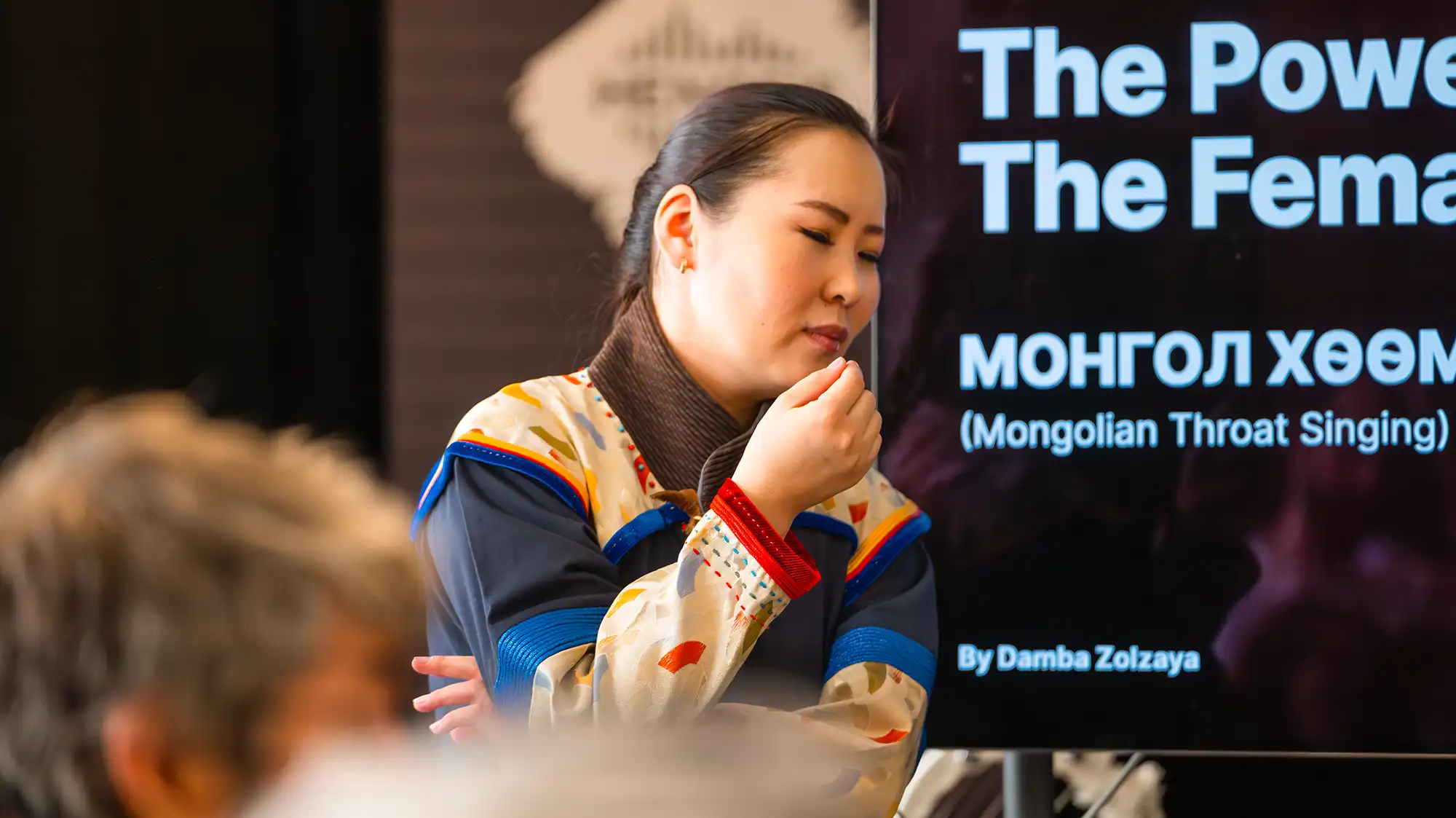
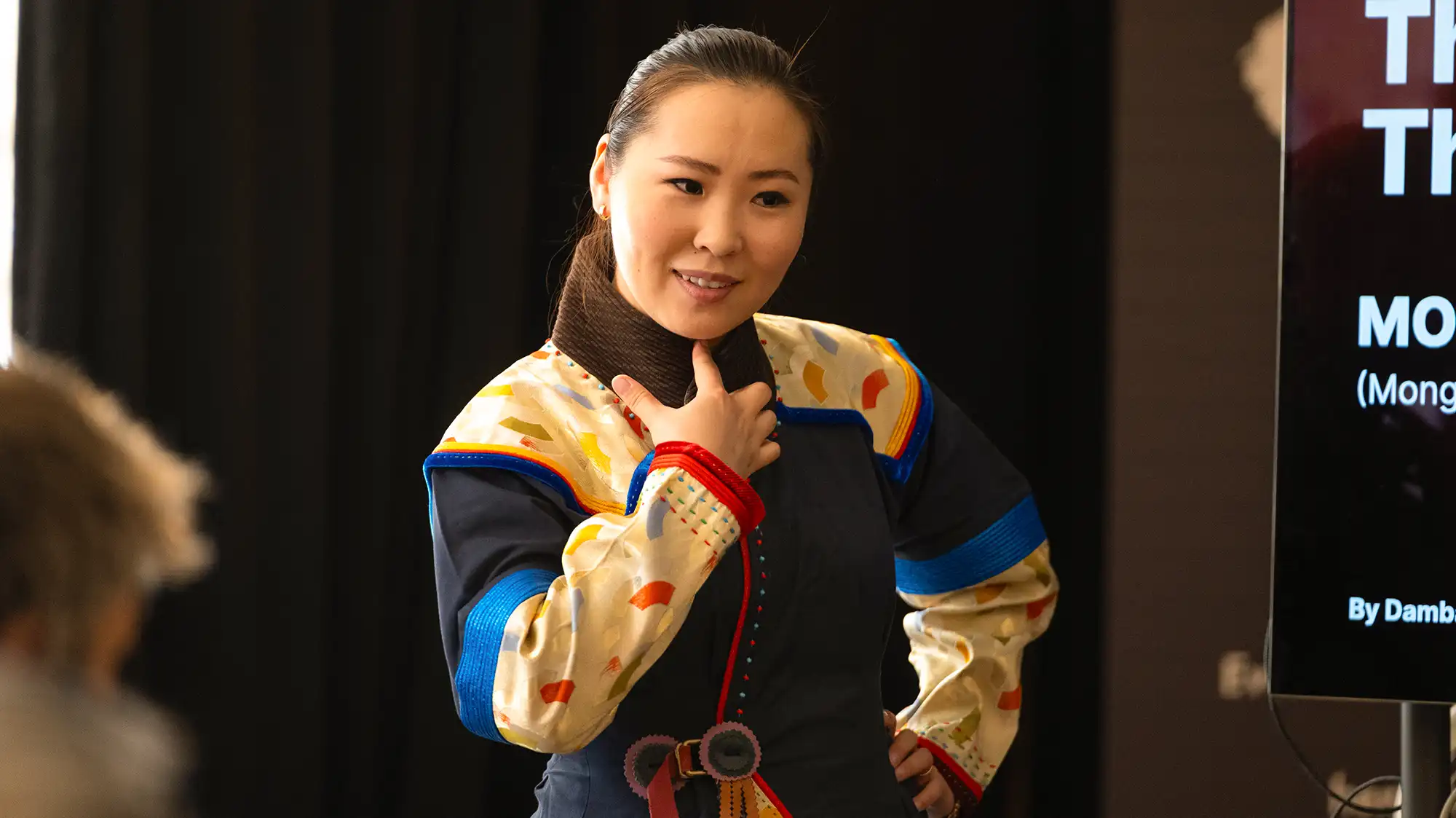
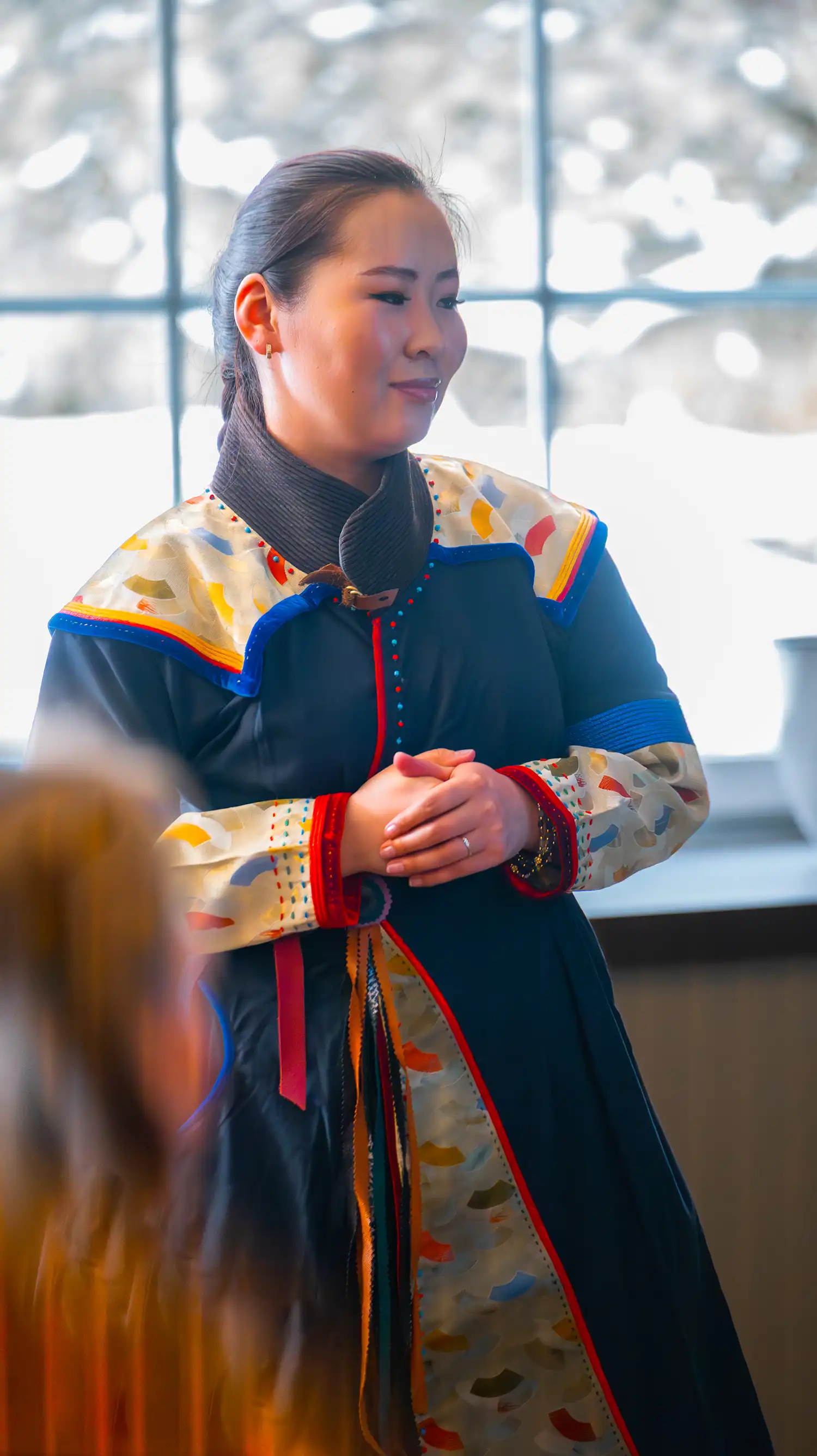
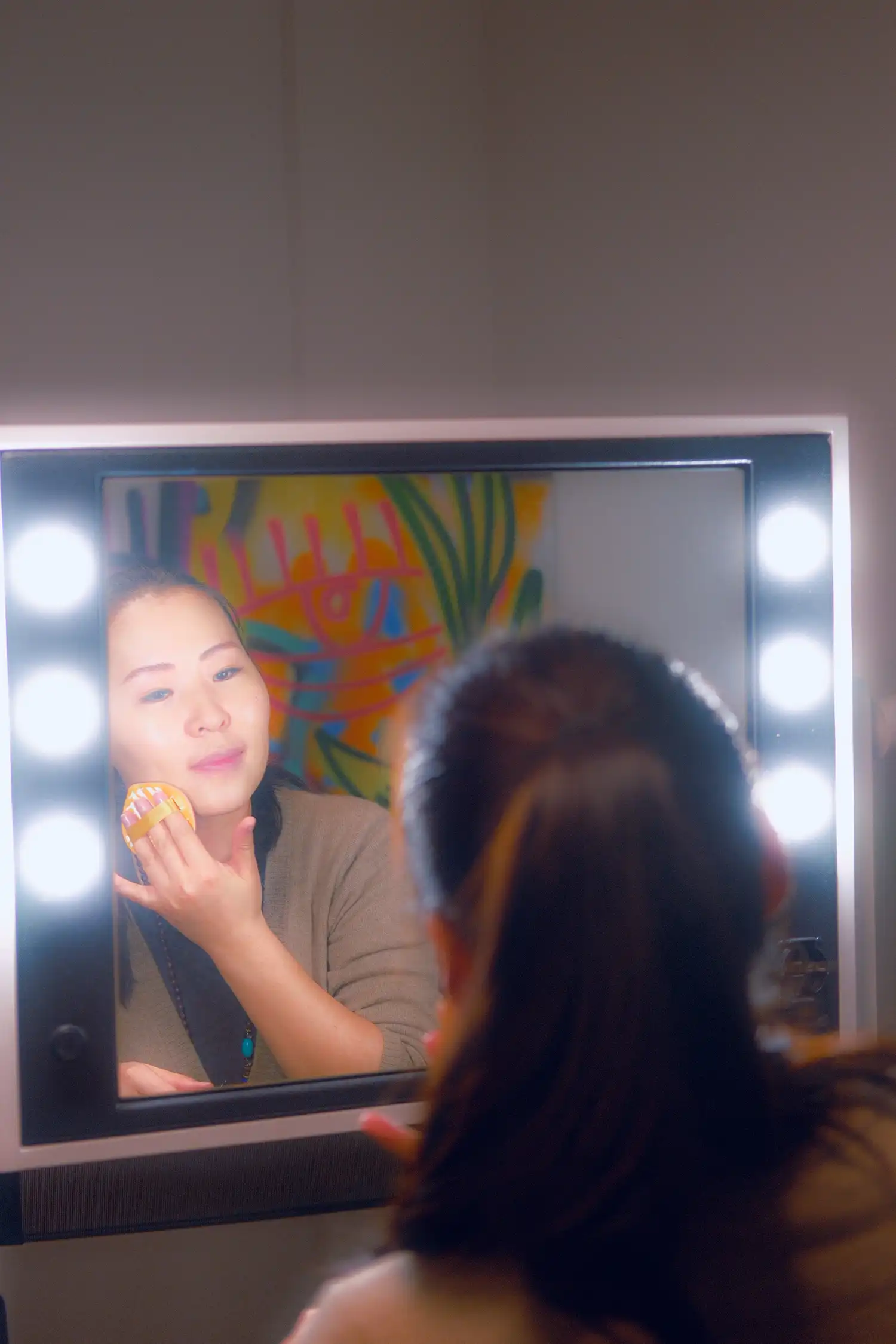
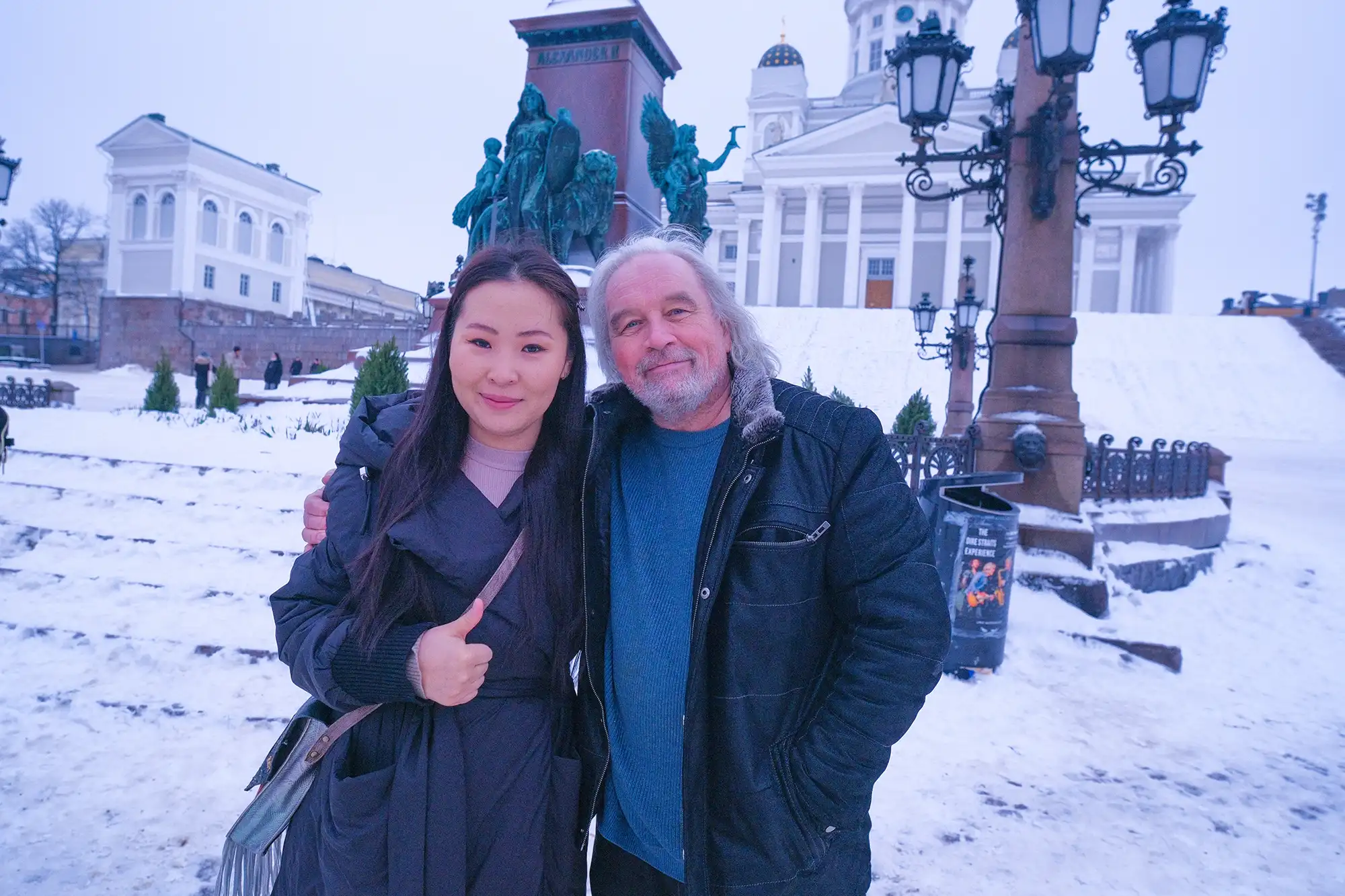
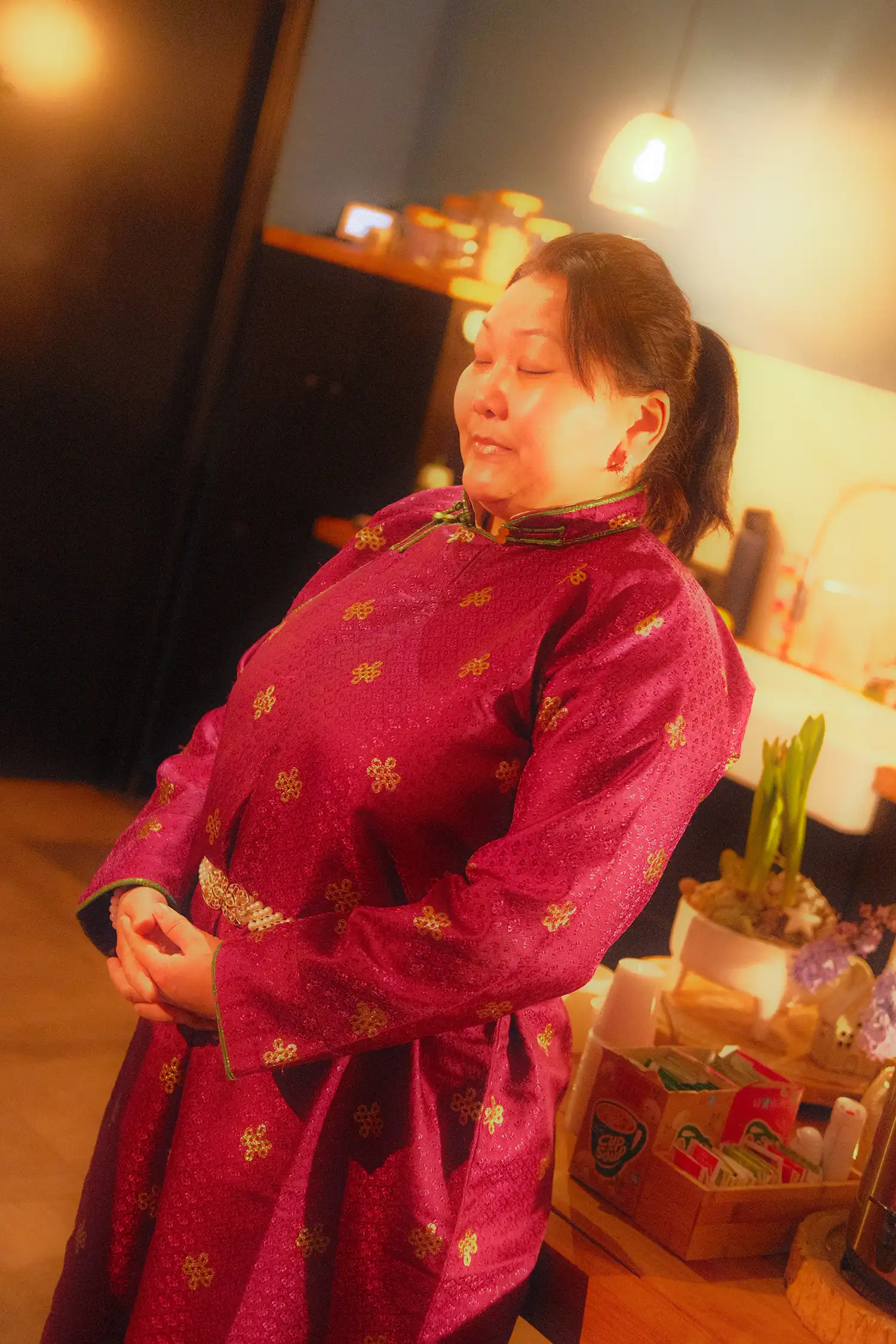
Zolzaya, female throat singer from Mongolia
For years I had been following a musician from Mongolia online: Zolzaya Damba. She was born in Chandmani, a small village in Khovd Province in western Mongolia. Chandmani is often referred to as “the cradle of Mongolian throat singing”: and for good reason. Remarkably many influential throat singers were born there and learned the art in that place.
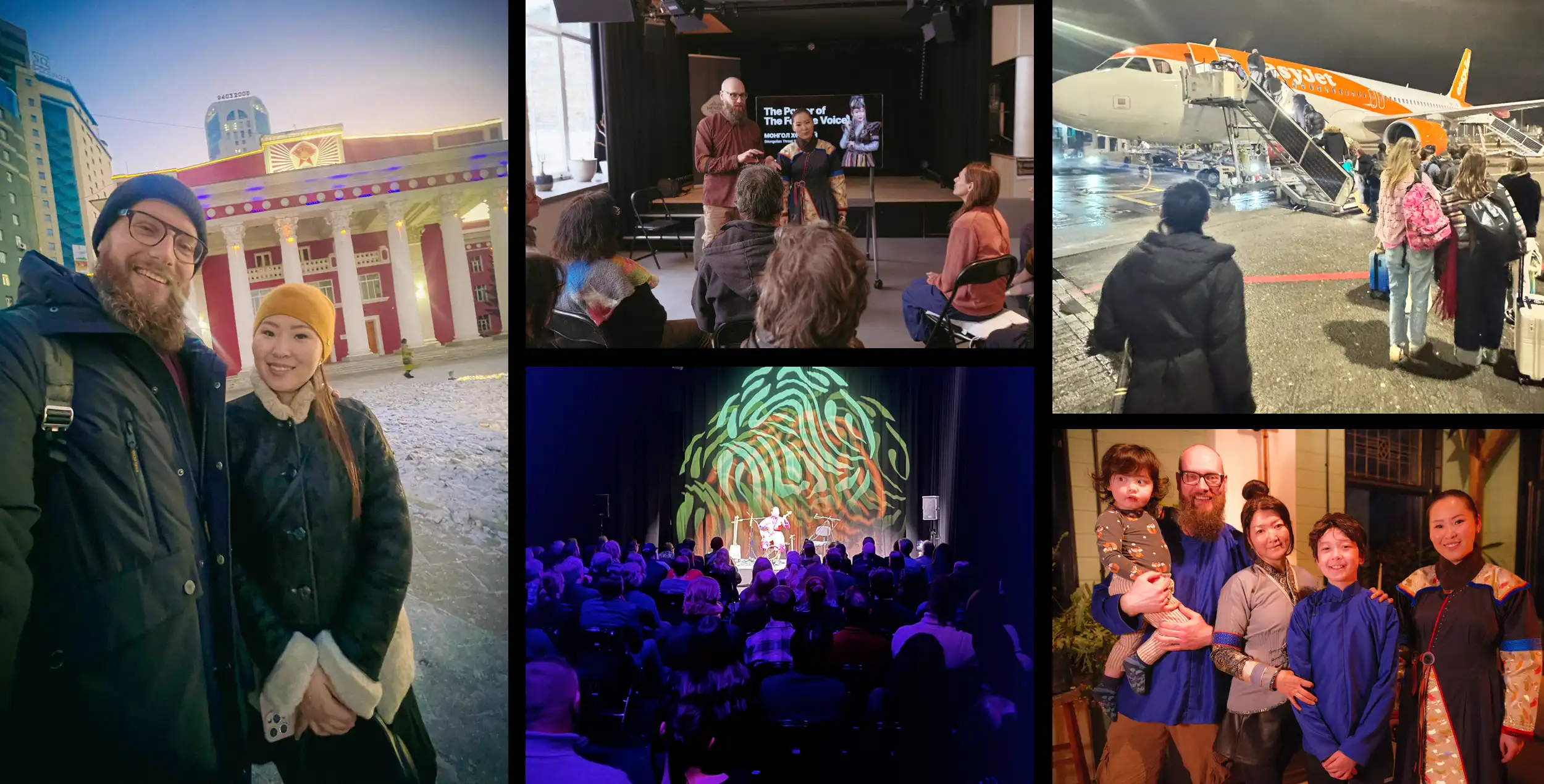
In January 2025, I met Zolzaya in Ulaanbaatar. That moment was special: after years of online contact, we finally met in person for the first time. She told me she would love to one day come to Europe to share her story and her music. And slowly but surely, a project began to take shape: one that had already been floating around in my head for years.
The Power of the Female Voice
Throat singing is powerful. Everyone experiences it differently, but almost no one hears it without feeling something. It is an art that literally resonates... through your body and your breath. At the same time, it is a tradition that has historically been carried largely by men. But singers like Zolzaya prove that women can master this art as well: and carry it in their own, powerful way. That is why I called this project: The Power of the Female Voice.
For us, the goals were clear:
- To invite a musician from Mongolia, who had never been to Europe before, to share her story and her art.
- To inspire people with her journey as a female throat singer in a world that has long been predominantly male.
- And to beautifully document the project in photos and videos, so a wider international online audience could experience it too.
A few months later, the plan became concrete. January 2026 would be the moment when Zolzaya would come to Europe for the very first time.
A challenging start
The project did not begin without obstacles. The idea may have been clear in my head, but of course it had to be realized in collaboration with my wife, Saran. And to be honest: at first, Saran was not immediately convinced. Inviting an unknown musician to Europe and building a tour and series of events around it is not only a lot of work... it is also a financial risk.
But I felt it deeply: this had to happen. And as if that wasn’t challenging enough, an unprecedented snowstorm hit parts of Europe in the very week Zolzaya was scheduled to arrive. Including the Netherlands. And that—ironically—after I had earlier answered her question “Do you have much snow in winter?” with: “Well… actually, very rarely!”
Well… In the night of January 9th, I drove from Groningen to Frankfurt Airport (500 km), sometimes at no more than 25 km/h on the highway, while code red weather warnings were issued. An exciting start, to say the least! Saran stayed home these days to take care of the children and our animals.
Switzerland – The First Part of the Project
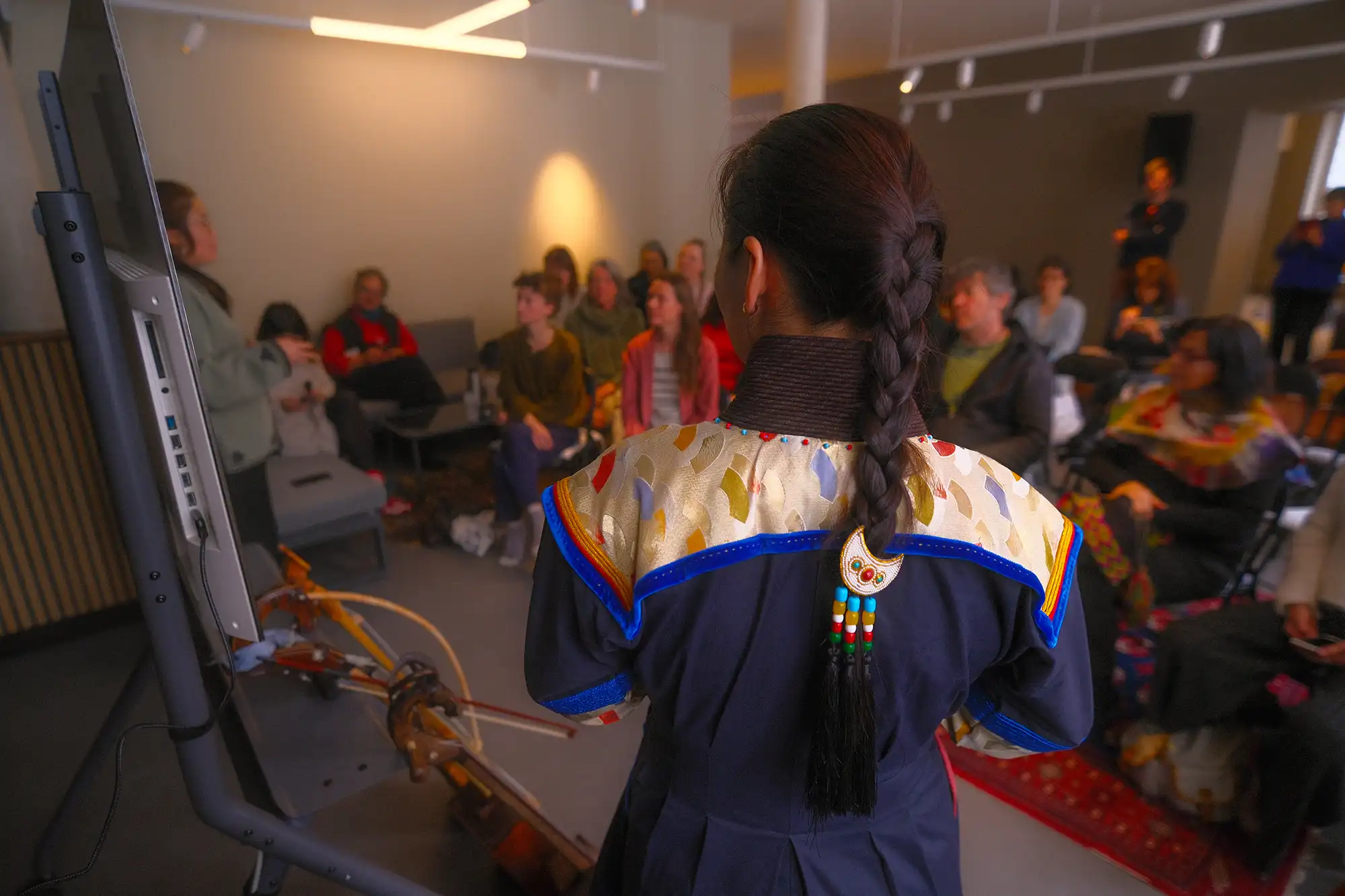
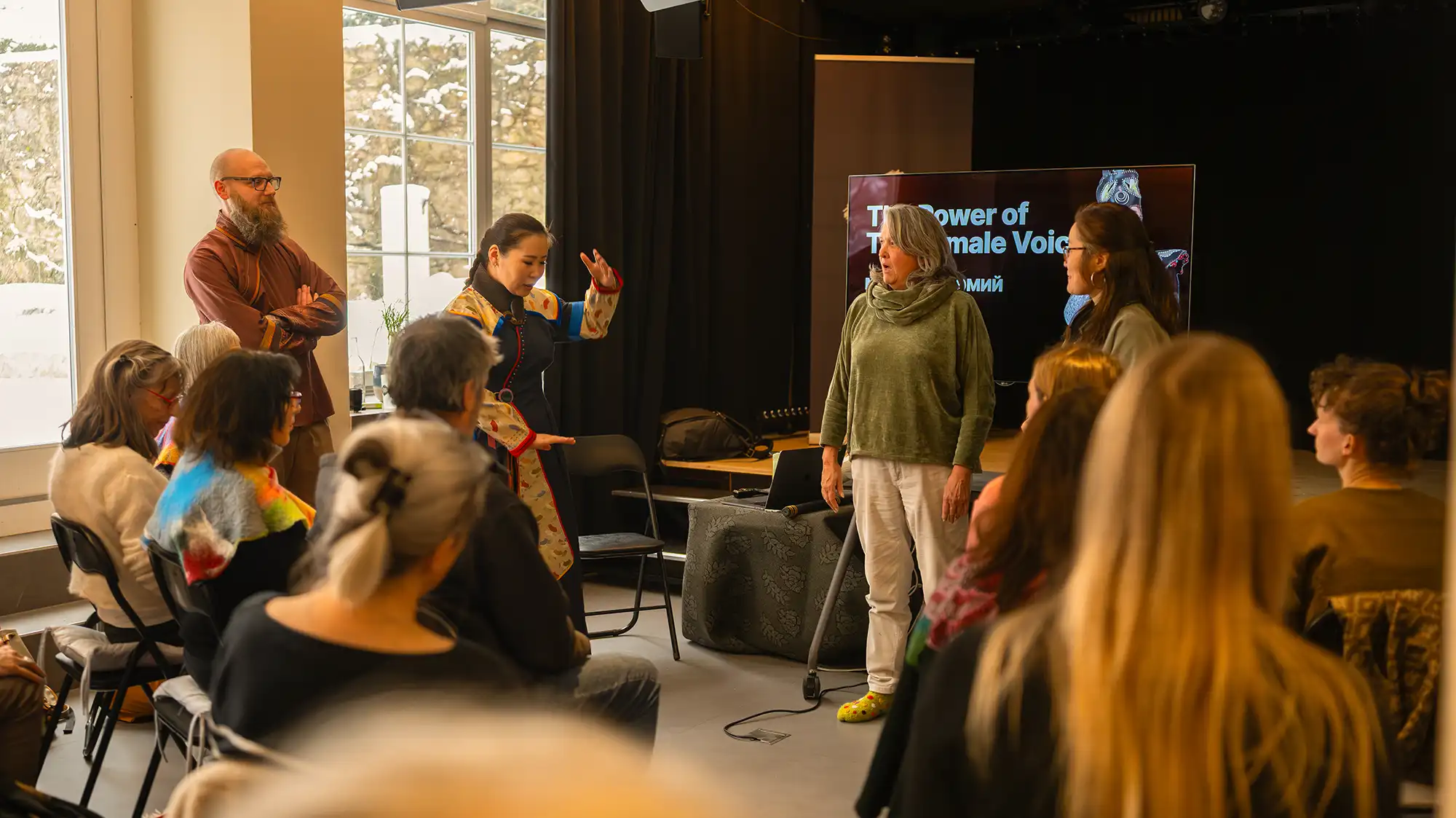
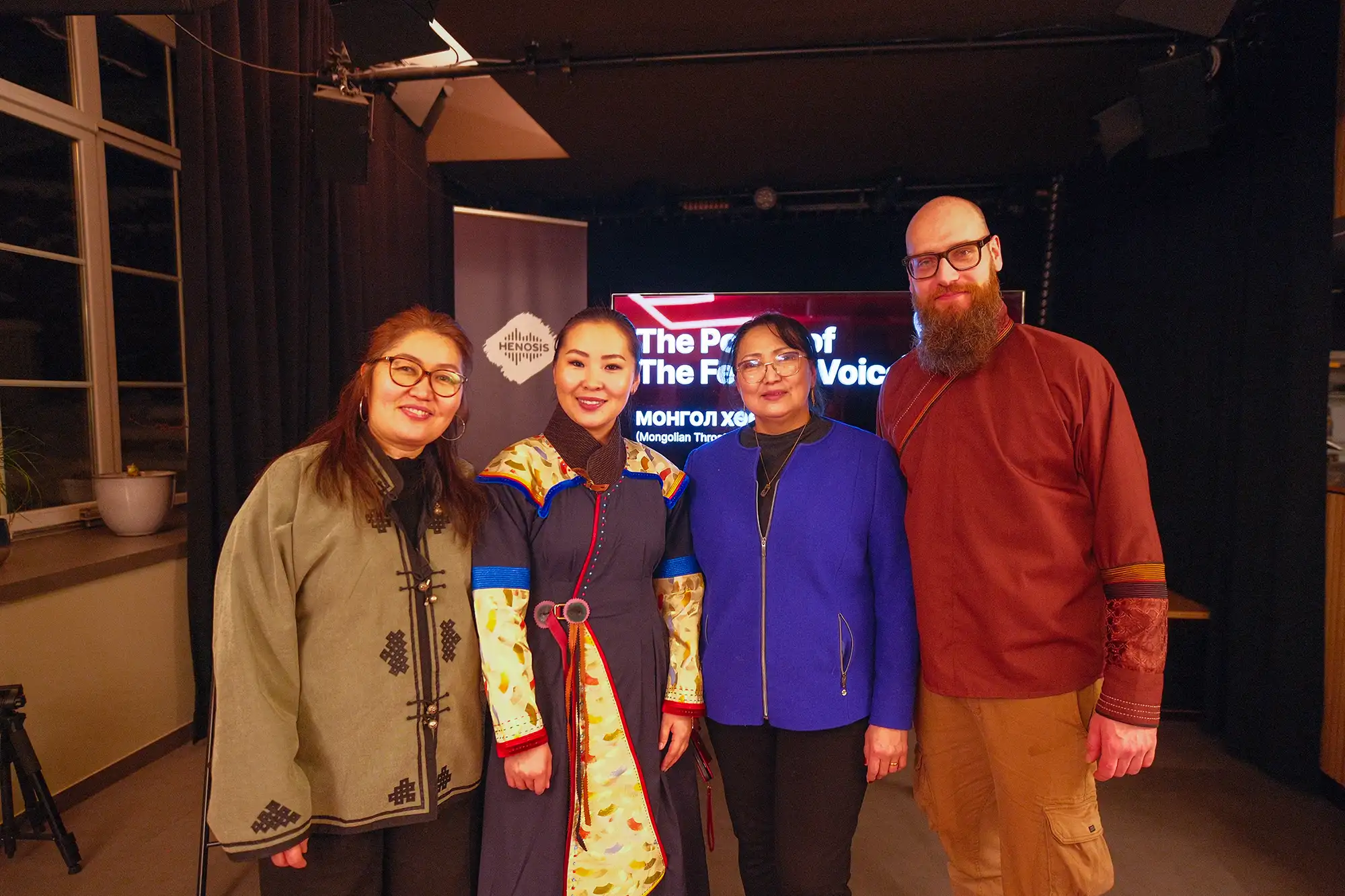
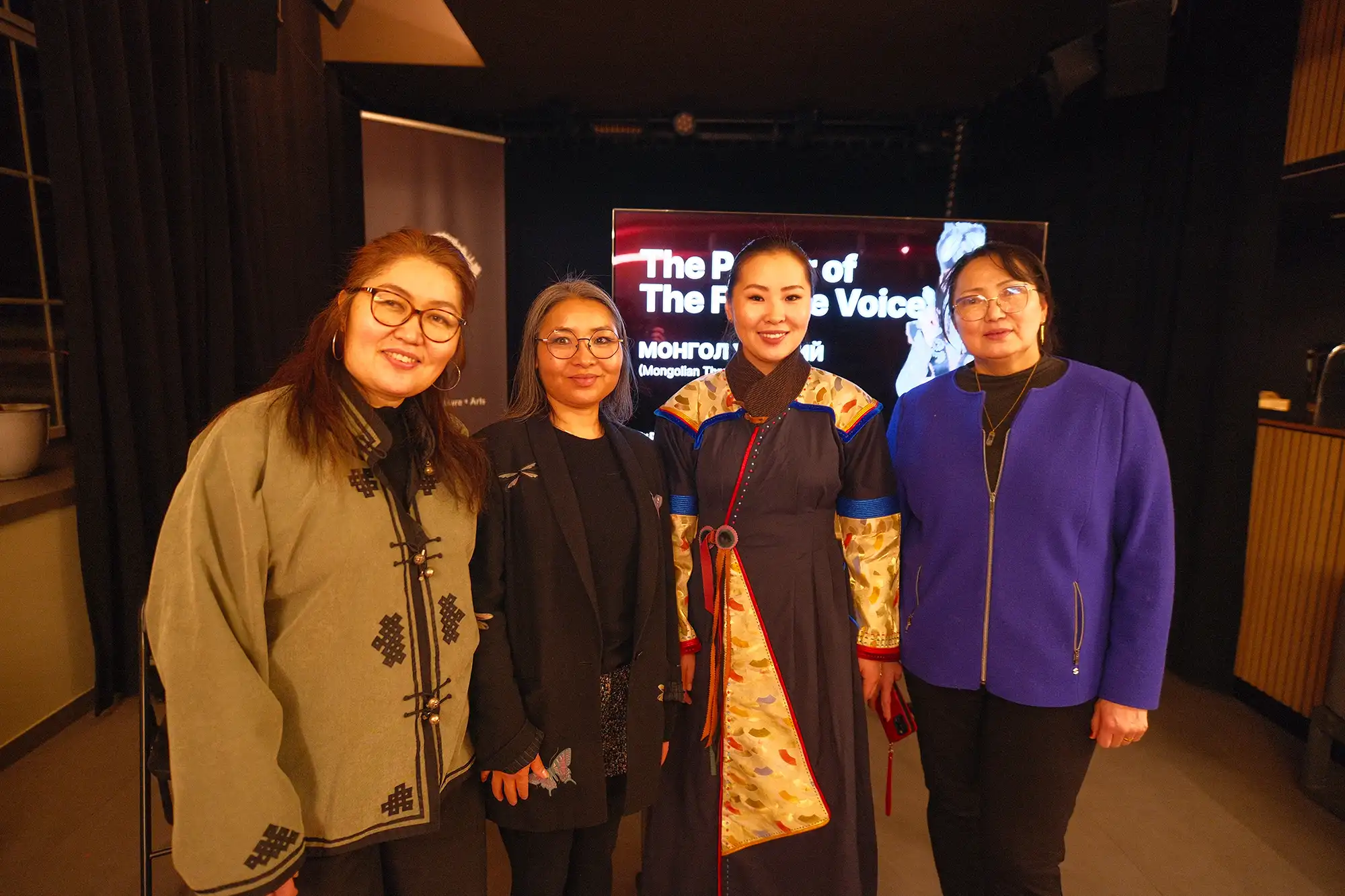
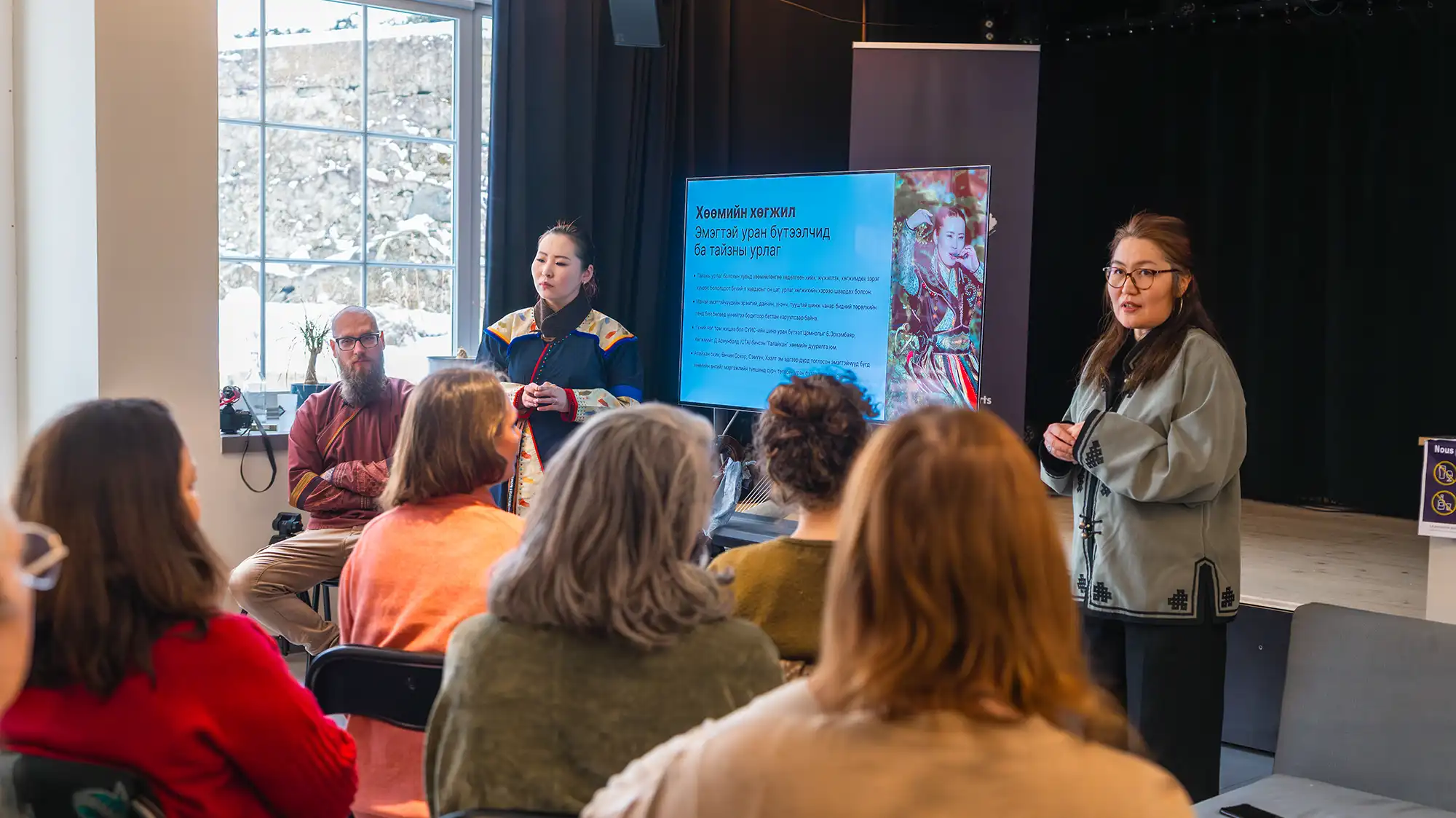
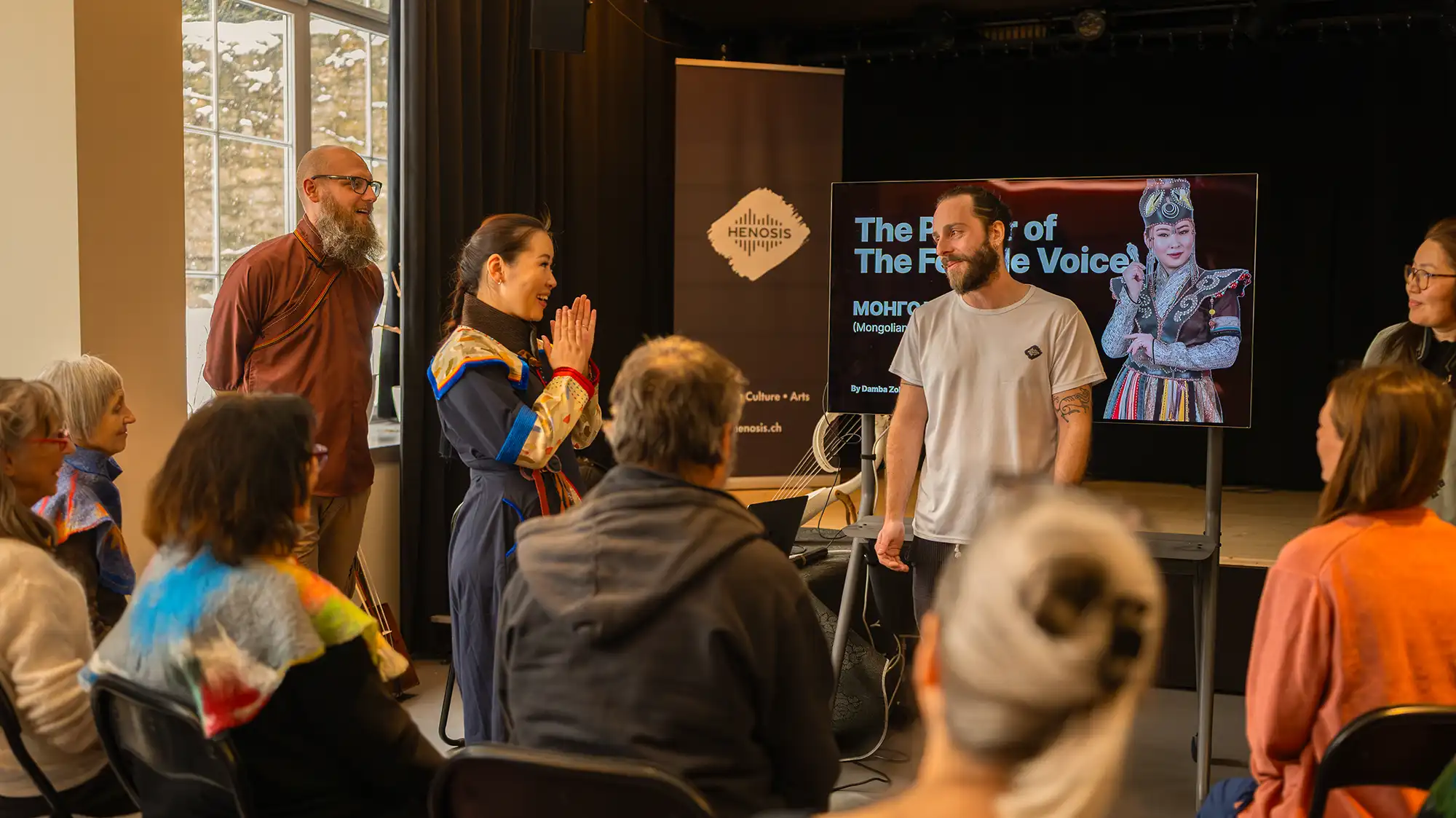
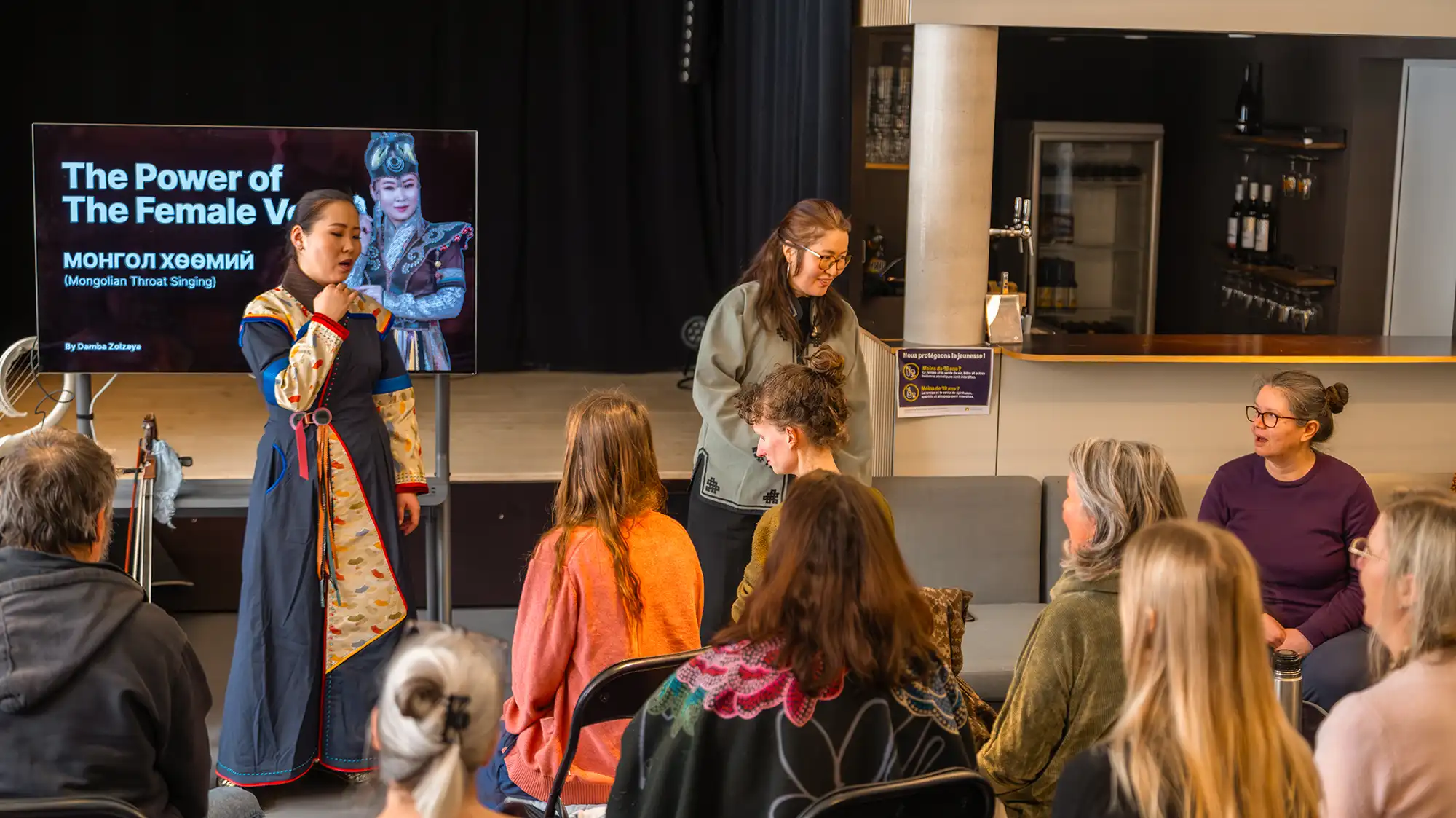
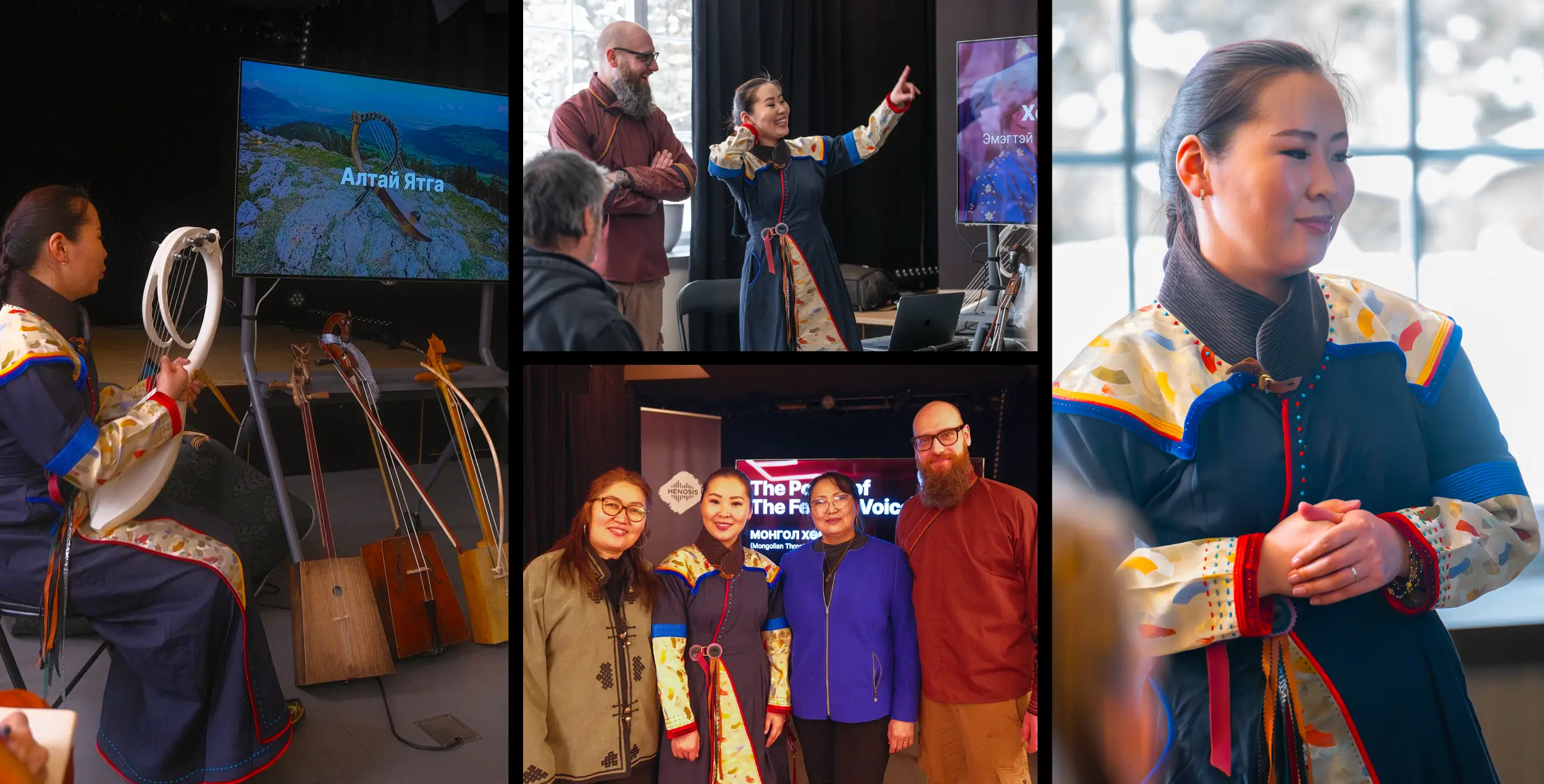
For the first part, we rented the location of Henosis in Romainmôtier, Switzerland. This is also where we organized the first European Throat Singing Festival and Competition in August 2025. A magical place: and perfect for a full-day lecture, demonstration, and workshop on January 10th.
It was already a small miracle that we were able to fly at all. In the week of our flight, reportedly around 1,000 flights were canceled from Amsterdam Schiphol Airport. But on our travel day, the weather finally calmed down enough, and we were able to board the plane with some peace of mind.
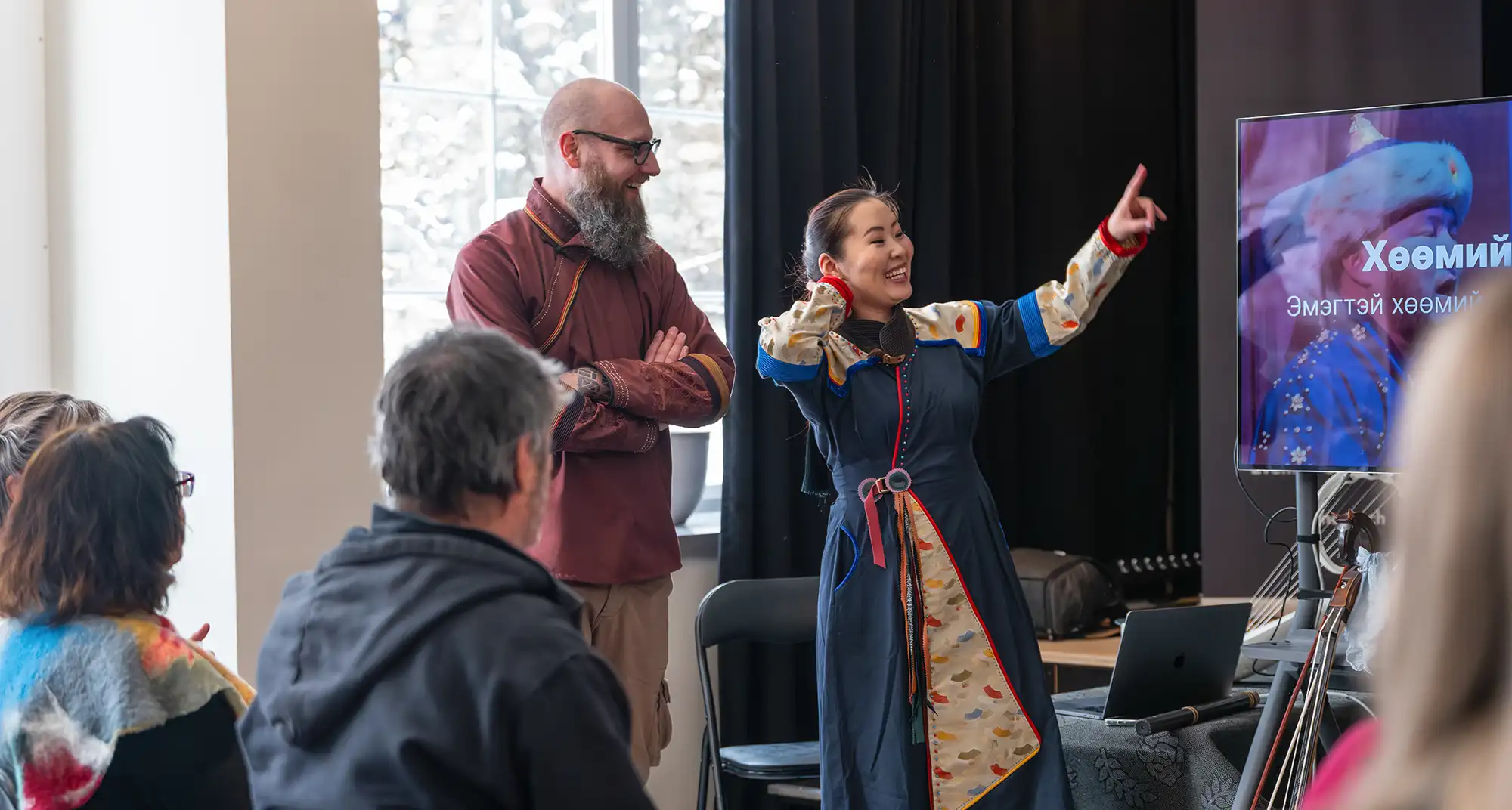
The day began with an introduction by Zolzaya. She shared her story and the challenges she faced while learning this art. She completed a four-year study program in Ulaanbaatar in a class full of boys: 30 boys—and she was the only woman. That is not just “remarkable”; it is a level of perseverance you can feel in everything she says and sings.
During her presentation, she also showed footage of influential throat singers from the same village, such as D. Sundui and T. Ganbold — pioneers who brought throat singing to the world in the 1970s, performing on international stages in Korea, Japan, China, and later also places like Finland. It visibly moved her to show these images here in Europe: especially because she herself was now taking that same step: sharing her story in Europe for the first time. I felt that deeply too. I understood her emotional reaction very well. Suddenly, you see the magnitude of the line that connects generations: those who opened the path, and someone like Zolzaya now finding her own place within it.
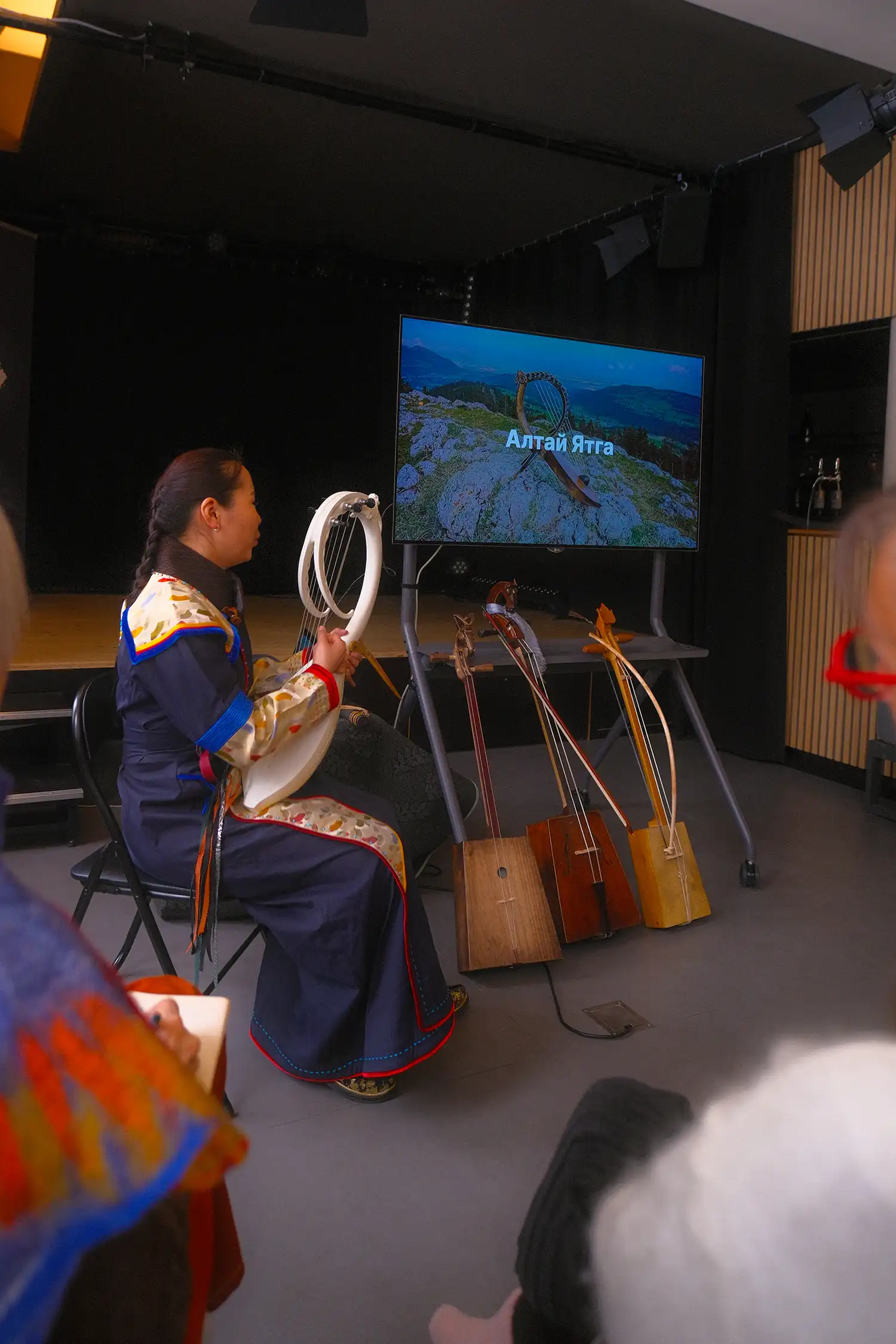
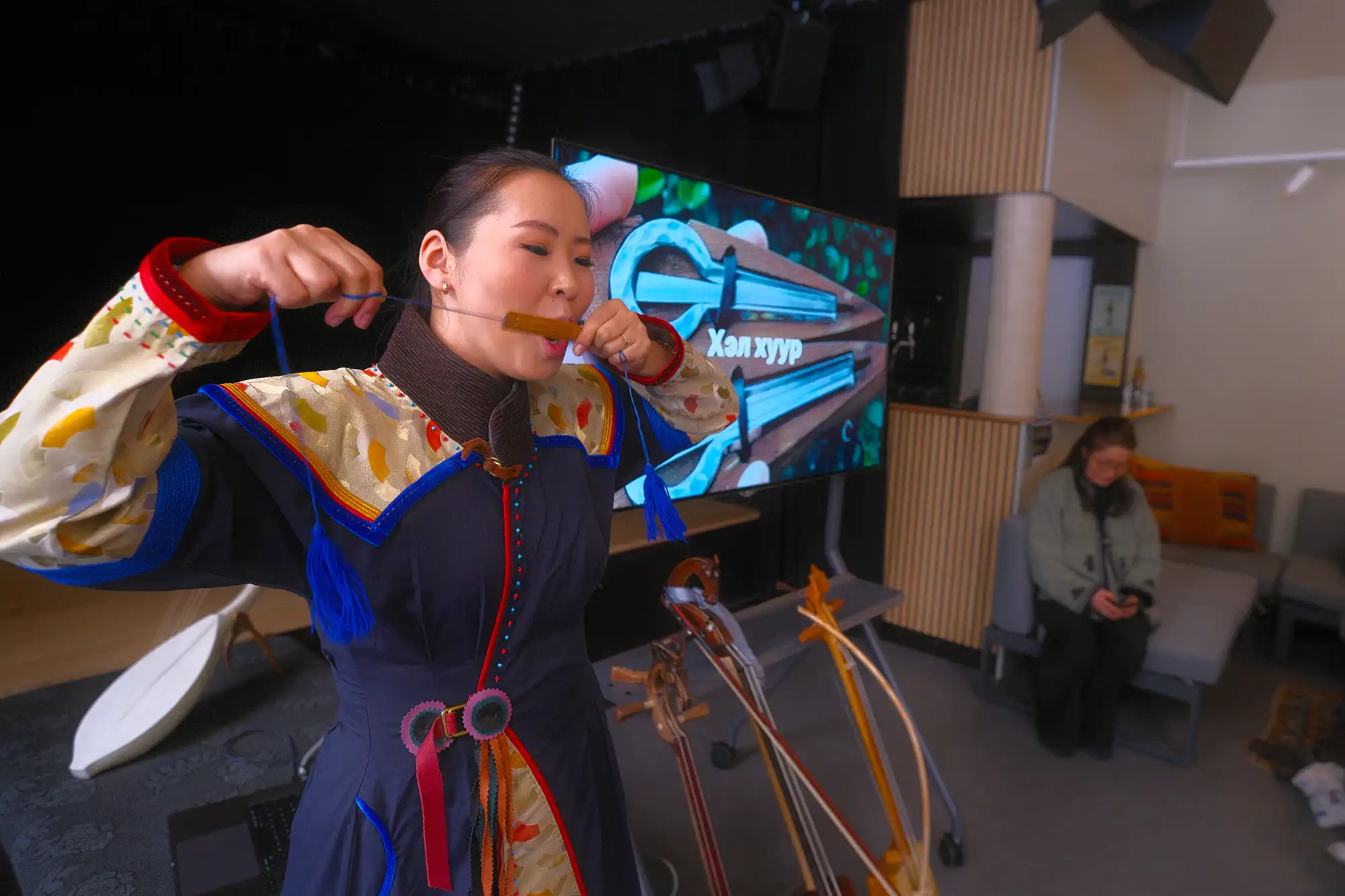
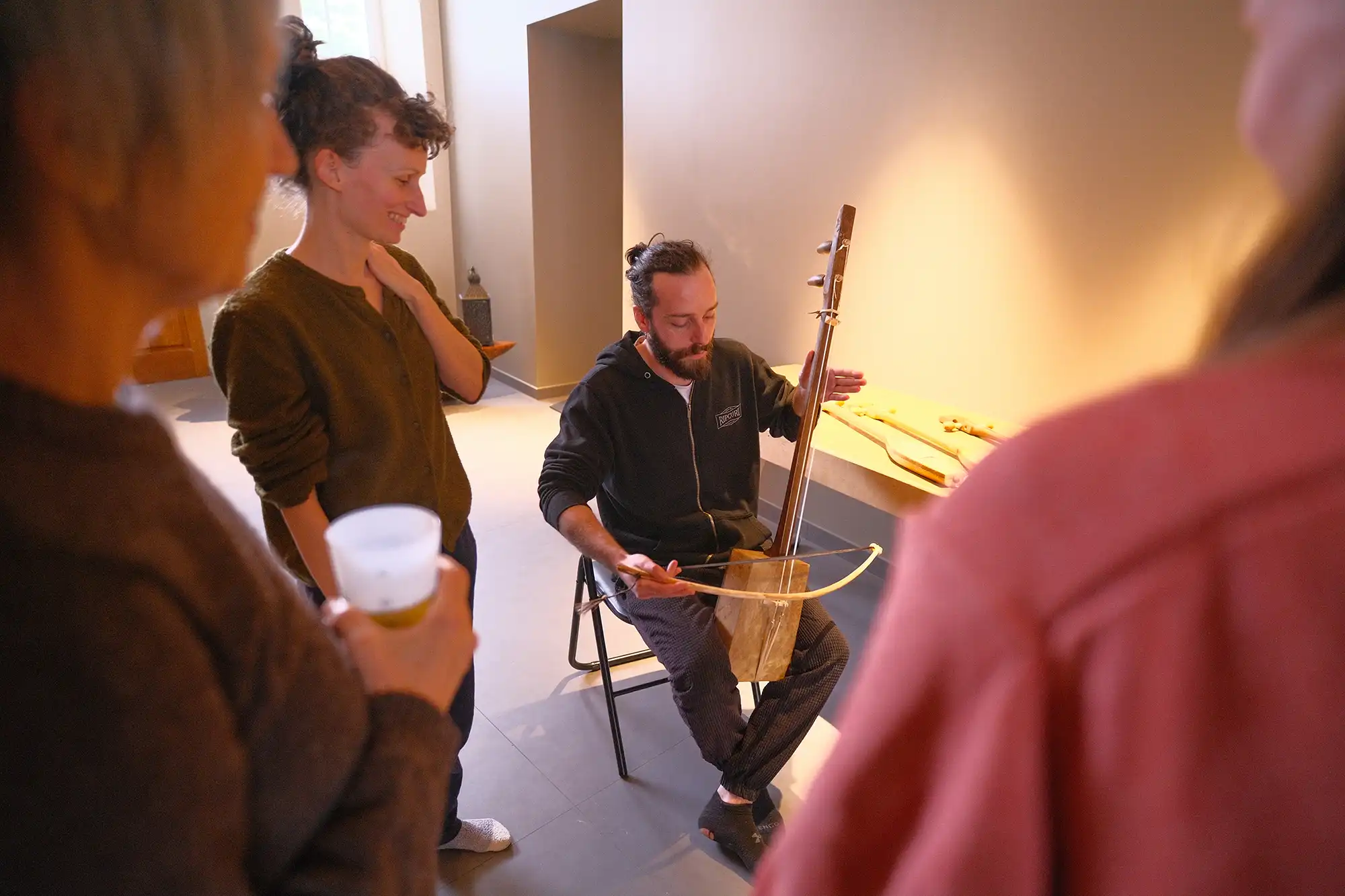
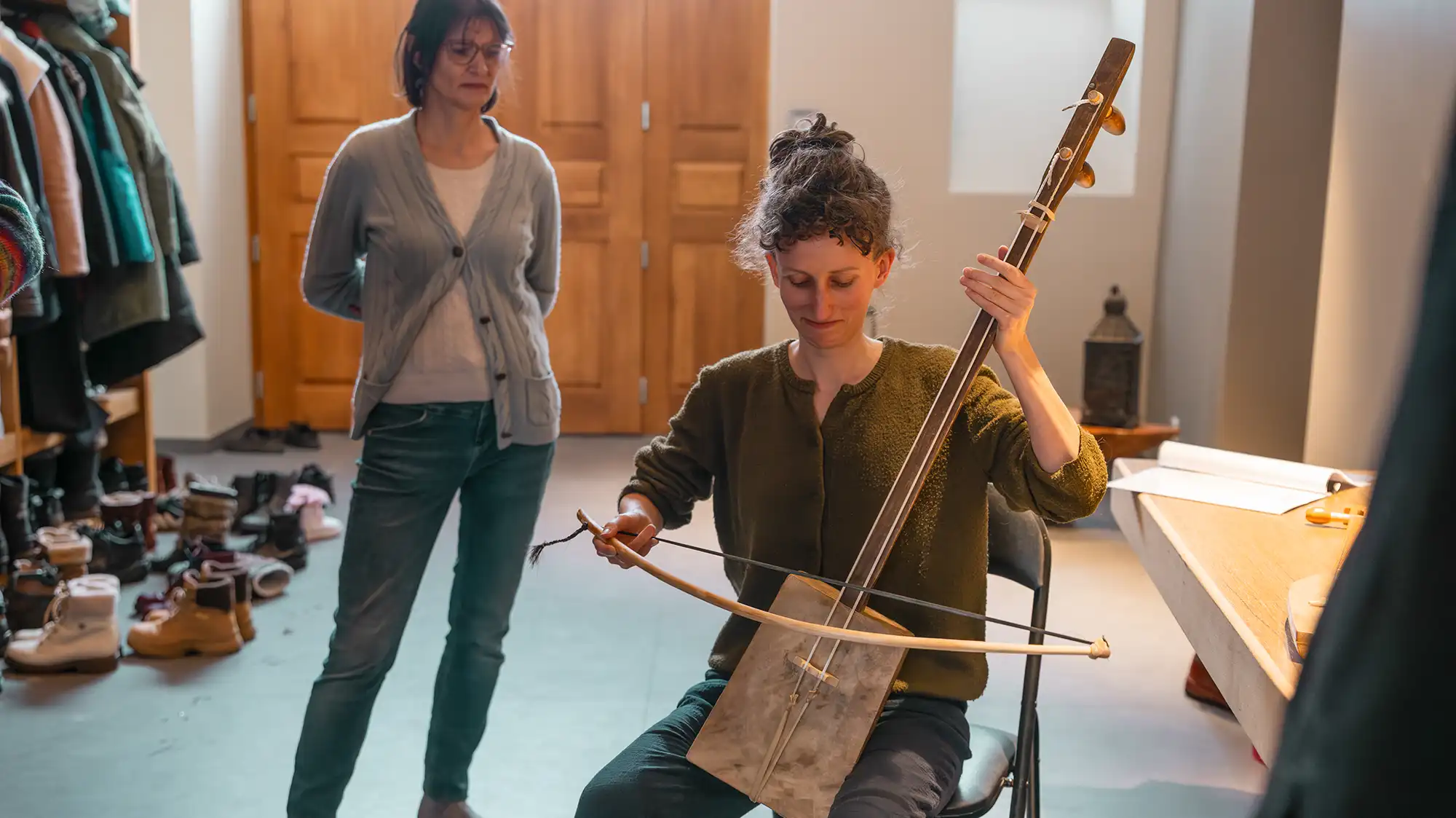
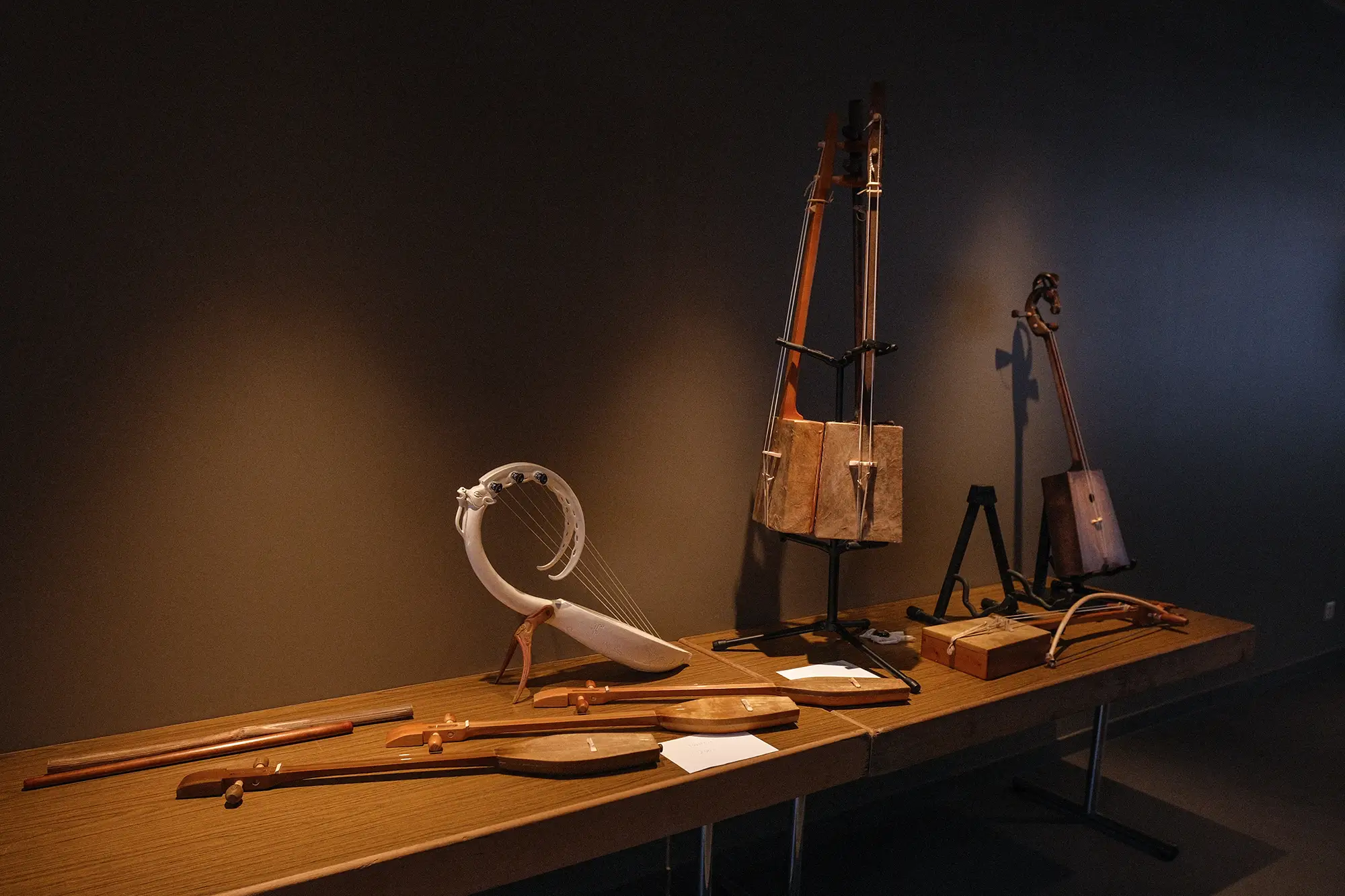
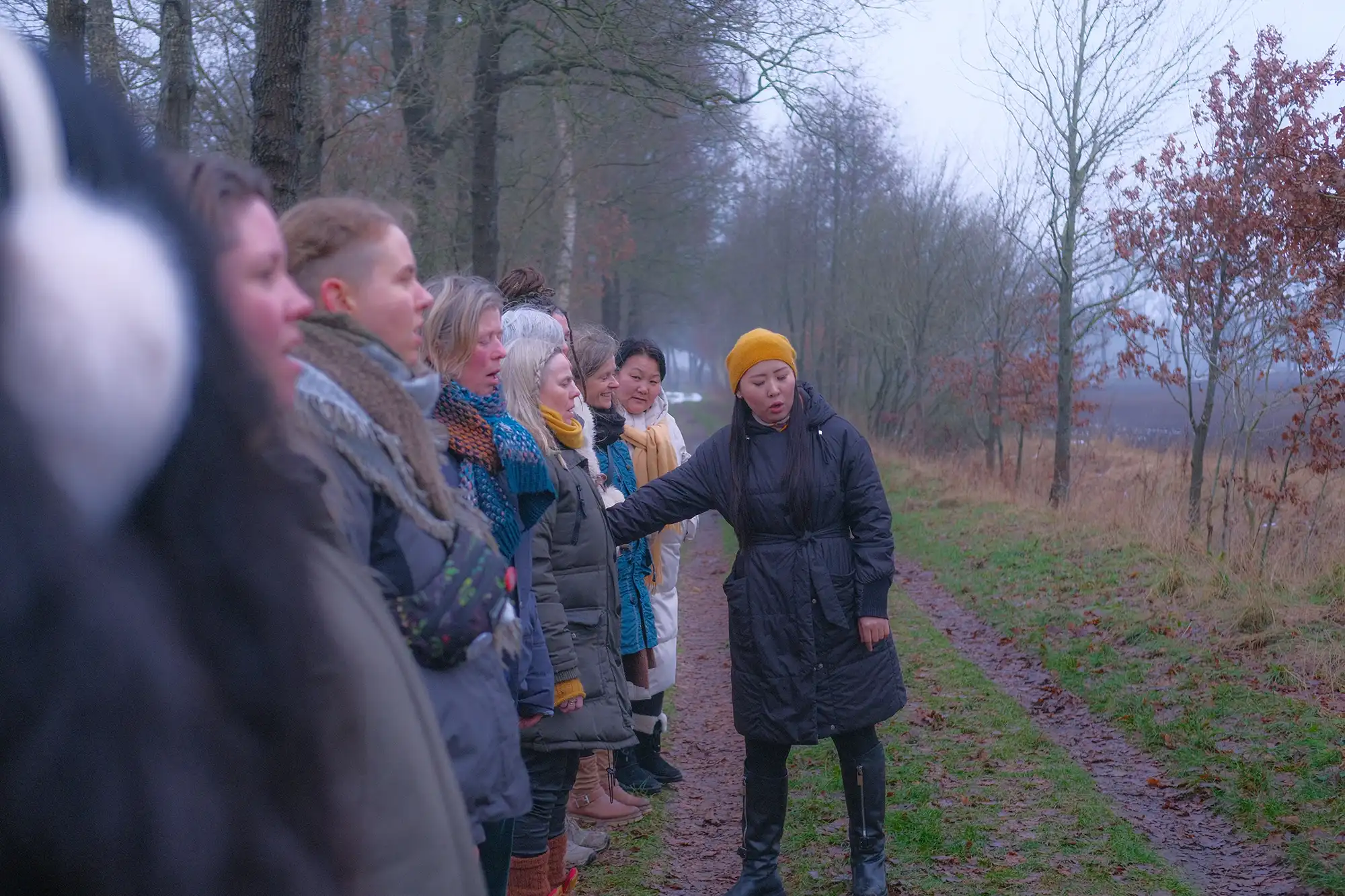
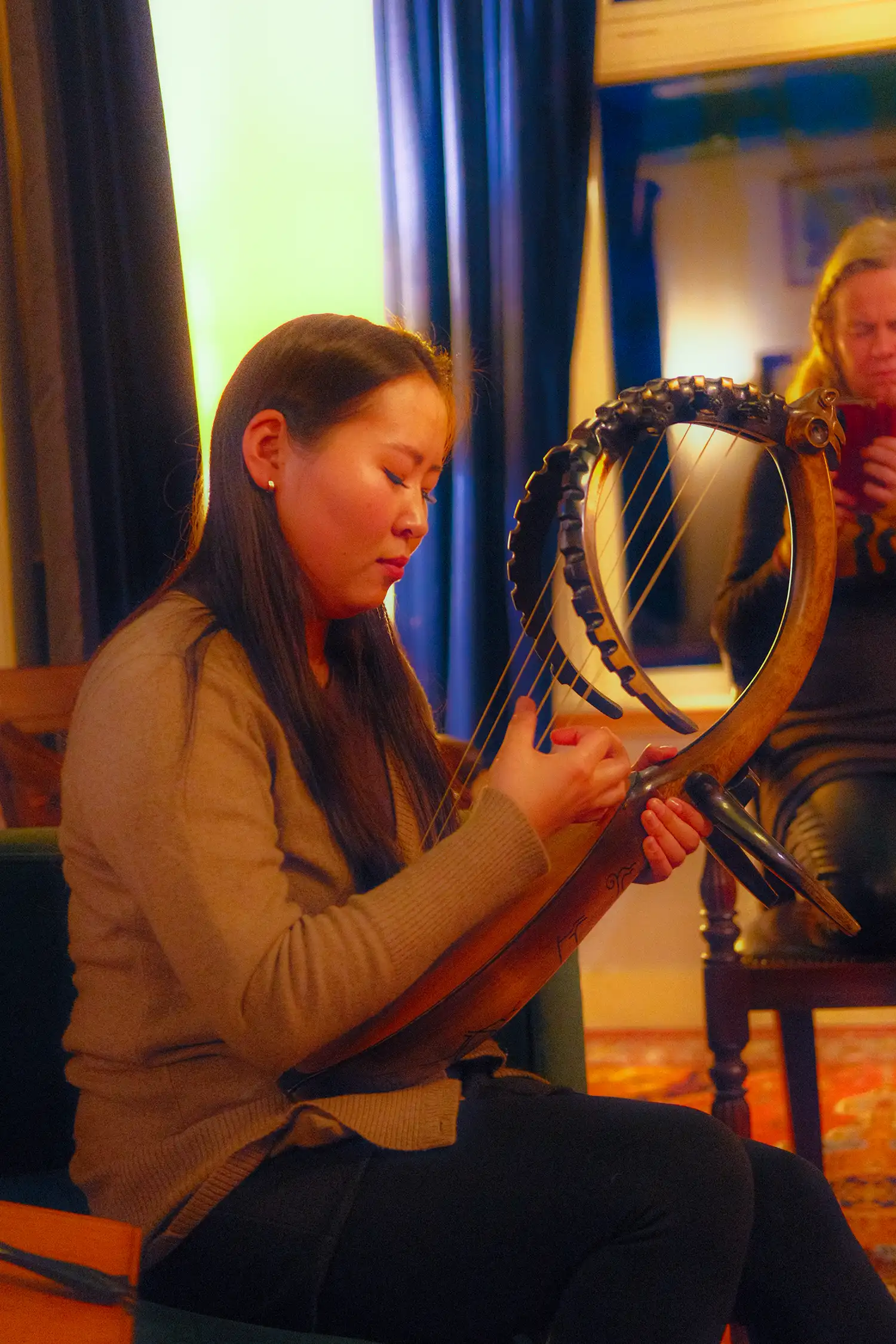
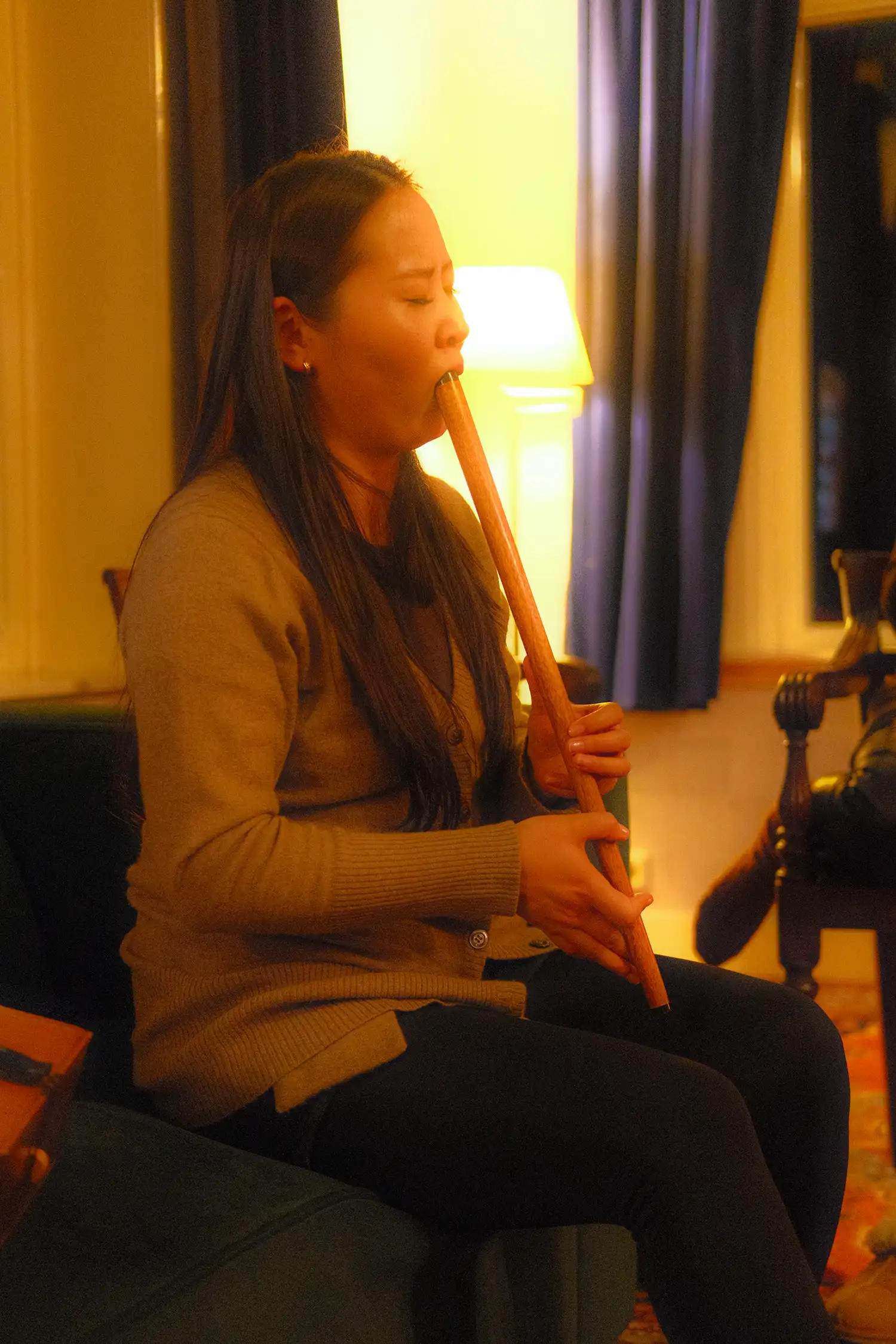
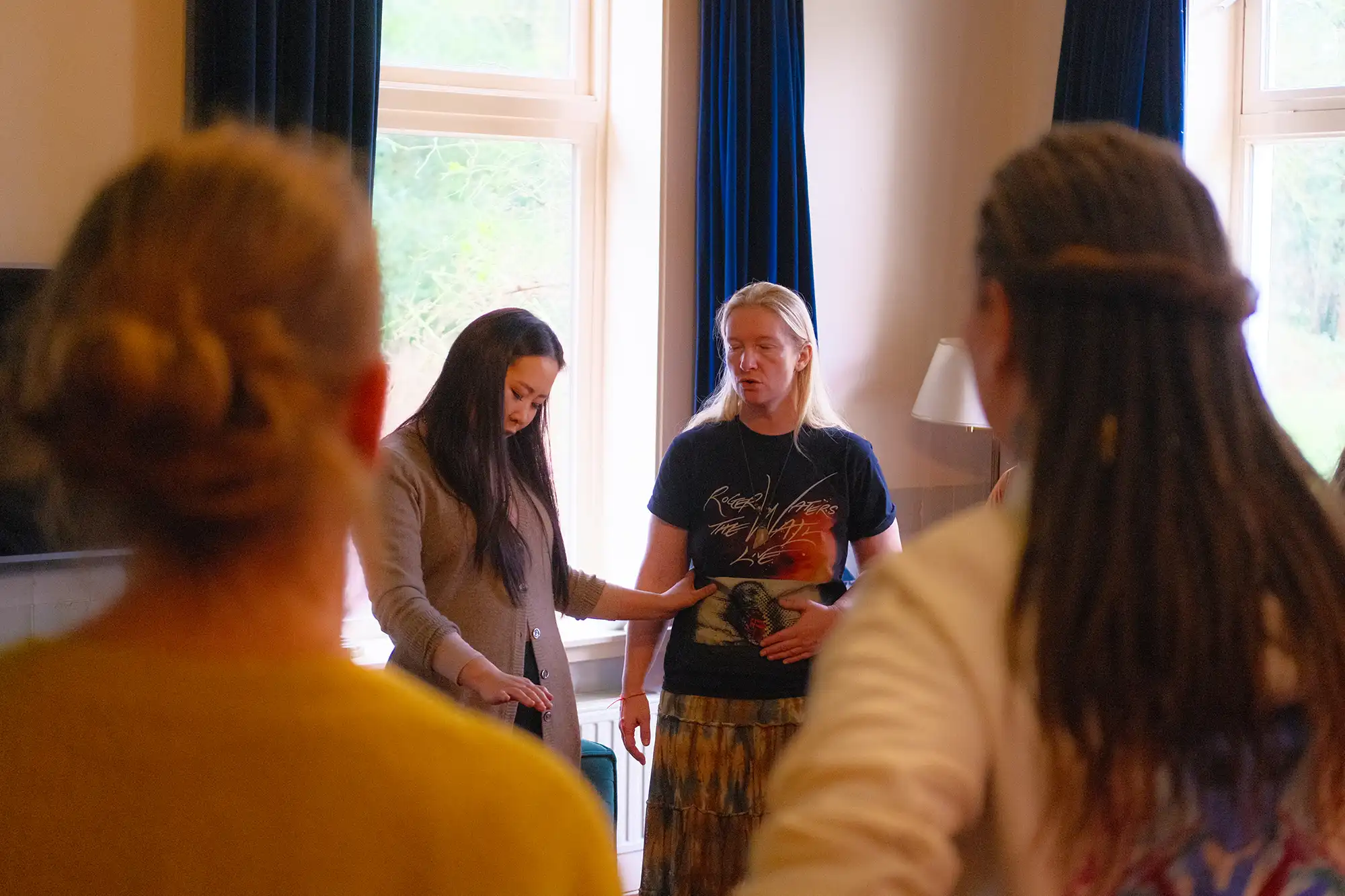
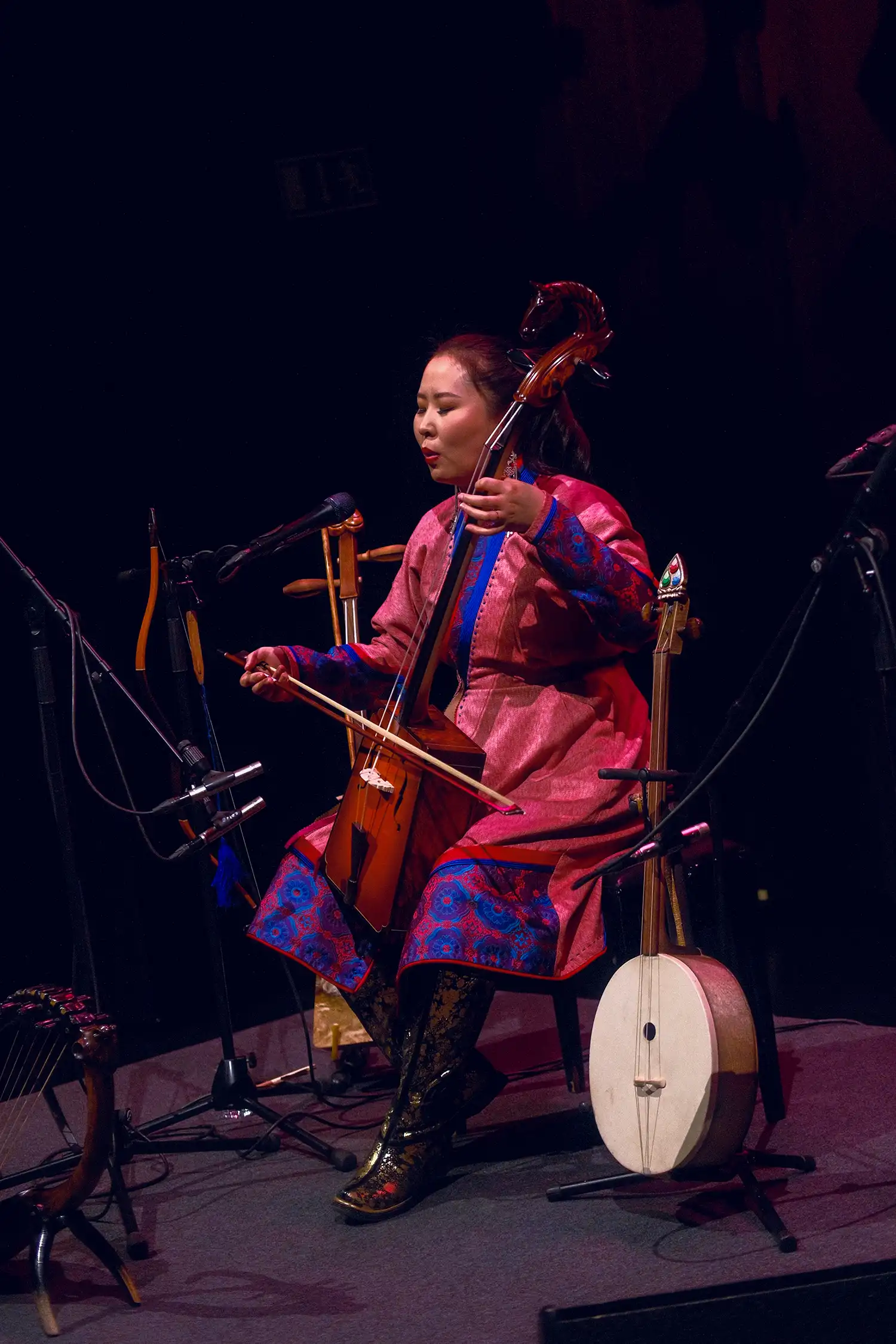
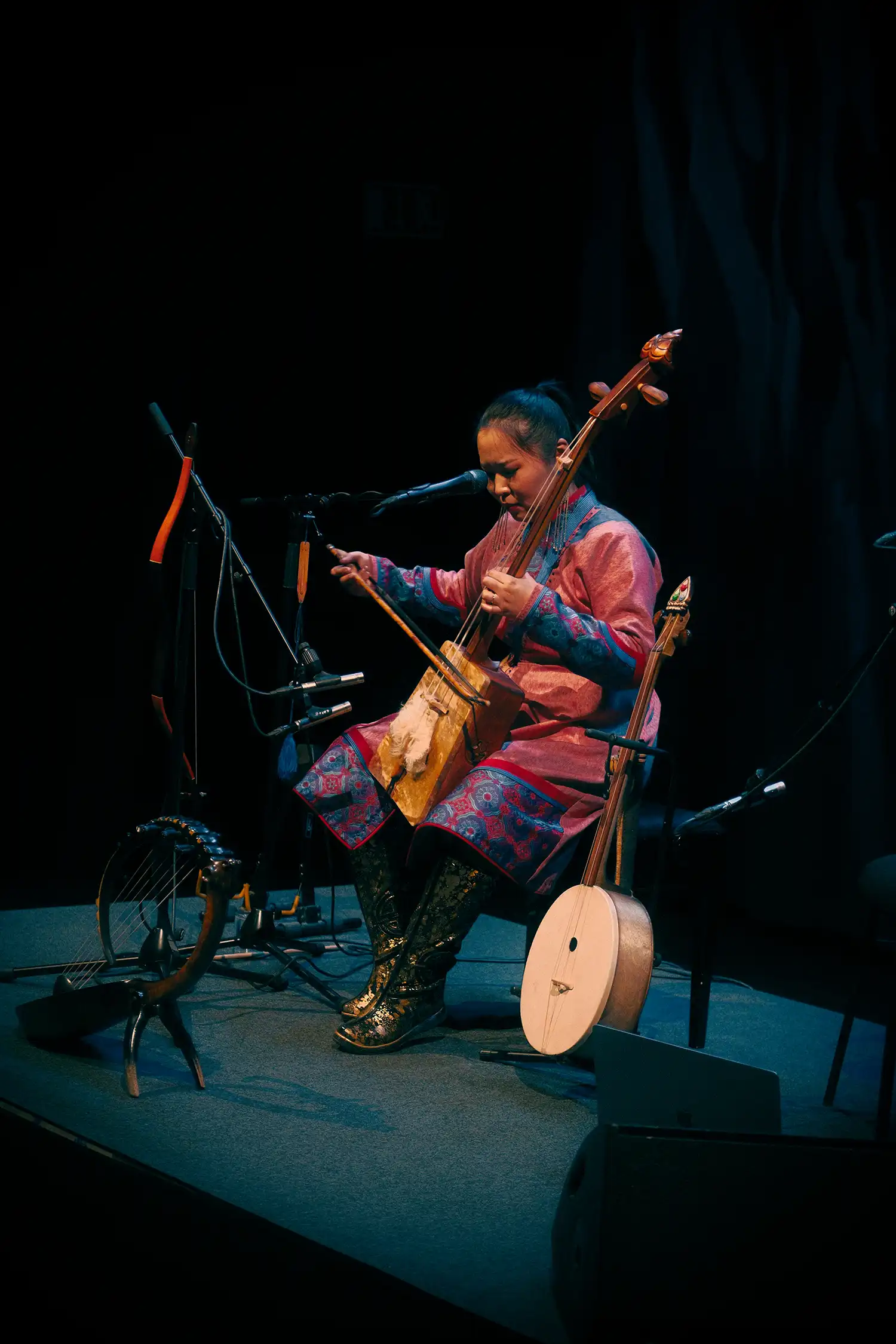
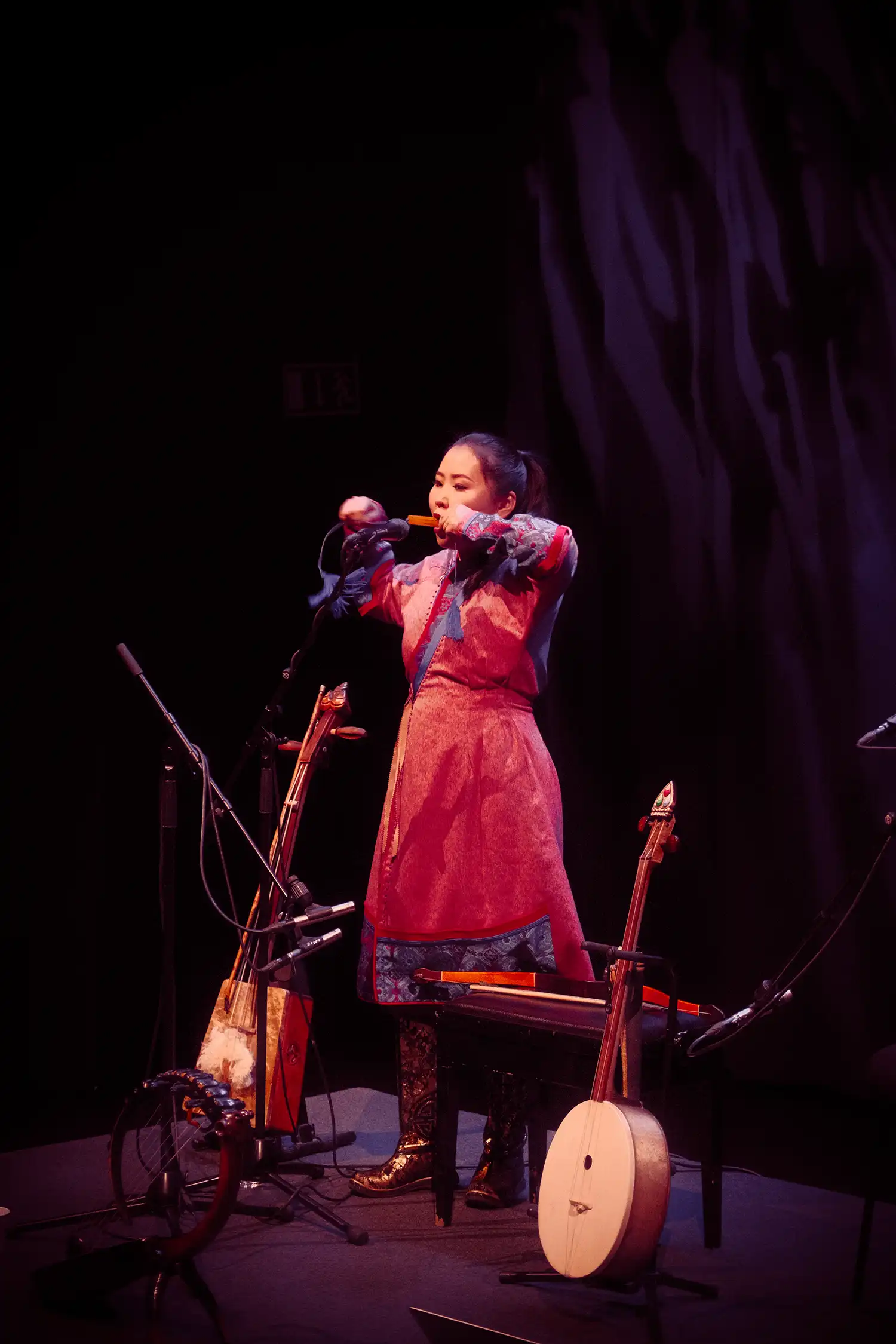
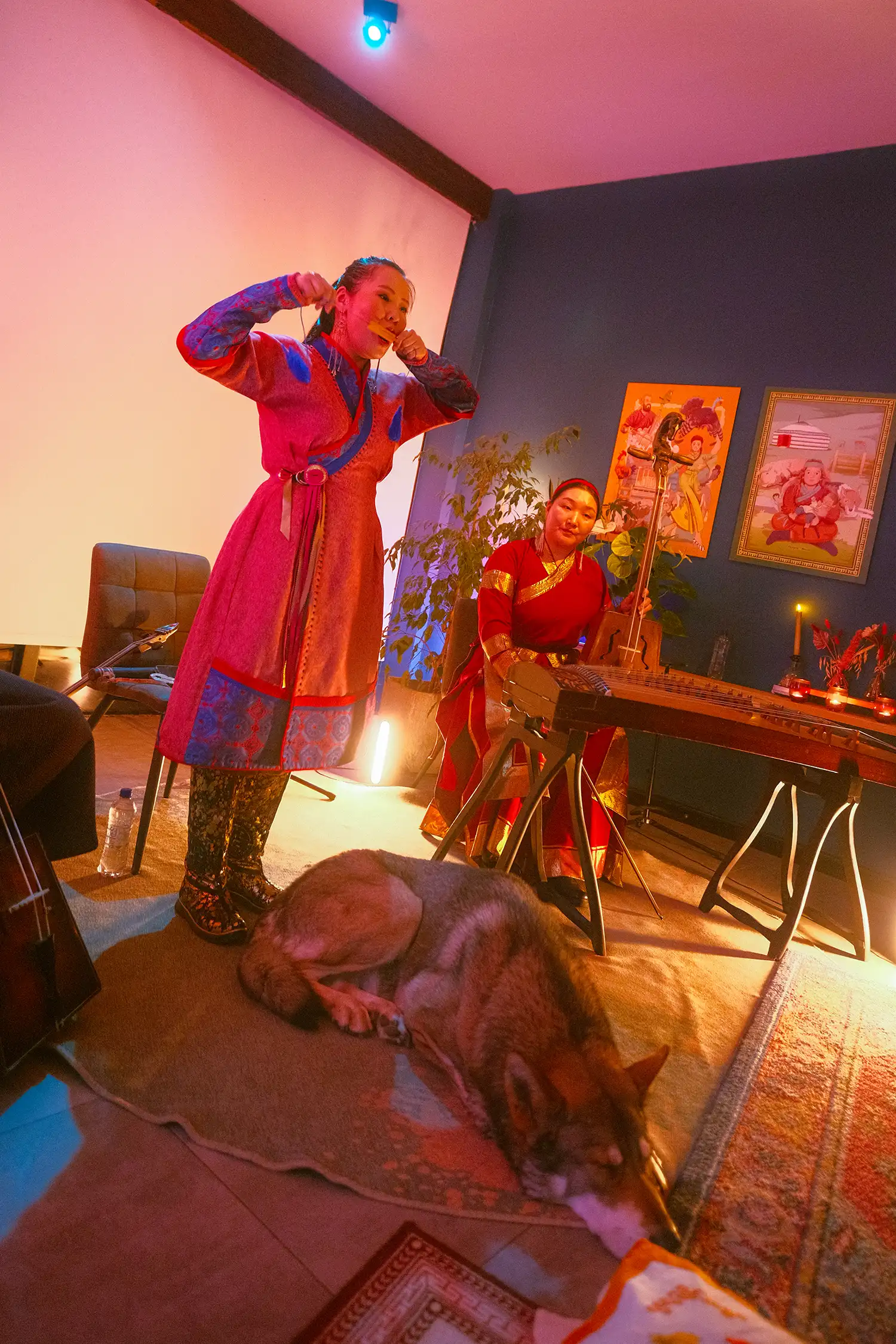
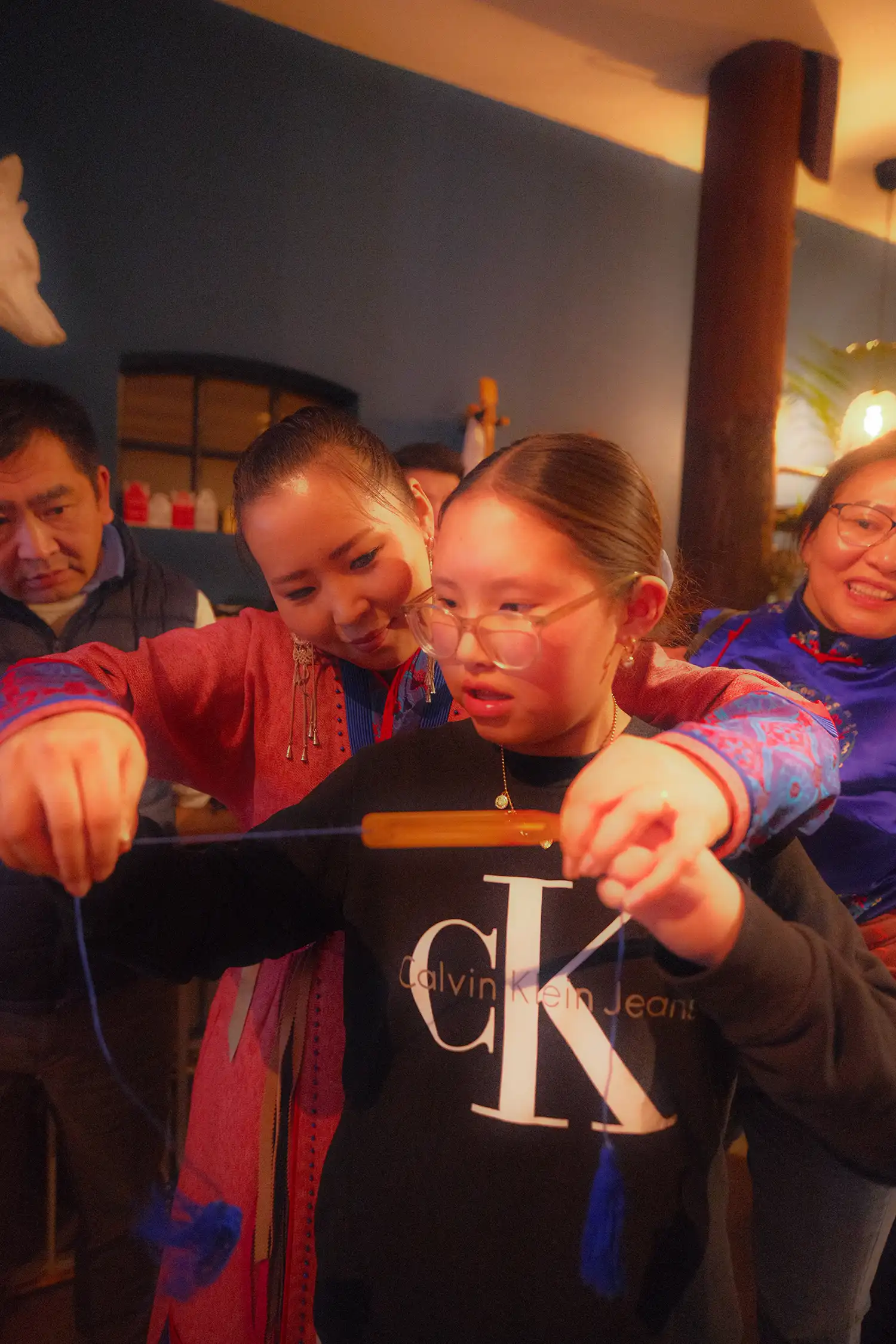
Later, she demonstrated all the instruments she plays: Morin Khuur (horsehead fiddle), Ikel, jaw harp, Tsuur (flute), Tovshuur, and the Altai Harp. She also demonstrated and explained various throat singing techniques. After that, she worked hands-on with the participants to practice the basic principles of Mongolian throat singing.
And I underestimated that day… Just a bit
On a day like this, I suddenly realized: everything landed on my plate. Welcoming guests, preparing the room, checking technology (TV/laptop/presentation), translating and assisting, running errands in between, organizing lunch and dinner for 25 people, cooking while the program continued… and on top of that, handling all the small questions, uncertainties, practical matters: and making sure Zolzaya felt supported. Normally I do these tasks together with Saran, but in this case it was simply not possible to do this part of the tour together.
Thankfully, I received some help from the owners of Henosis: Lucas and his partner Lea. After two days in Romainmôtier, we returned to the Netherlands: by train to Geneva, and from there flying back to Amsterdam.
The Netherlands – The Second Part of the Project
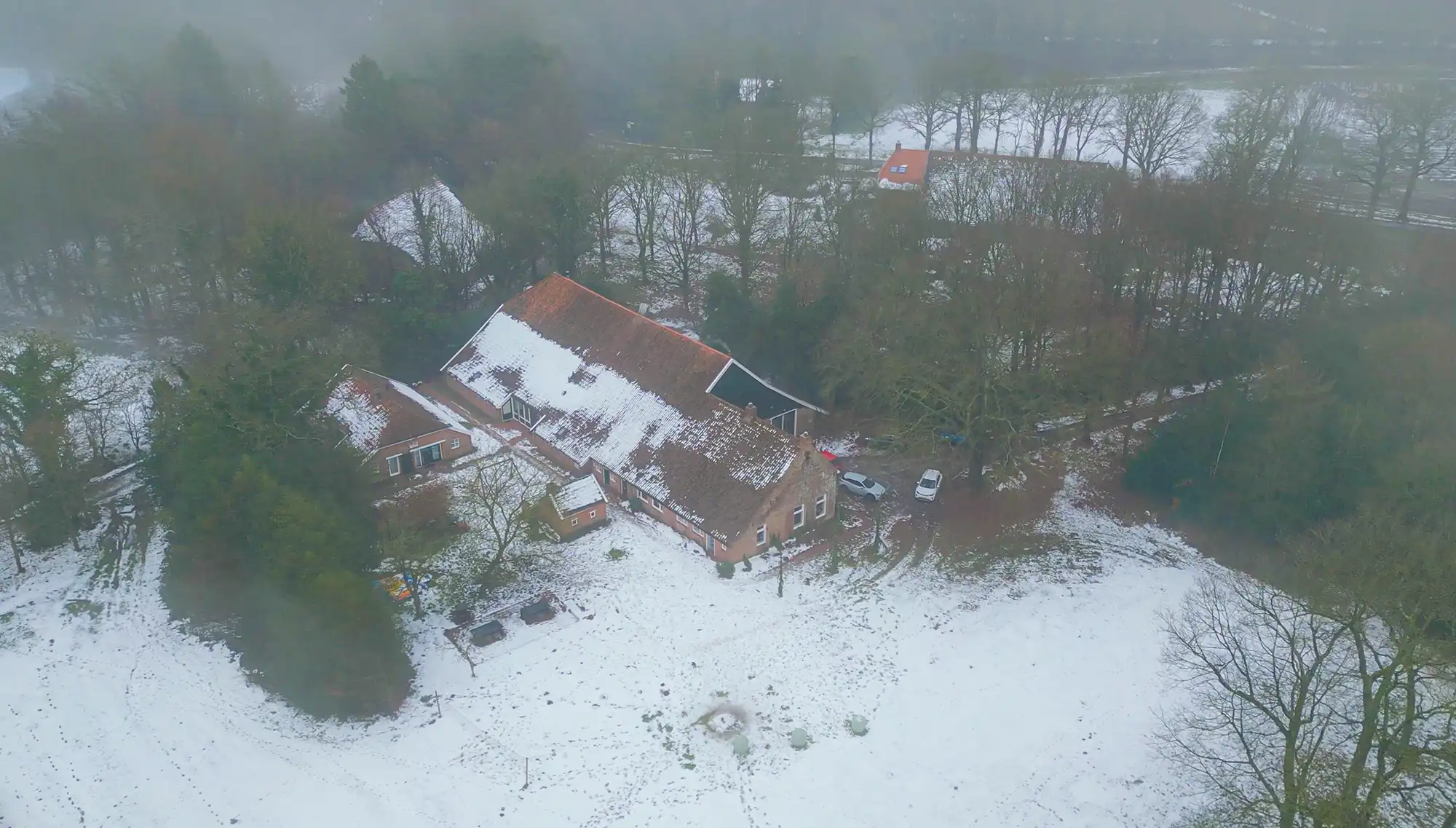
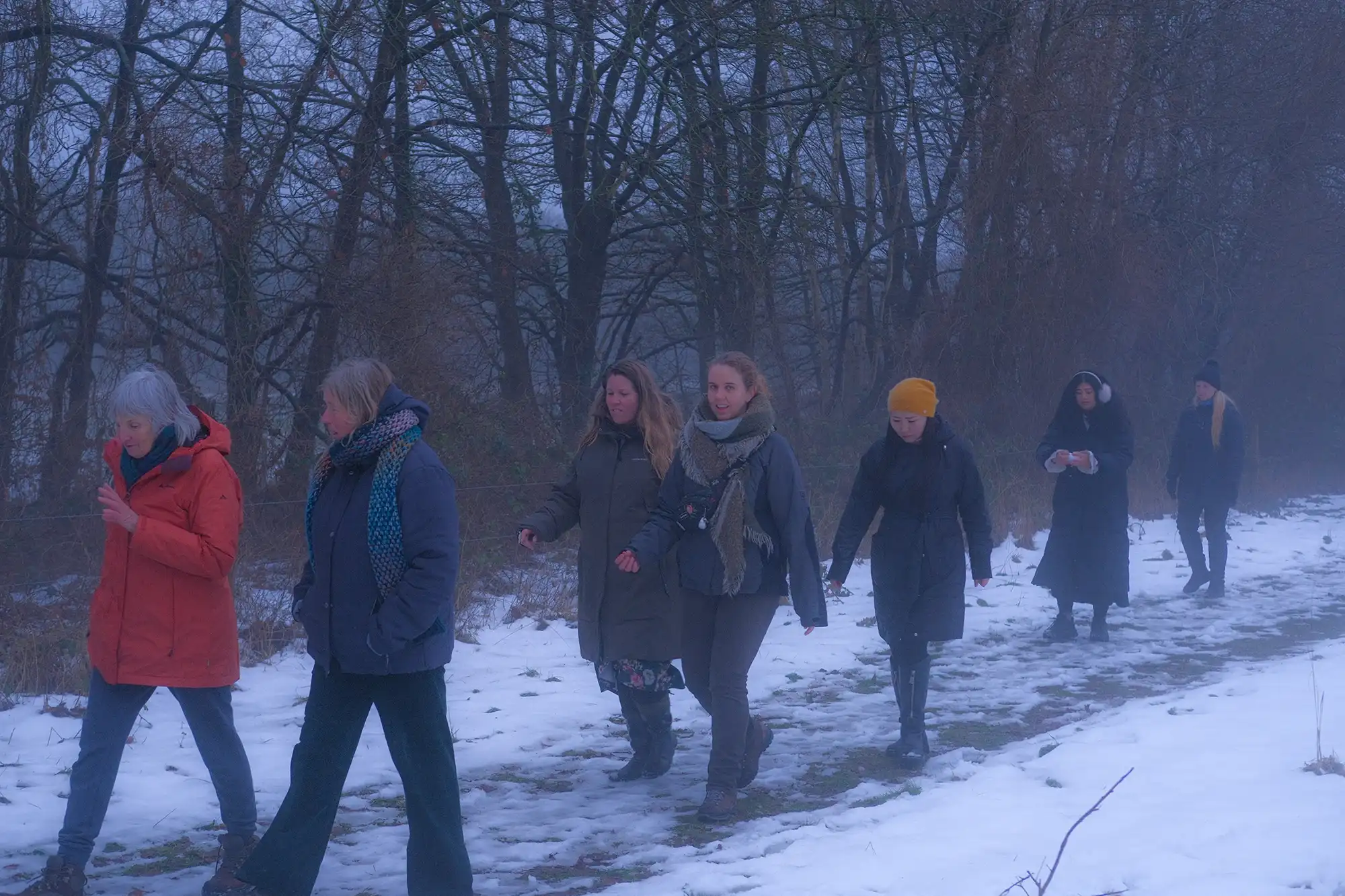
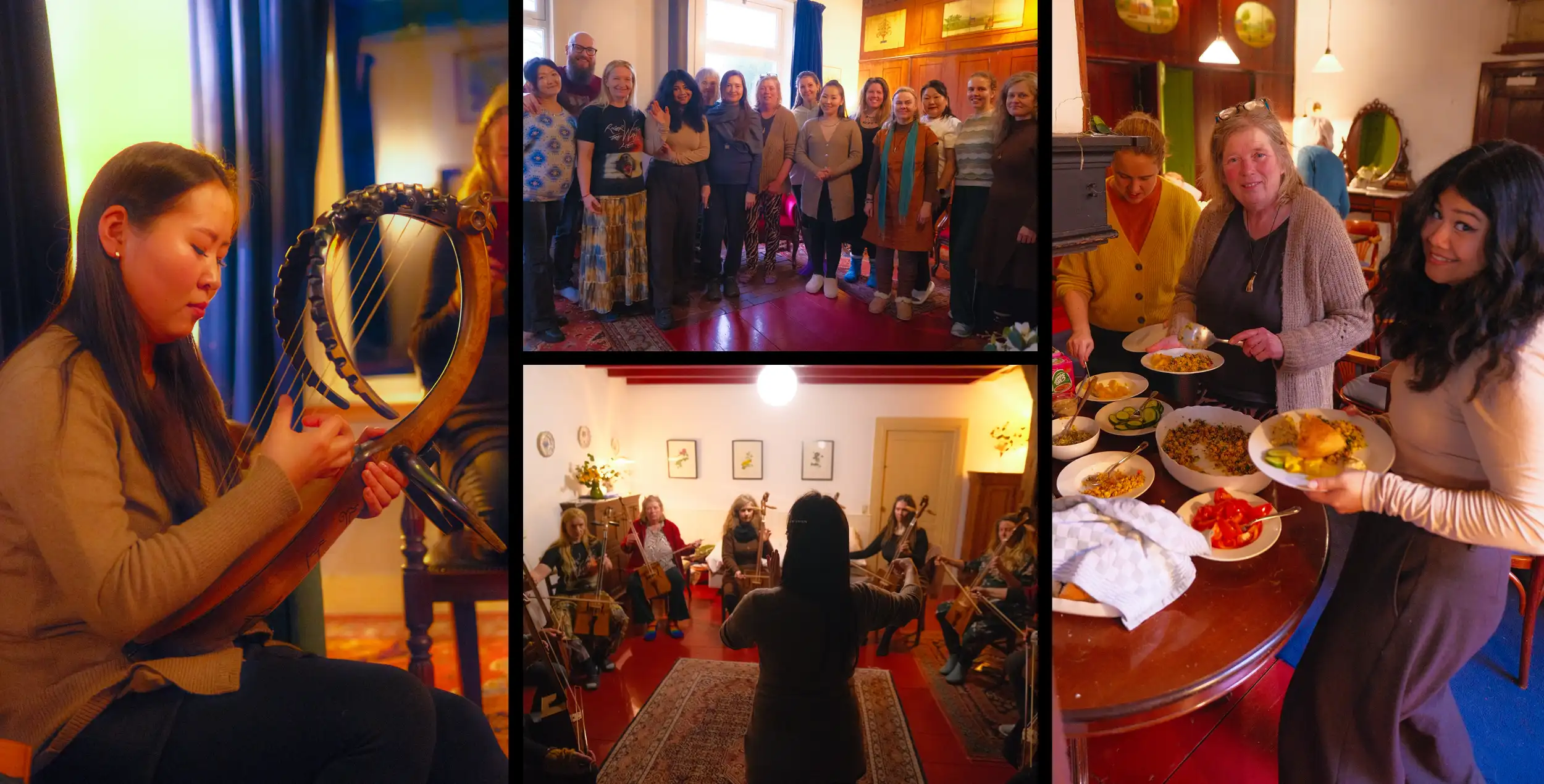
In August 2025, Saran and I organized our first Mongolian music retreat in the Netherlands, at a beautiful 19th-century farmhouse belonging to Romantische Rijksmonumenten in Ter Wupping (Groningen), surrounded by nature. For this project, it felt special to organize a winter retreat there. With Zolzaya as the teacher. And with female participants only.
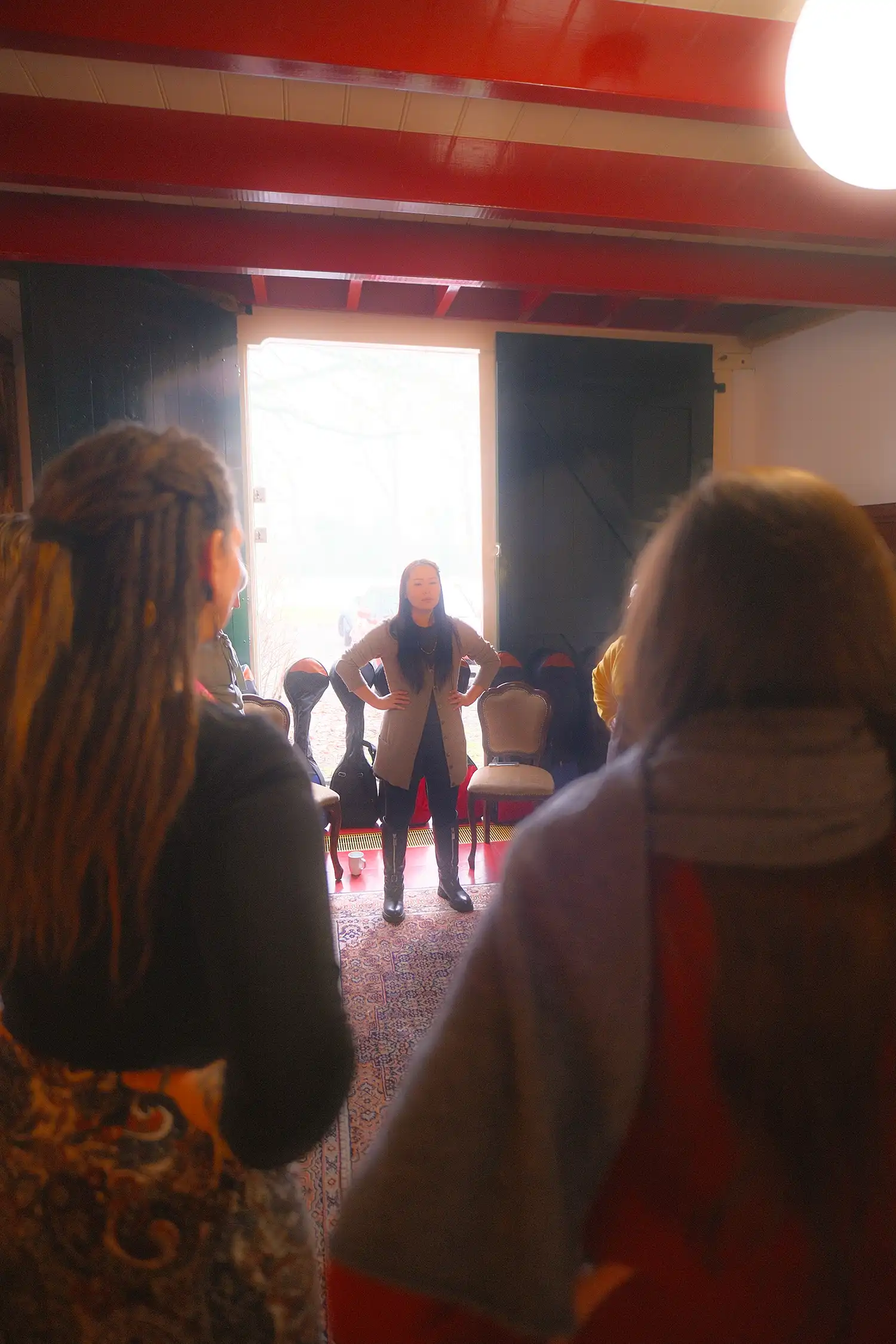
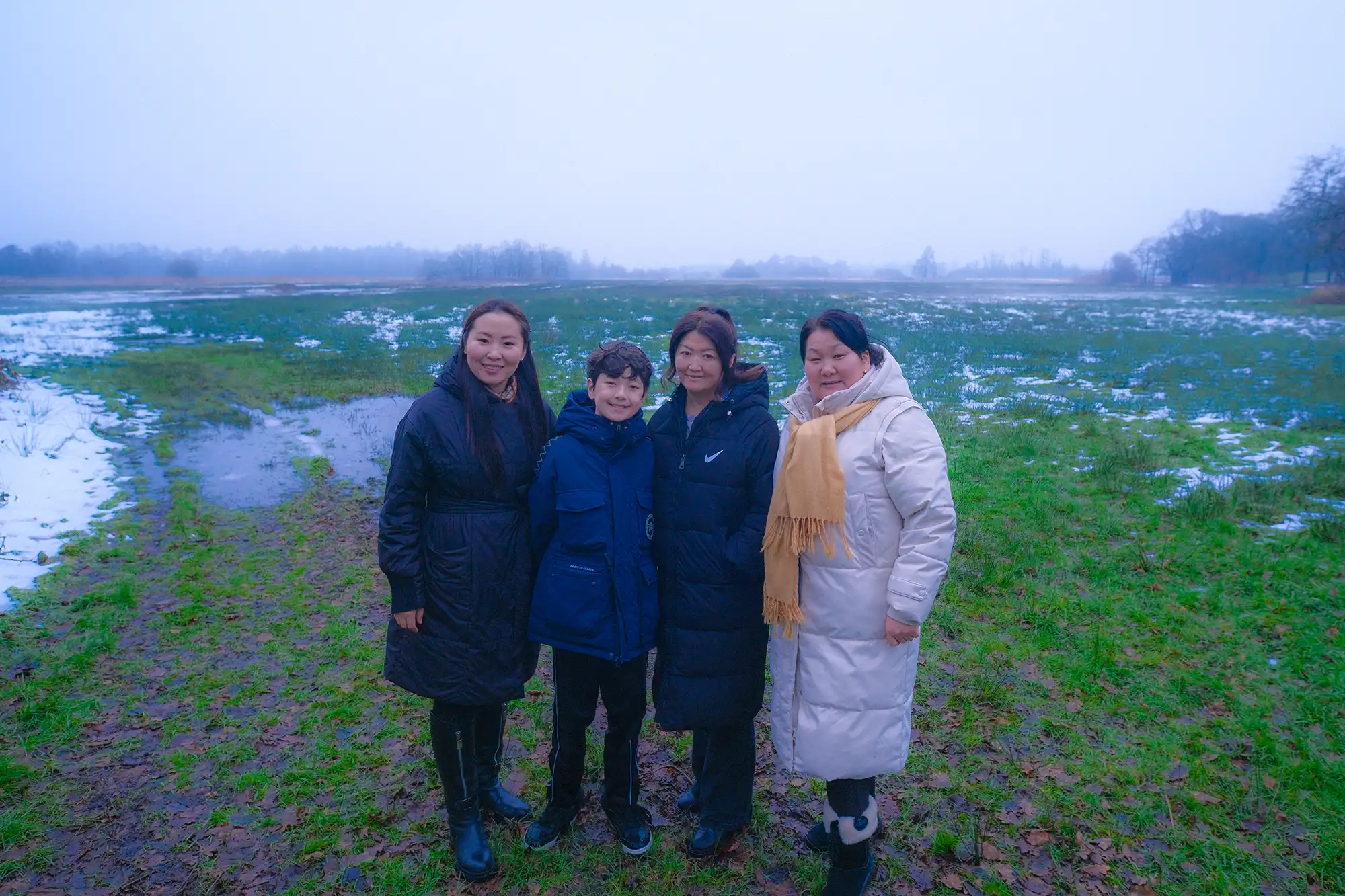
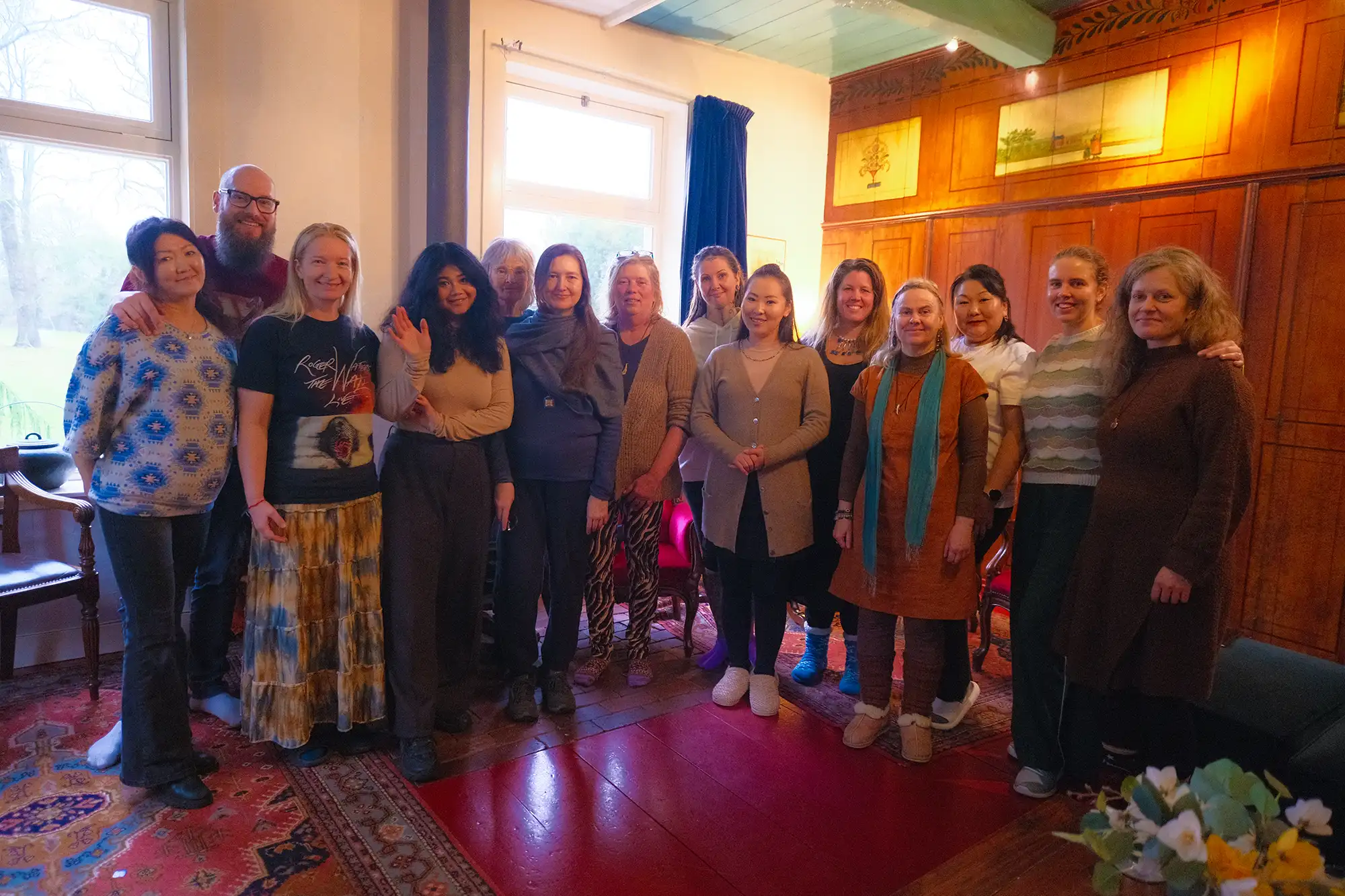
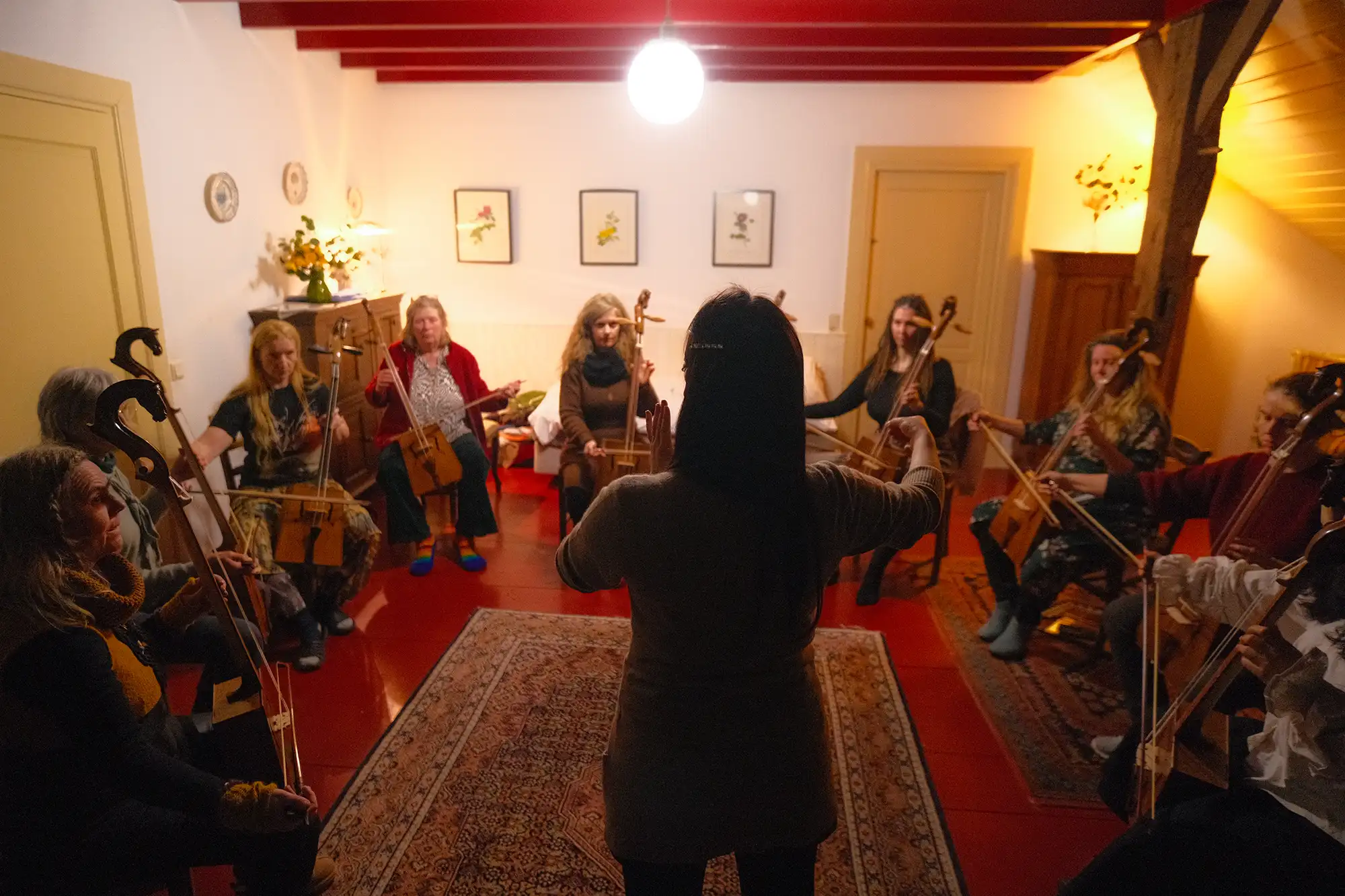
From January 12th to 15th, we worked for four days with 10 participants. And what a group: people from the United States, Sweden, Norway, Belgium, Germany, the Czech Republic, and the Netherlands. This immediately shows how throat singing works: people who don’t know each other, yet feel instantly connected by something that goes deeper than “music”.
This part was not easy either. The extreme weather required a lot of logistics: picking people up from train stations, driving back and forth—and yes… sometimes literally getting stuck in the snow. But we live in the countryside, and there is always someone who comes to pull you out, haha!
A warm beginning, and then: Getting to work
After a wonderful dinner prepared by Saran and our friend Myadag, Zolzaya and I opened the retreat with a short presentation about Mongolian throat singing and the goals of these days. Then Zolzaya shared her musical art in the warm living room of the farmhouse. The rest of the evening was free, and the next day we really got to work.
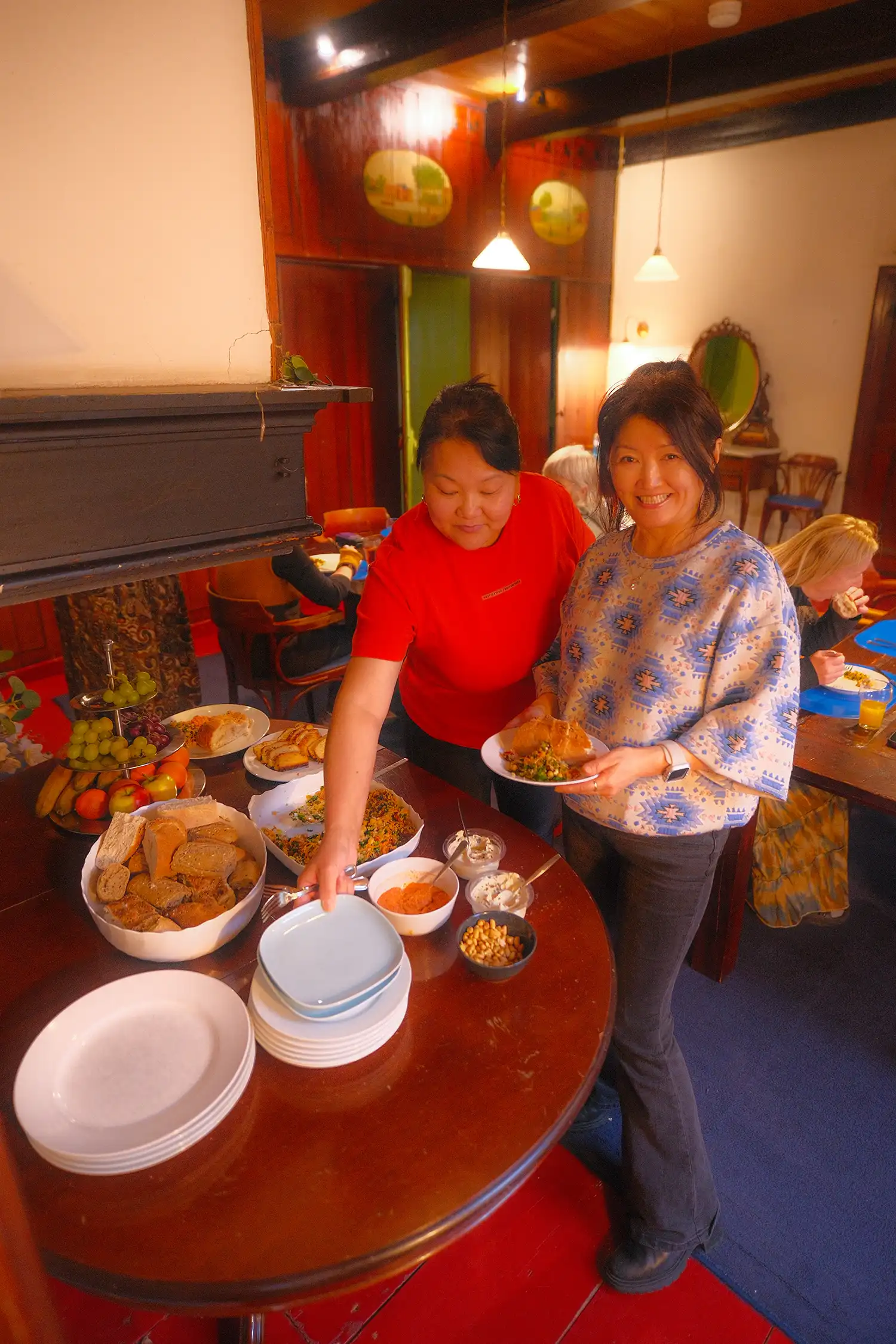
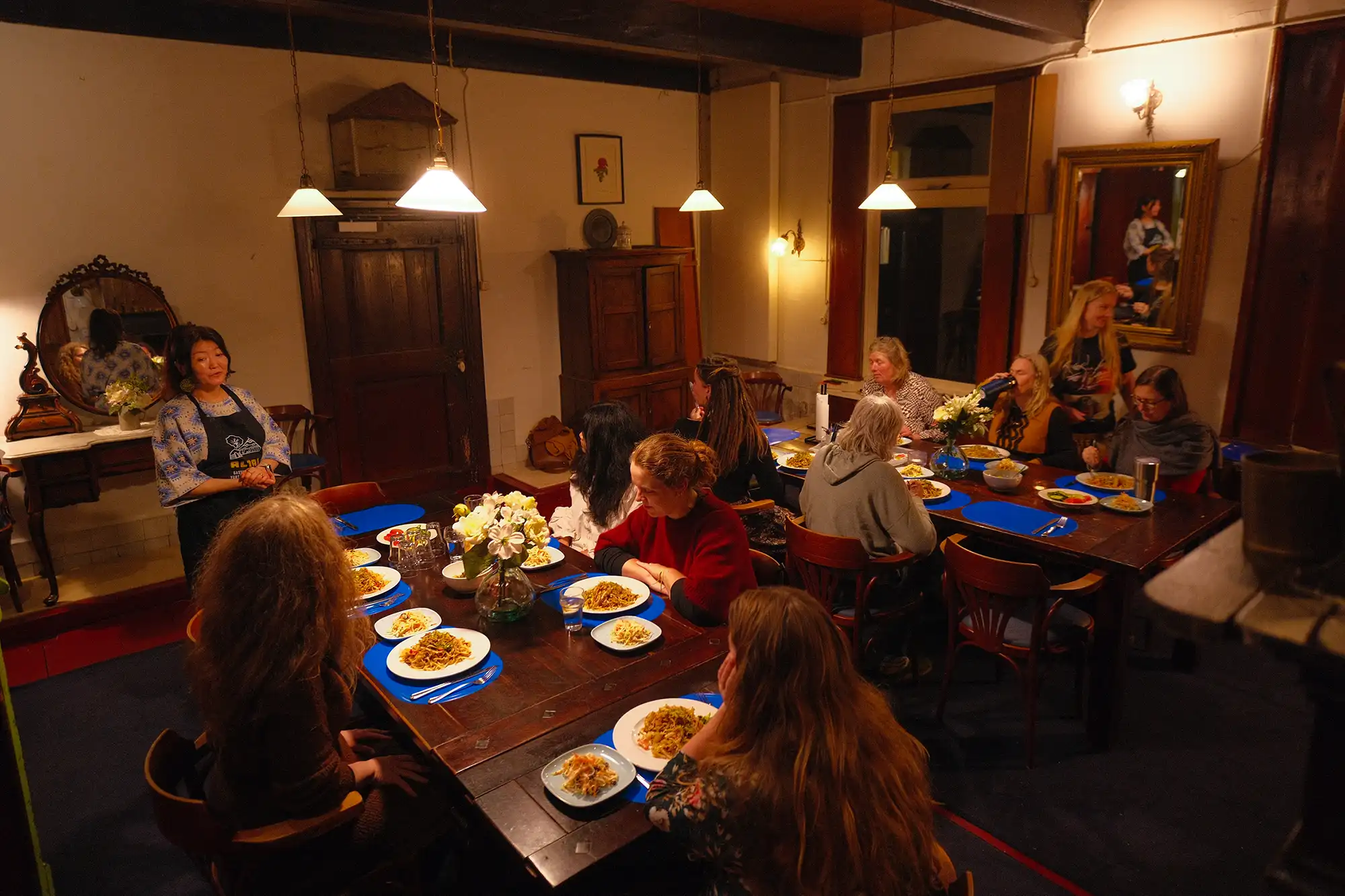
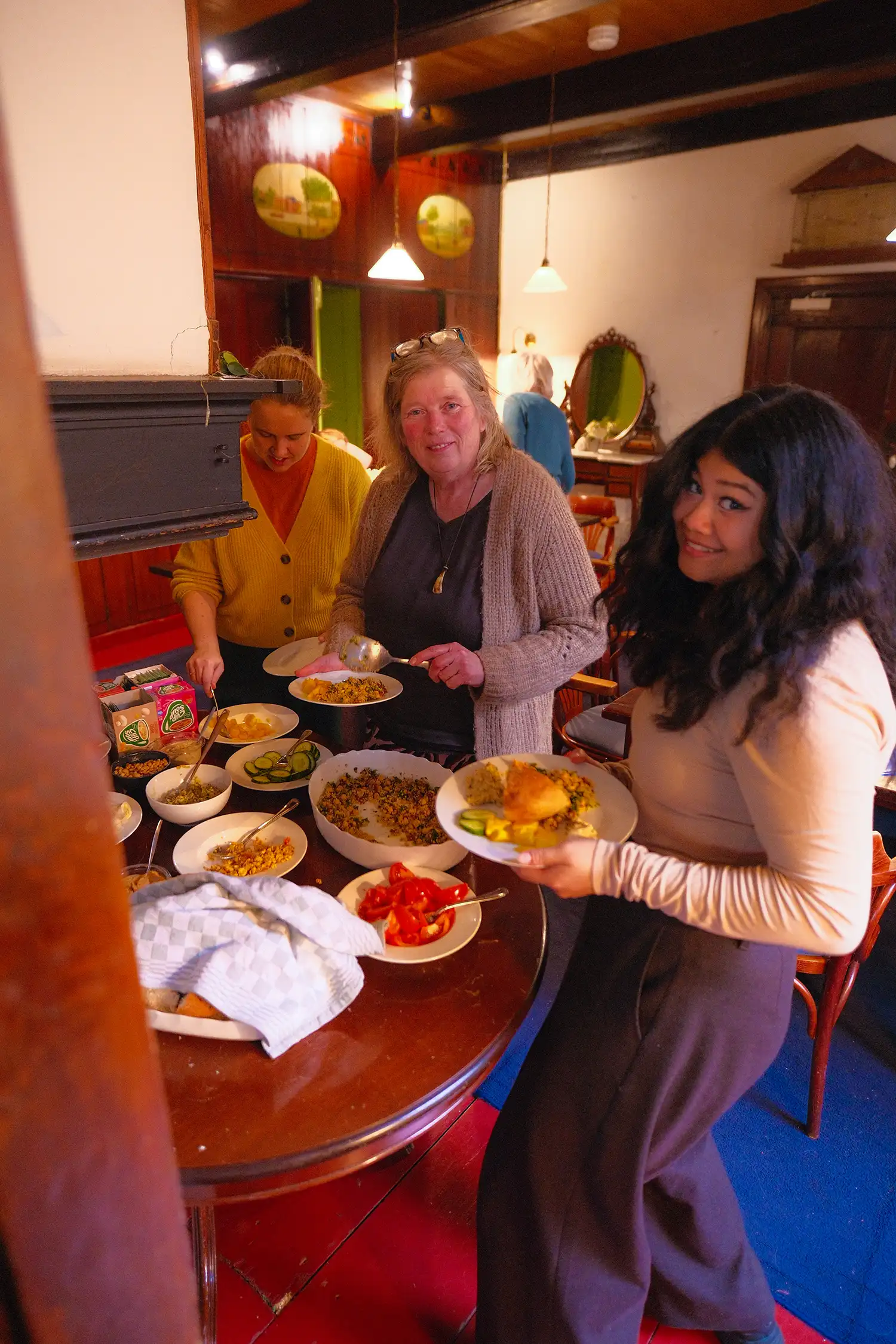
Behind the scenes, Saran and Myadag kept the retreat running: breakfast, lunch, dinner, snacks. Because a retreat without good food simply does not exist: it is a crucial part of the atmosphere and of feeling “at home”.
Zolzaya as a teacher: Strong and Passionate
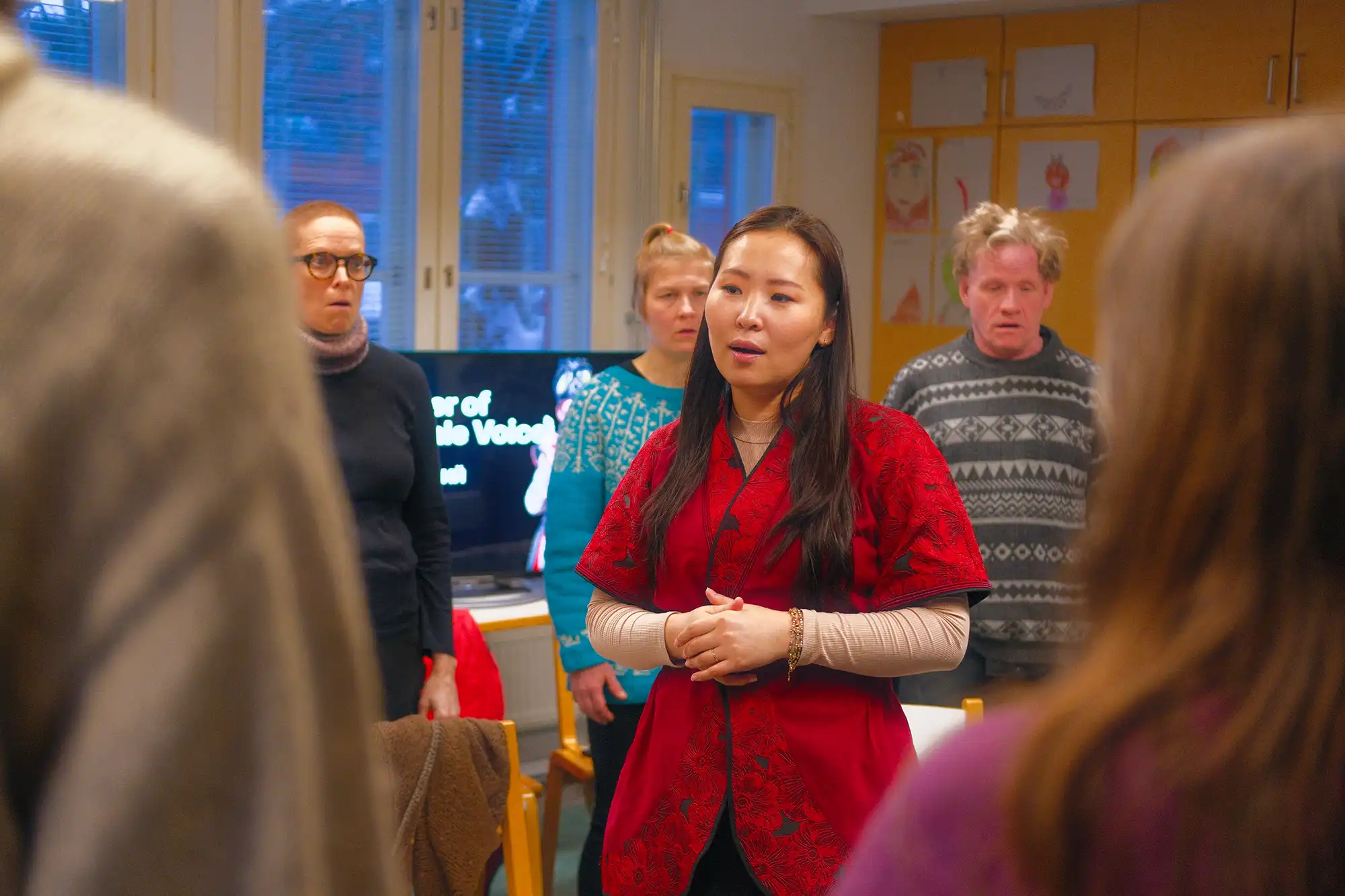
Participants quickly noticed: Zolzaya is a strong teacher. She pushes you to continue. And she does that not only through exercises, but also through her story. When she first said she wanted to become a throat singer, there was little support. Her two older brothers initially thought she might be better off choosing something else. Her mother did support her. And that was a key moment.
Then came years of perseverance at university, surrounded by young men and male teachers. She described it as a period of endurance and many tears. And yet she now says: “I’m glad I went through that... otherwise I wouldn’t be standing here today.” That deeply inspired several participants.
The farmhouse itself is beautiful: many bedrooms, each with a private bathroom and toilet, a lovely dining area, and, cherry on top, the old barn has been transformed into a wellness space with a sauna, hot tub, and swimming pool. Participants could recharge whenever they needed.
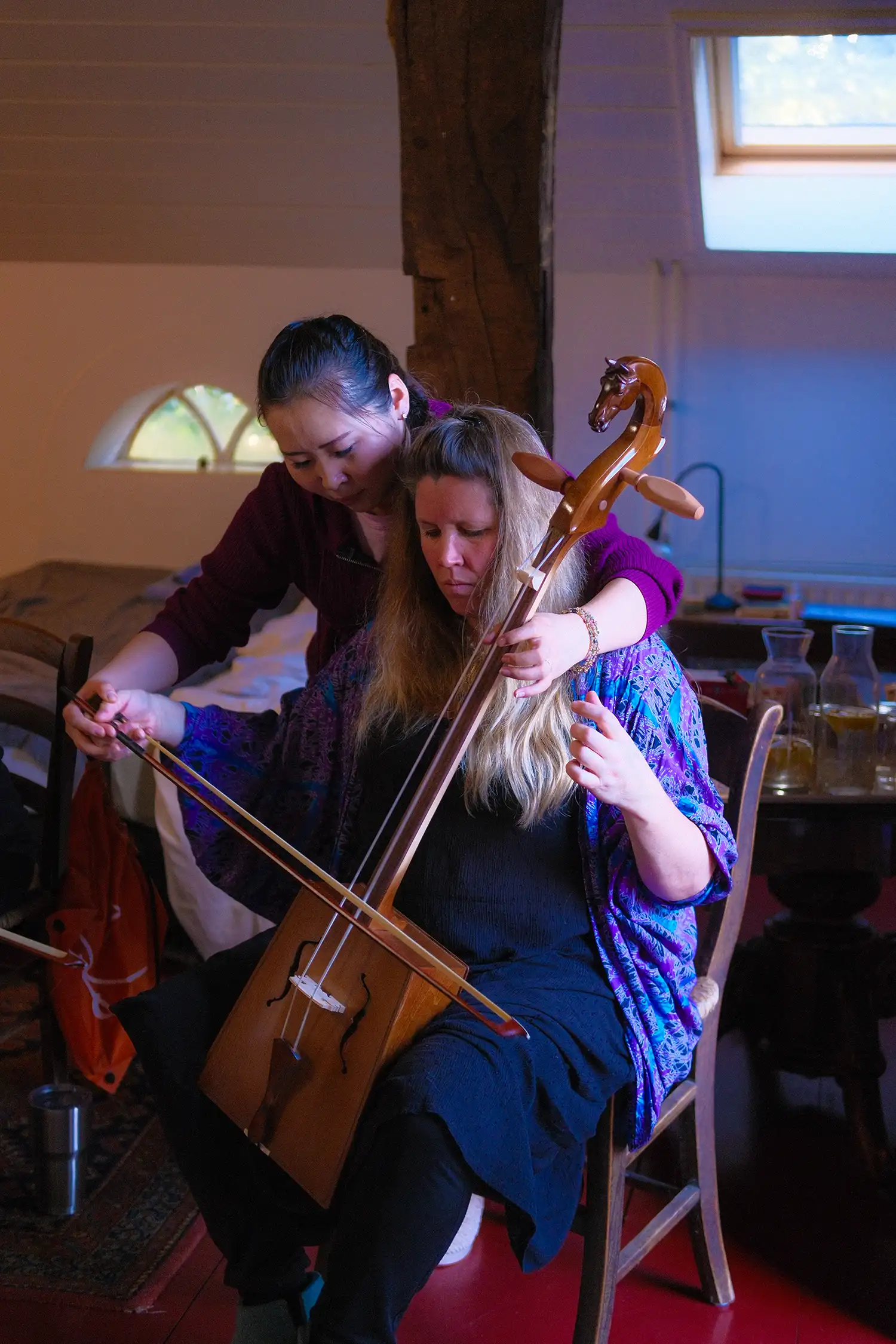
As with previous retreats, we invited Jade, a professional yoga teacher, to guide a gentle session. Saran, Zolzaya, and I enjoyed it as well: and it was necessary, because throat singing workshops truly demand a lot from both body and mind. We also included sessions on the basics of the Morin Khuur, so the tradition could be experienced not only through the voice, but also through the instrument.
And then suddenly, four days were over. During the farewell dinner, we shared experiences. For Saran and me, it was deeply meaningful to hear exactly what we had hoped for: that participants felt they had experienced something truly unique: something you don’t just find anywhere. And we know: they will carry this with them, and pass it on in their own way.
Finland – The Third Part of the Project
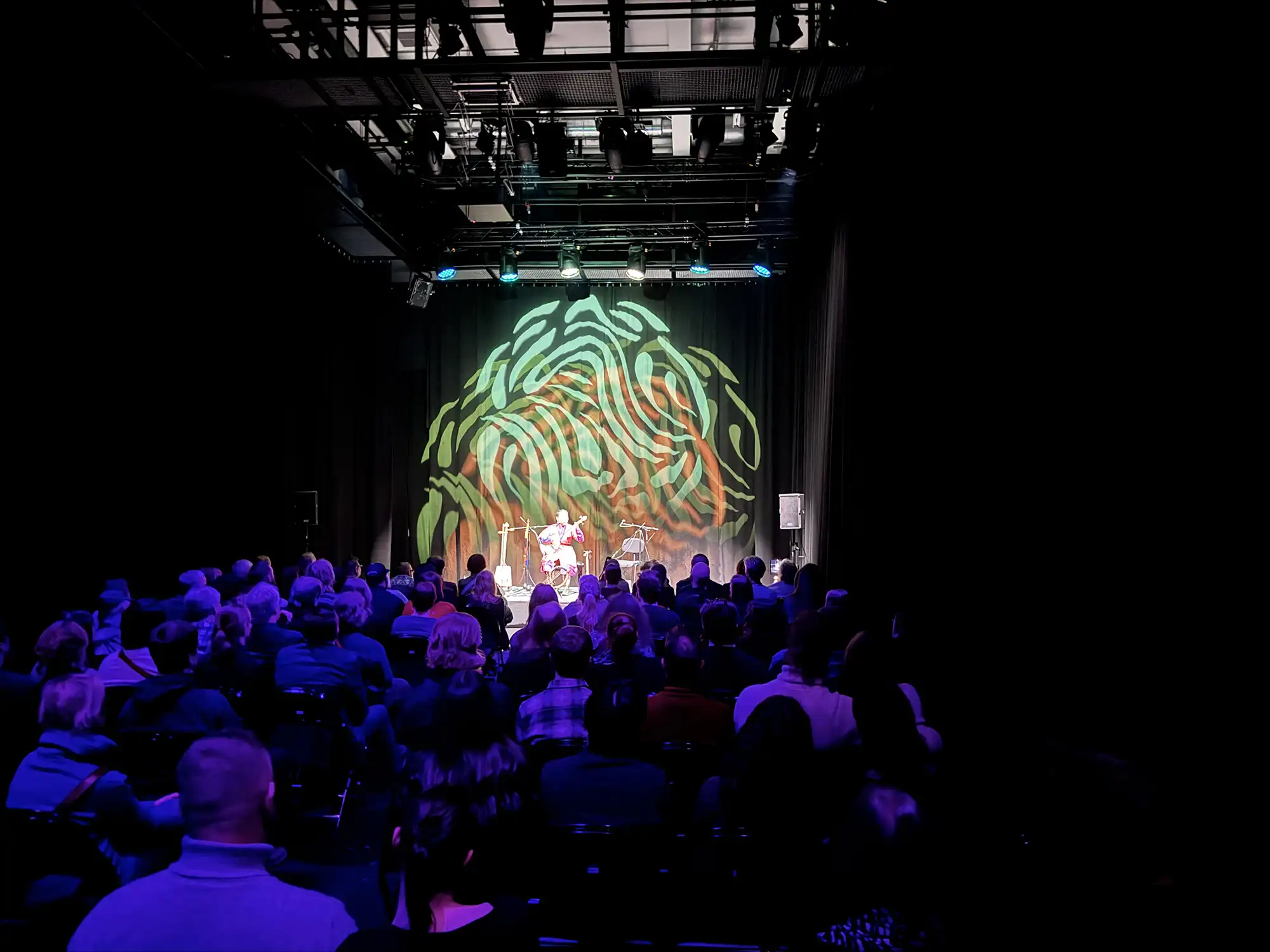
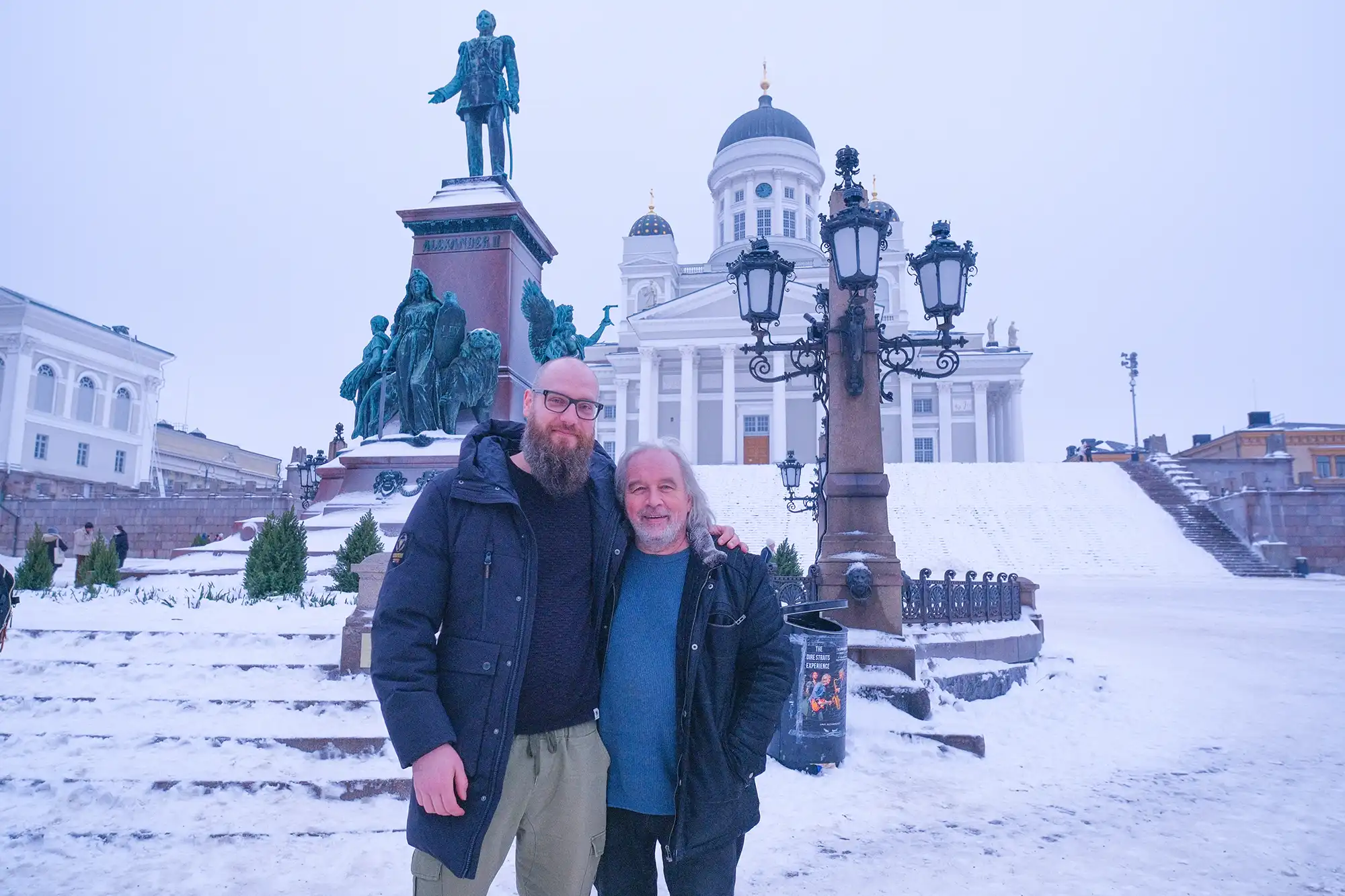
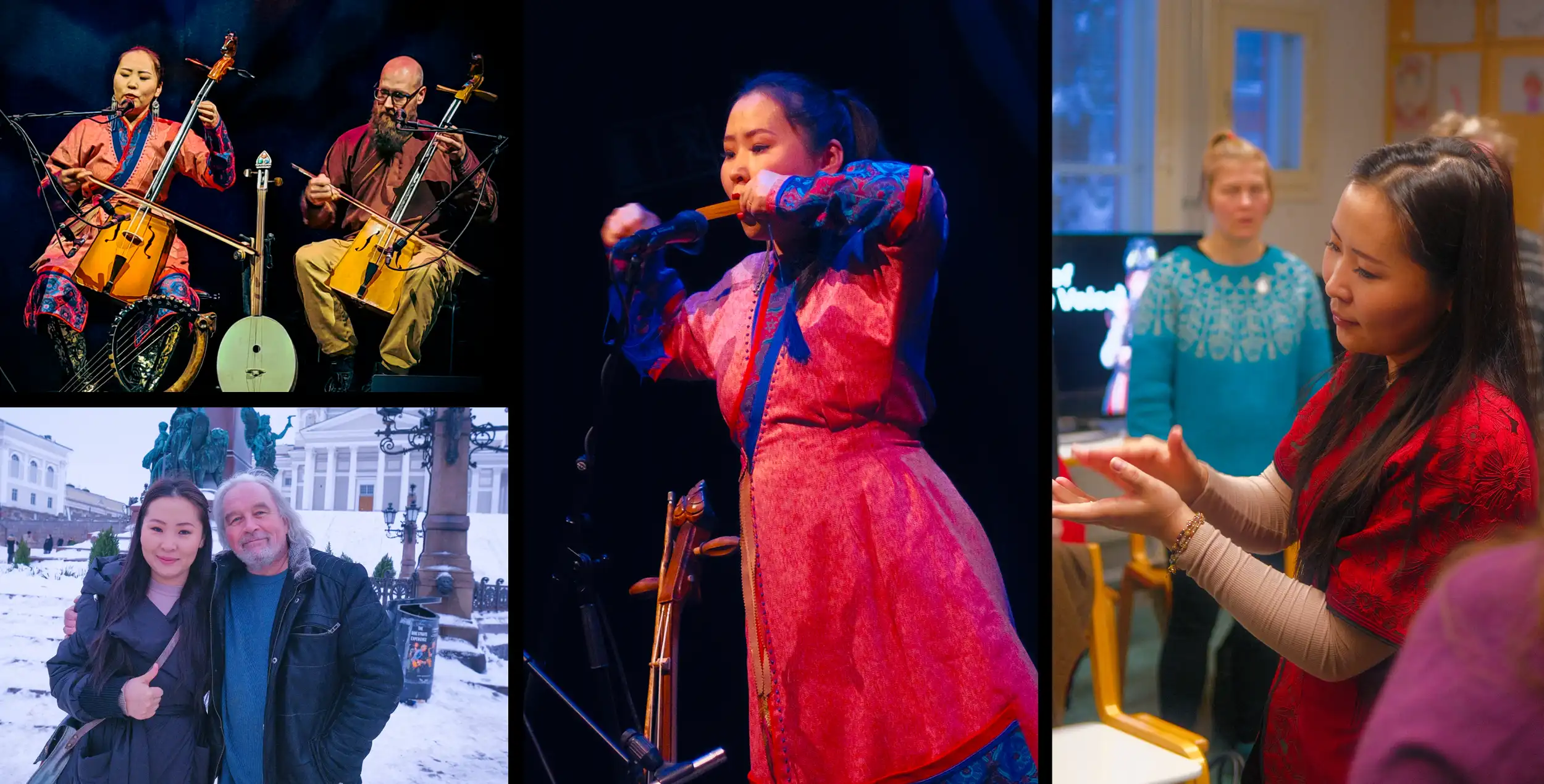
After the Netherlands, we traveled on to Finland. Together with Sauli Heikkilä, co-founder of the Finnish Throat Singing Association, we organized a solo concert for Zolzaya in Helsinki on Saturday, January 17th, followed by a workshop on January 18th.
Zolzaya told me she was quite nervous about this. And understandably so: a solo performance is intense, and as a female throat singer you sometimes need to pace yourself a bit differently. So we built a program in which I could speak between songs: making the performance less “non-stop” and giving the audience more context.
Sauli: An archive of Throat Singing History
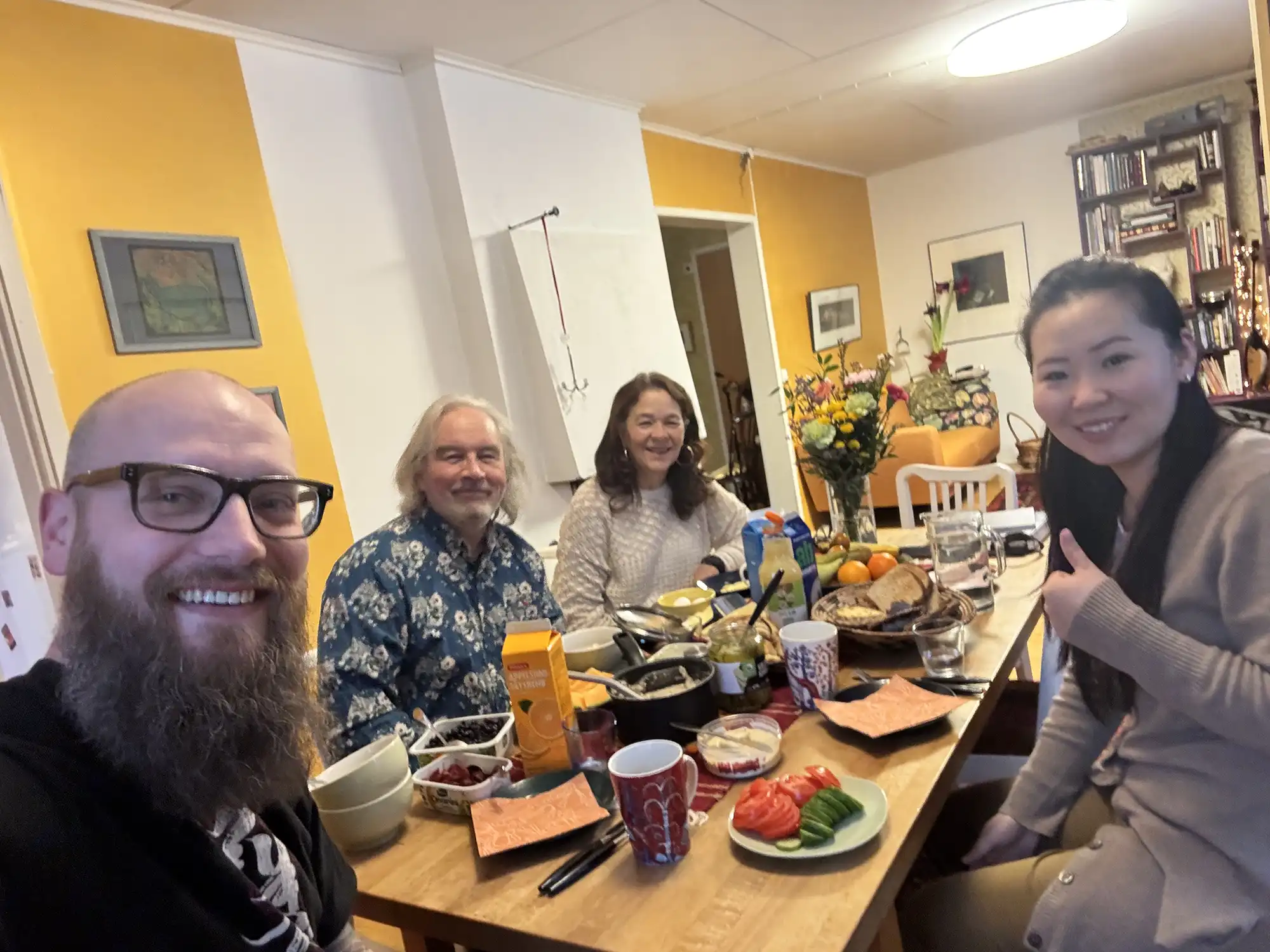
Sauli picked us up at the airport. Possibly one of the nicest people I know: social, kind, easy-going. We had lunch together, and at his home he showed us a remarkable collection: an archive filled with newspaper clippings, posters, postcards, and projects: decades of history. He also founded the Tuvan ensemble Cedip Tur, still manages the Finnish throat singing magazine Höömei, and wrote the book Kiehtova Kurkkulaulu, among others.
The Concert at Caisa
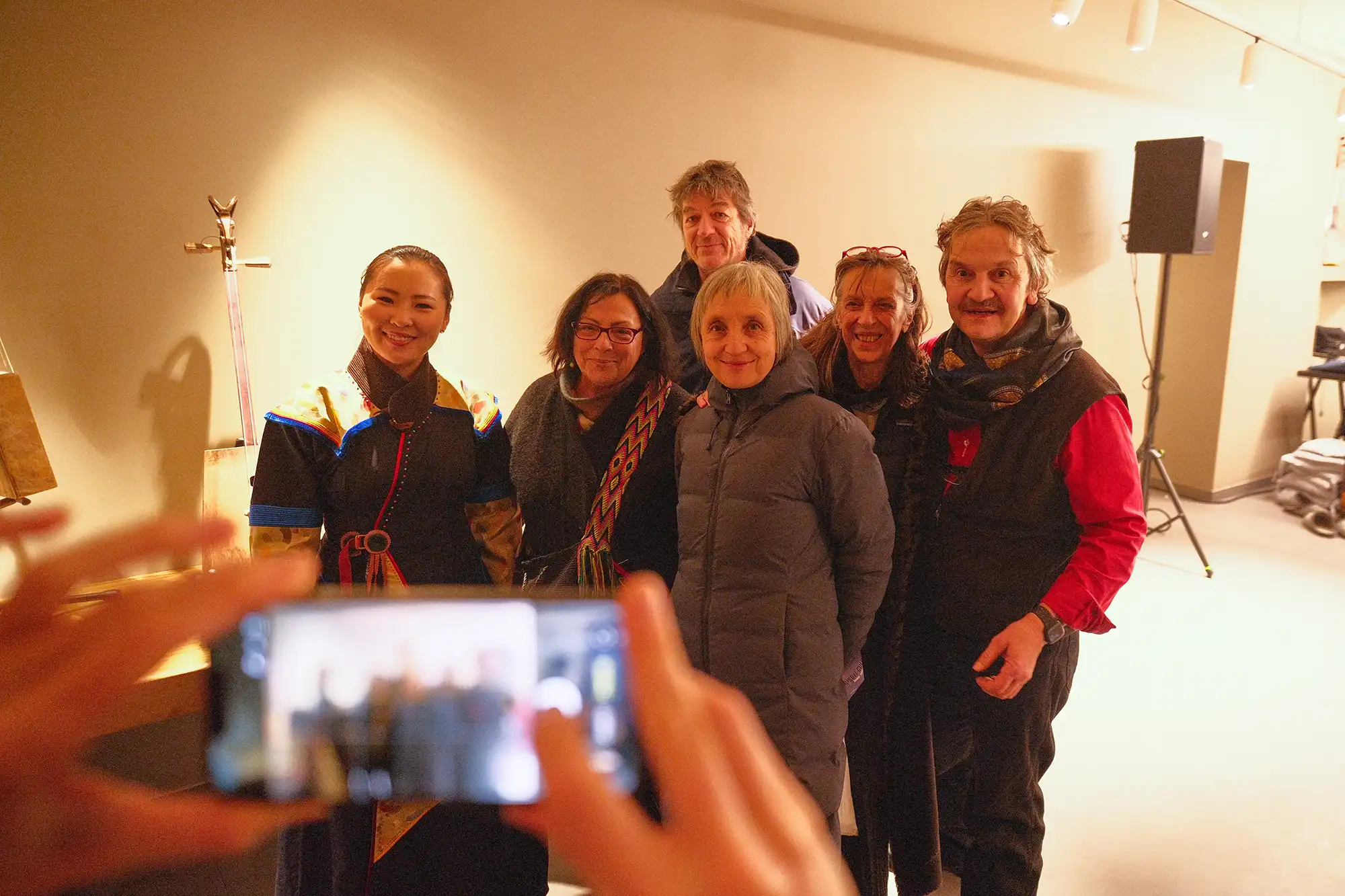
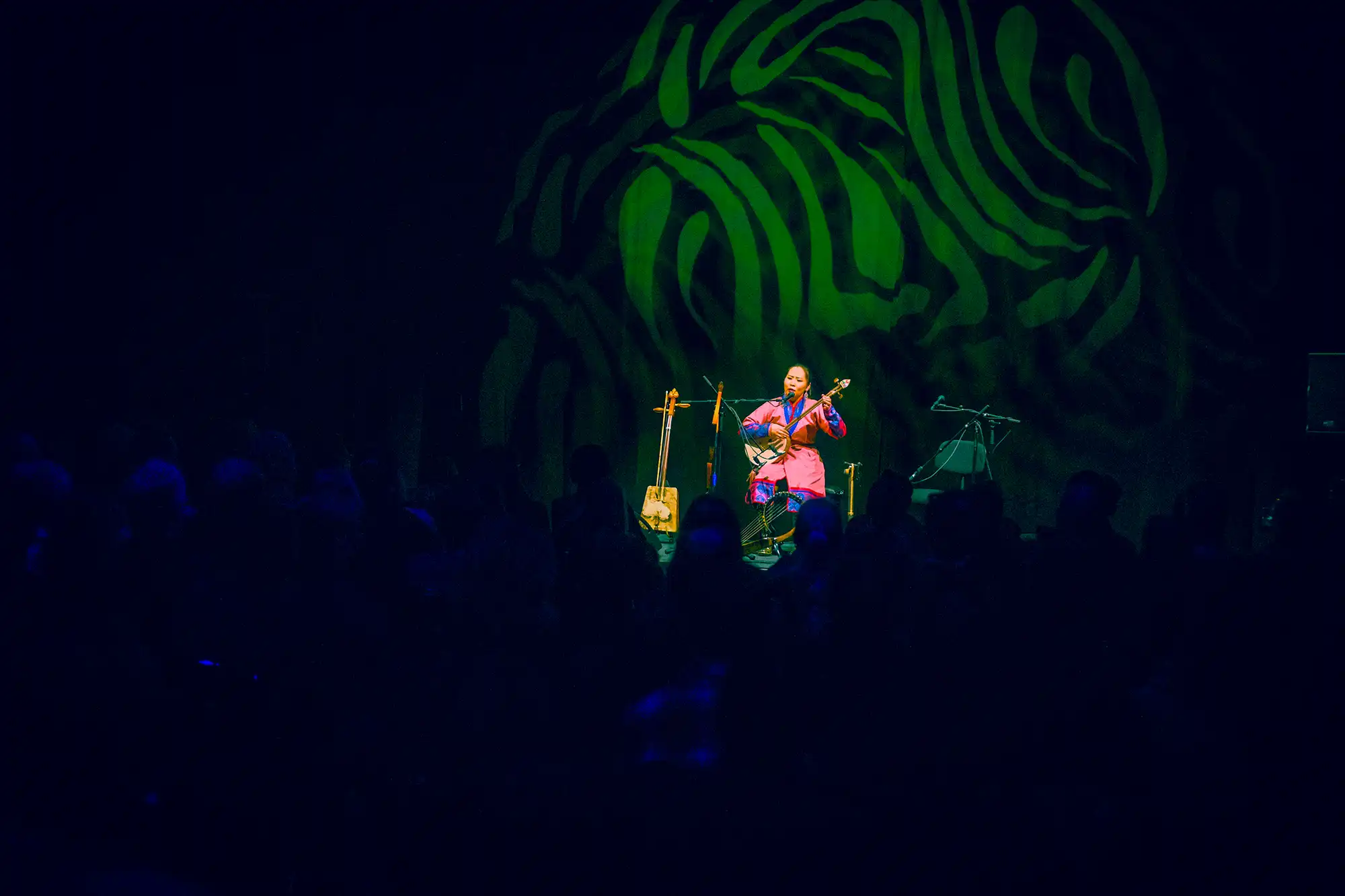
At Kulttuurikeskus Caisa, we prepared everything. The soundcheck went well: and then it was time. The concert was a success! The audience was visibly moved. Afterward, a woman said to us: “The most beautiful performance I have ever seen in my life.” Later, Sauli received a text message from someone else: “Zolzaya’s voice brought tears to my eyes, so beautiful.”
And yes… that is exactly what I meant by The Power of the Female Voice. Sauli later said himself: “It was even better than expected.” Zolzaya then asked him why he had trusted me enough to organize this together, even though he only knew her music from short online clips. Sauli laughed and said: “Rowan said you were good, so I trusted that blindly!”
The next day was the workshop: four hours of working on the basic principles. Once again, a very successful afternoon with wonderful participants.
That evening, we sat at Sauli’s home—and yes, in a Finnish house, a sauna is of course essential. There, me and Sauli continued talking about future plans. And that may be the most important part: this project was not only about now, but also about opening doors for the future.
Back Home – Closing with a living room concert
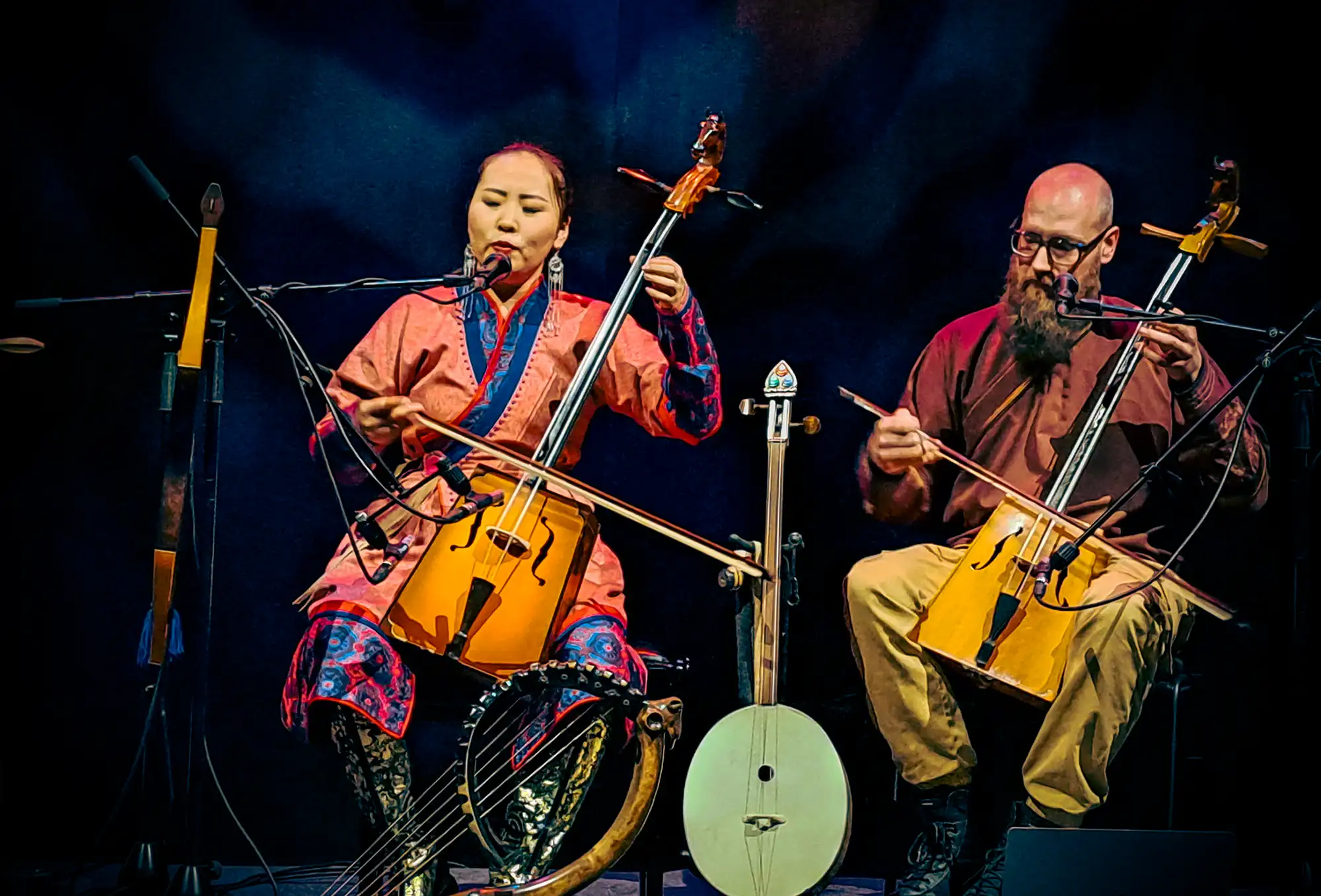
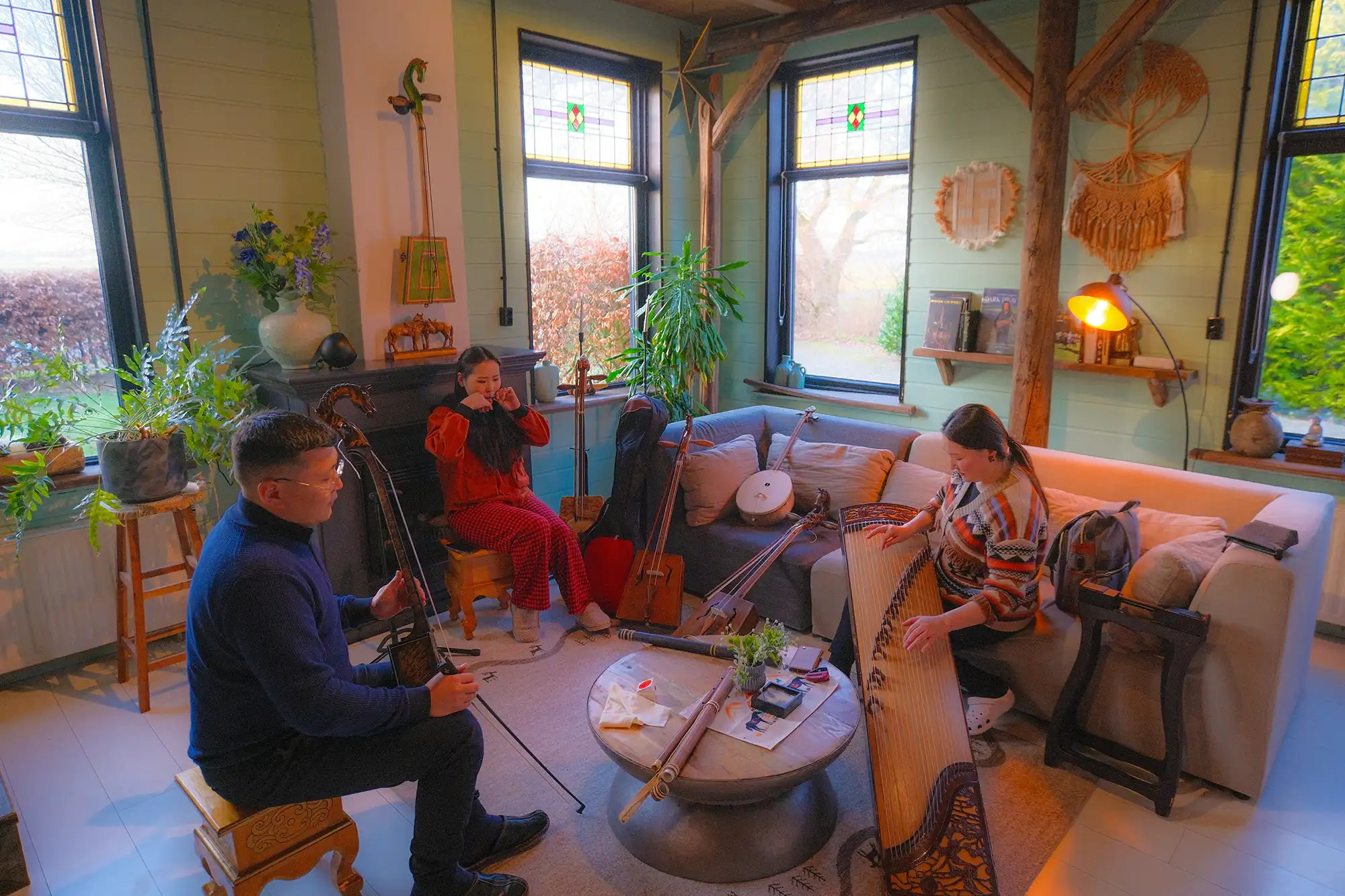
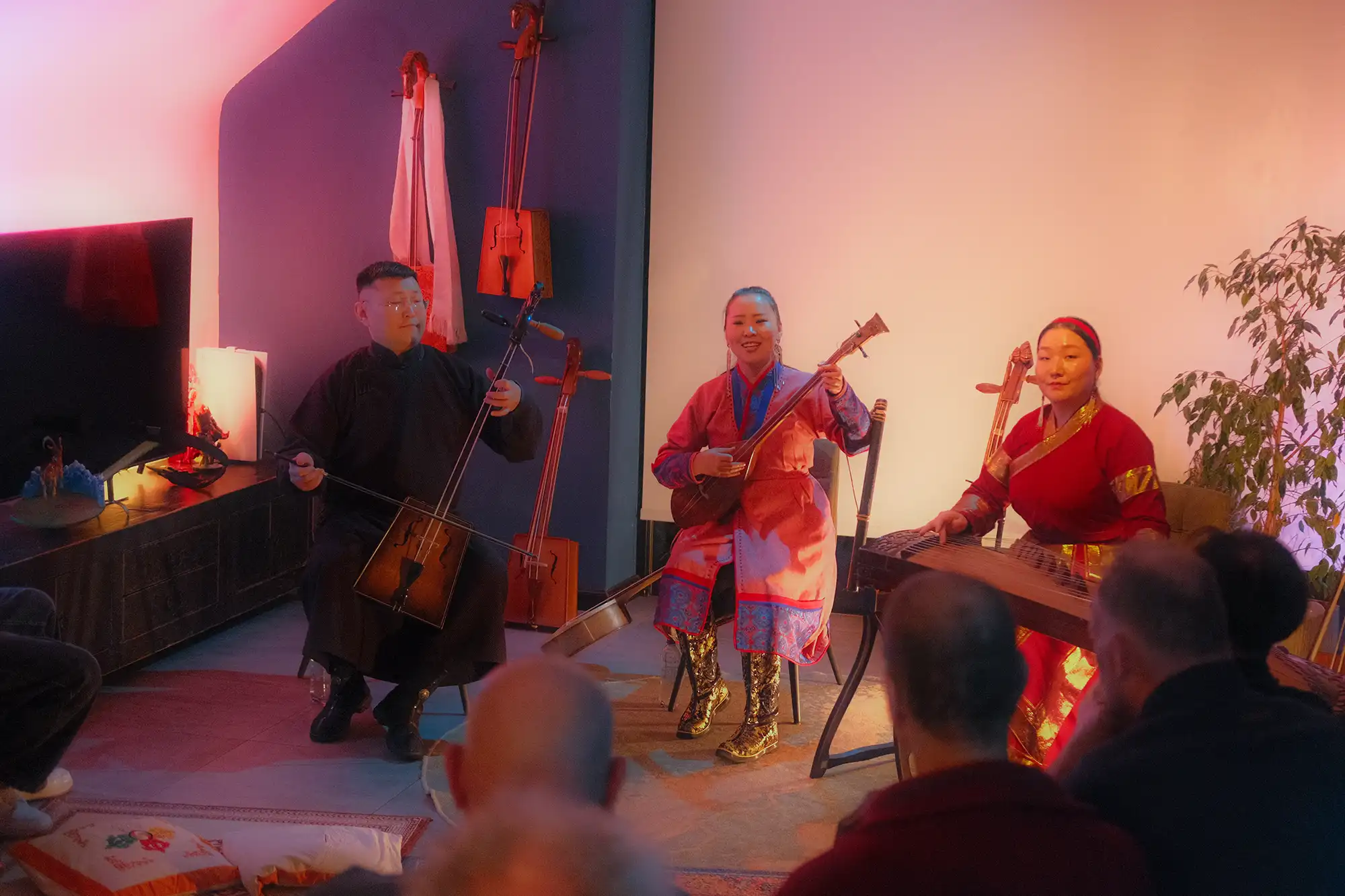
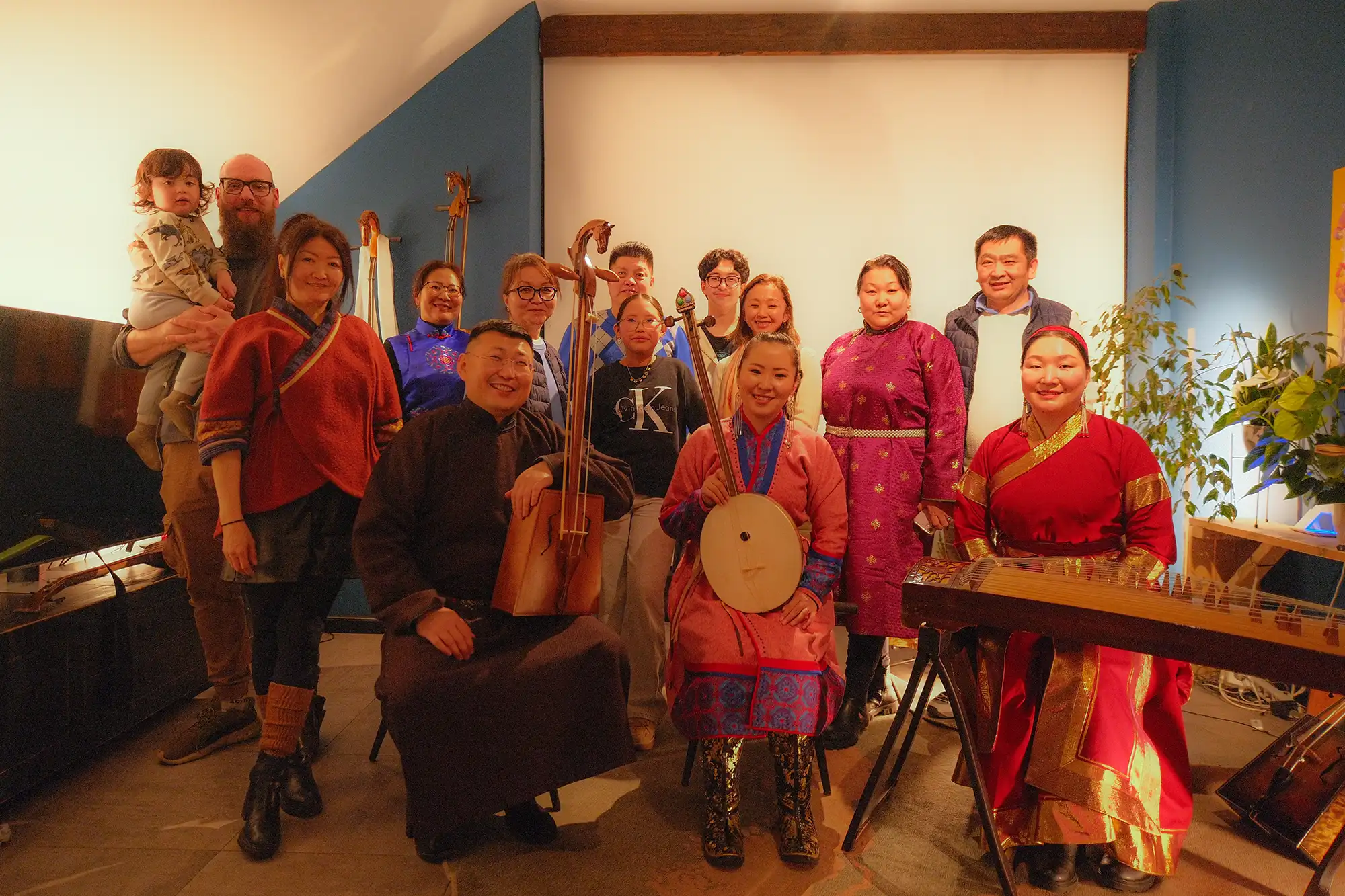
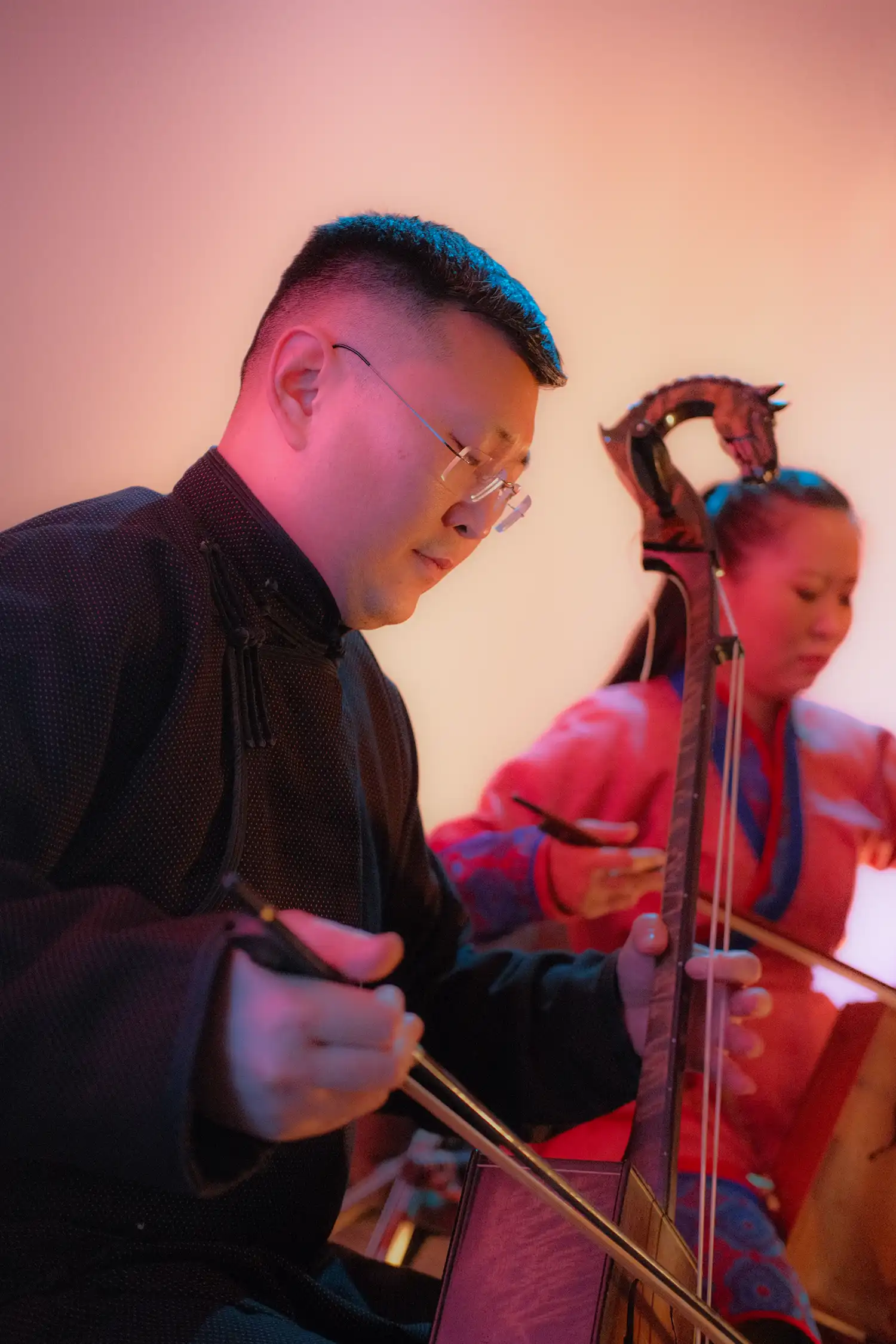
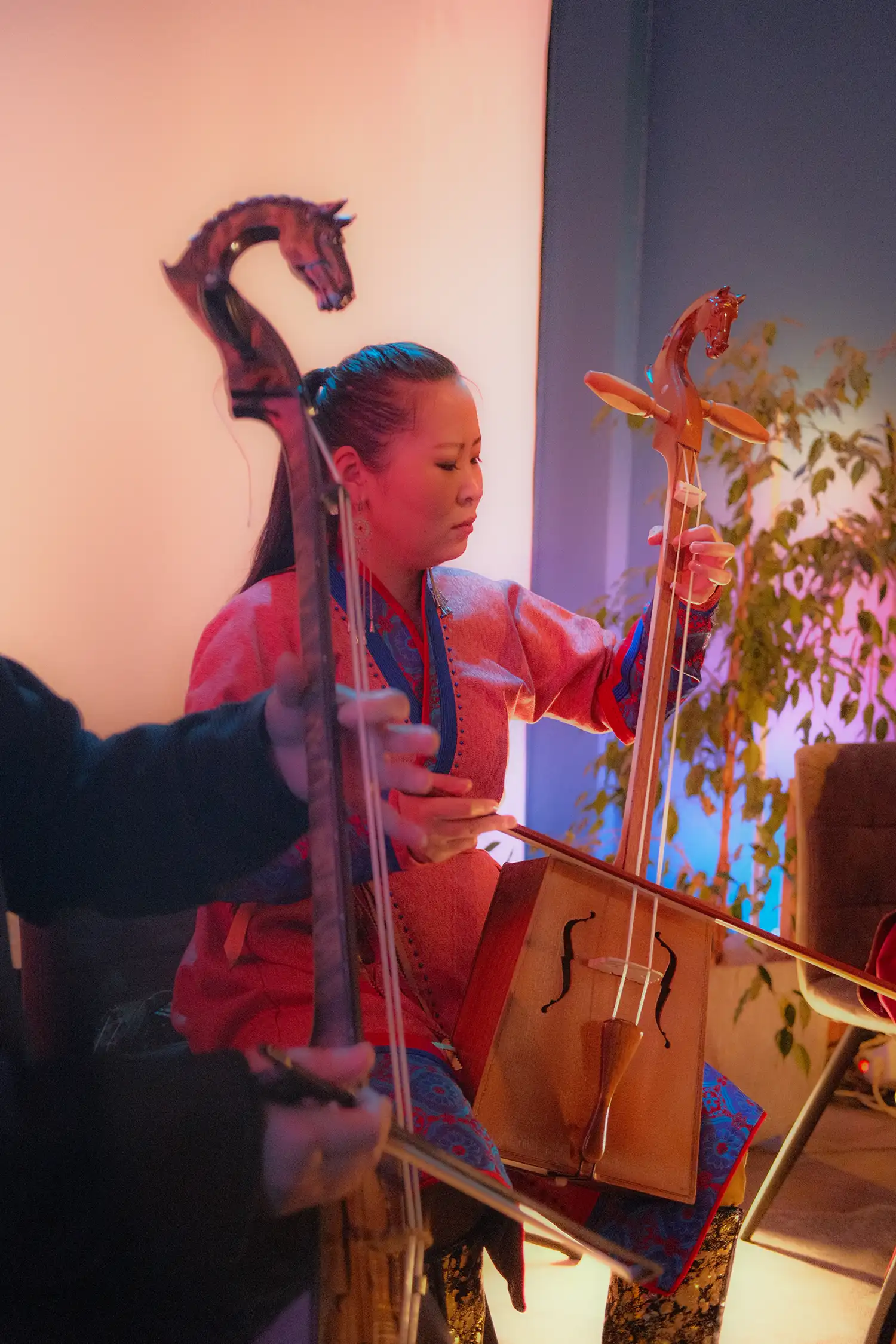
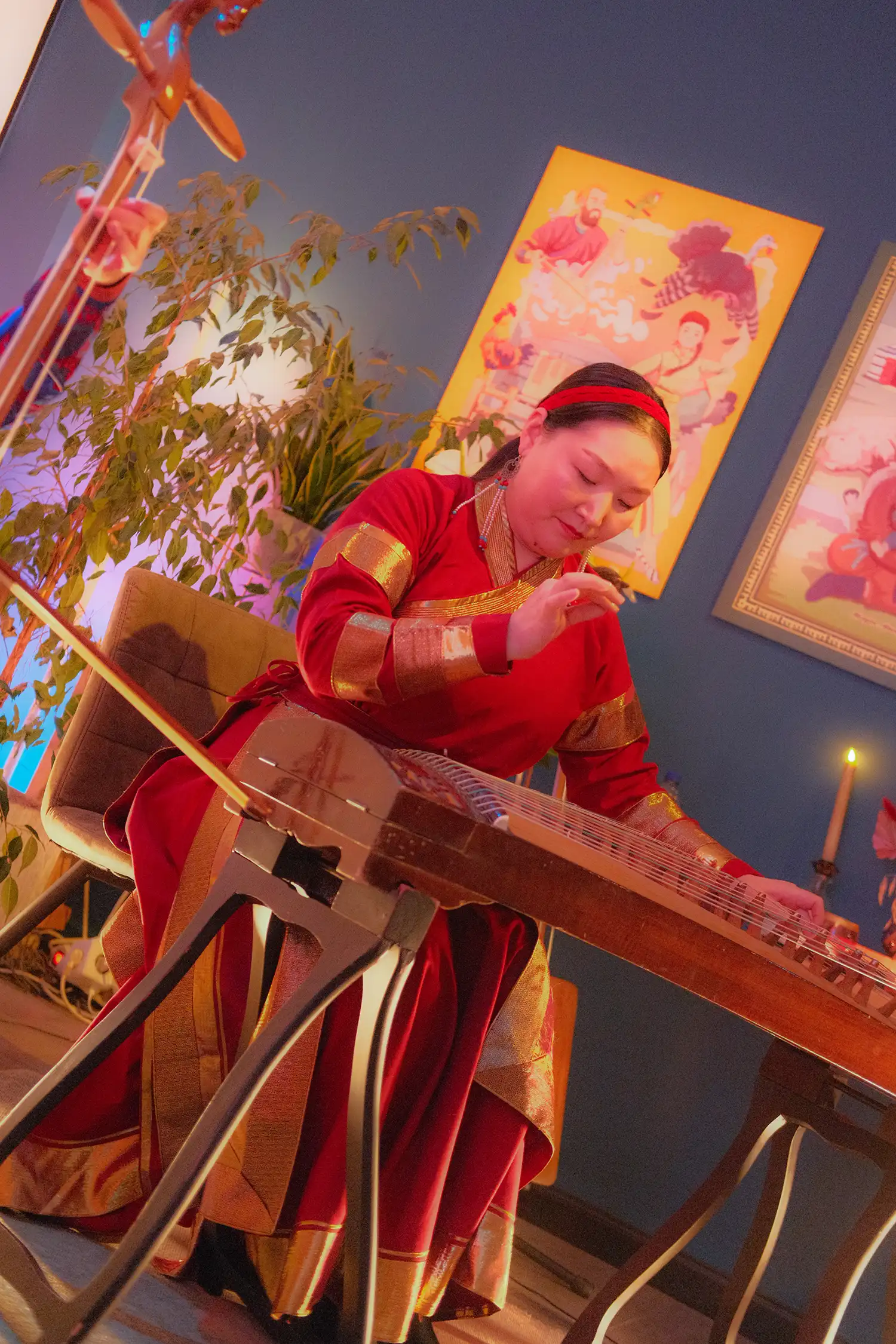
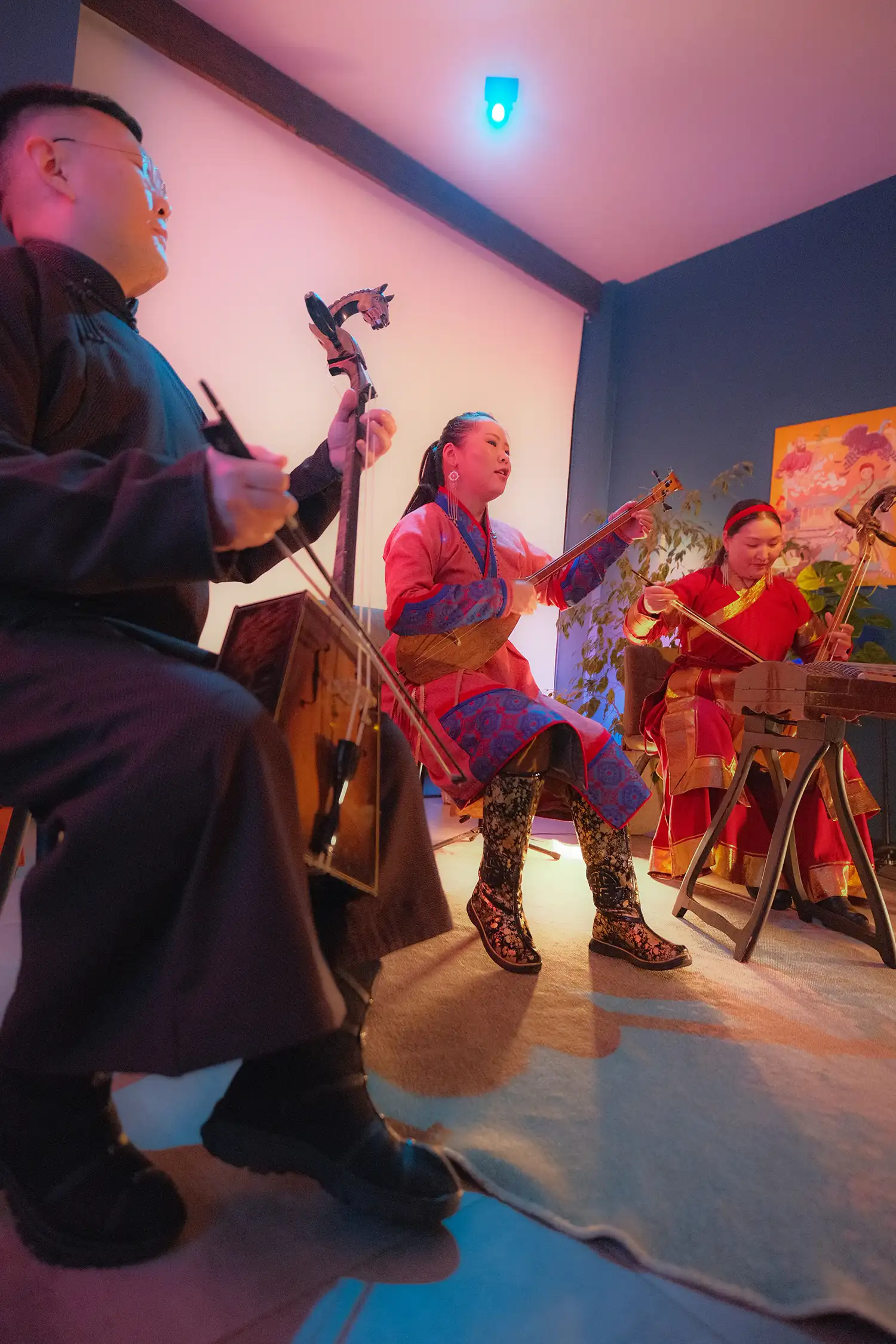
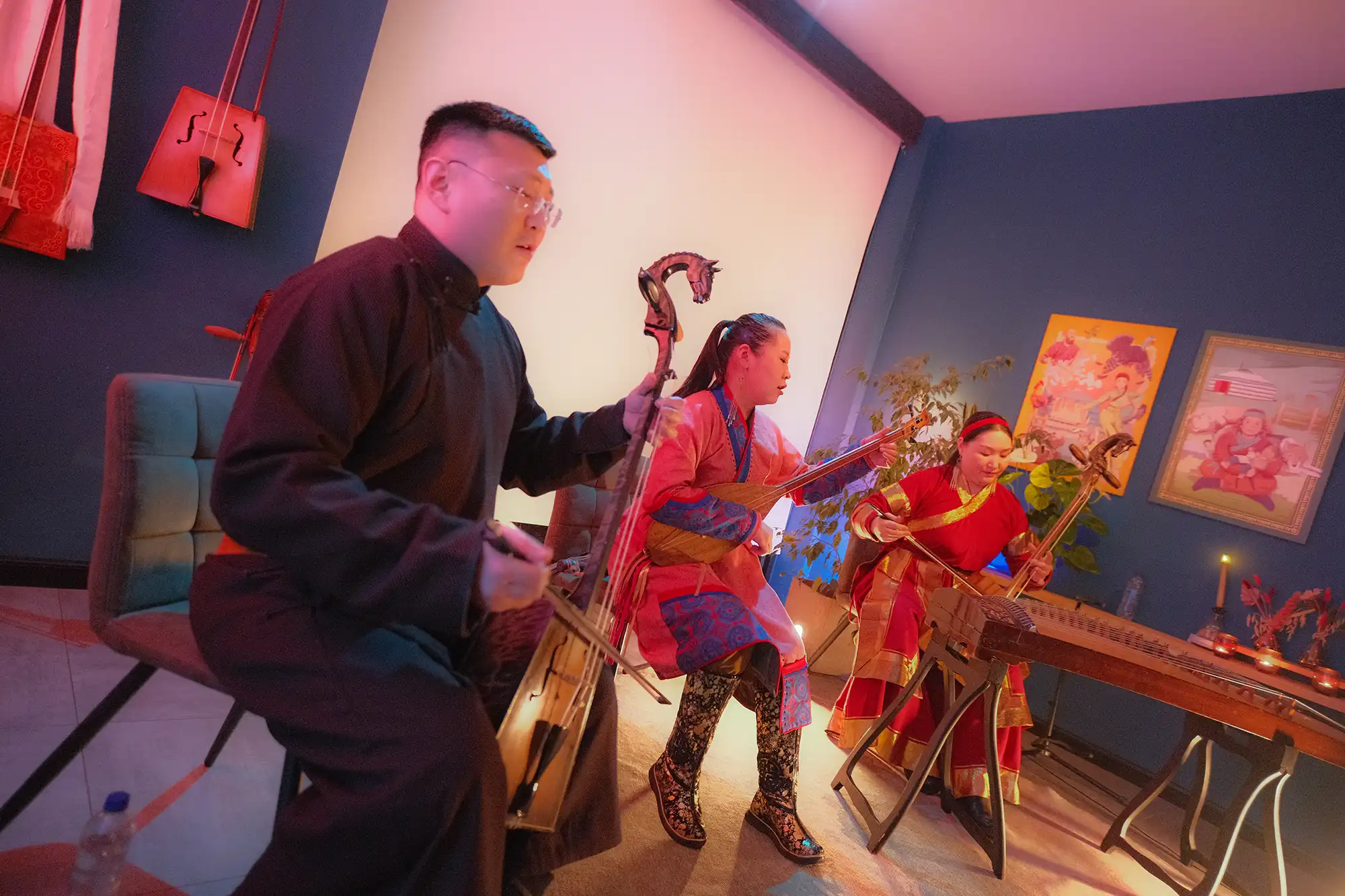
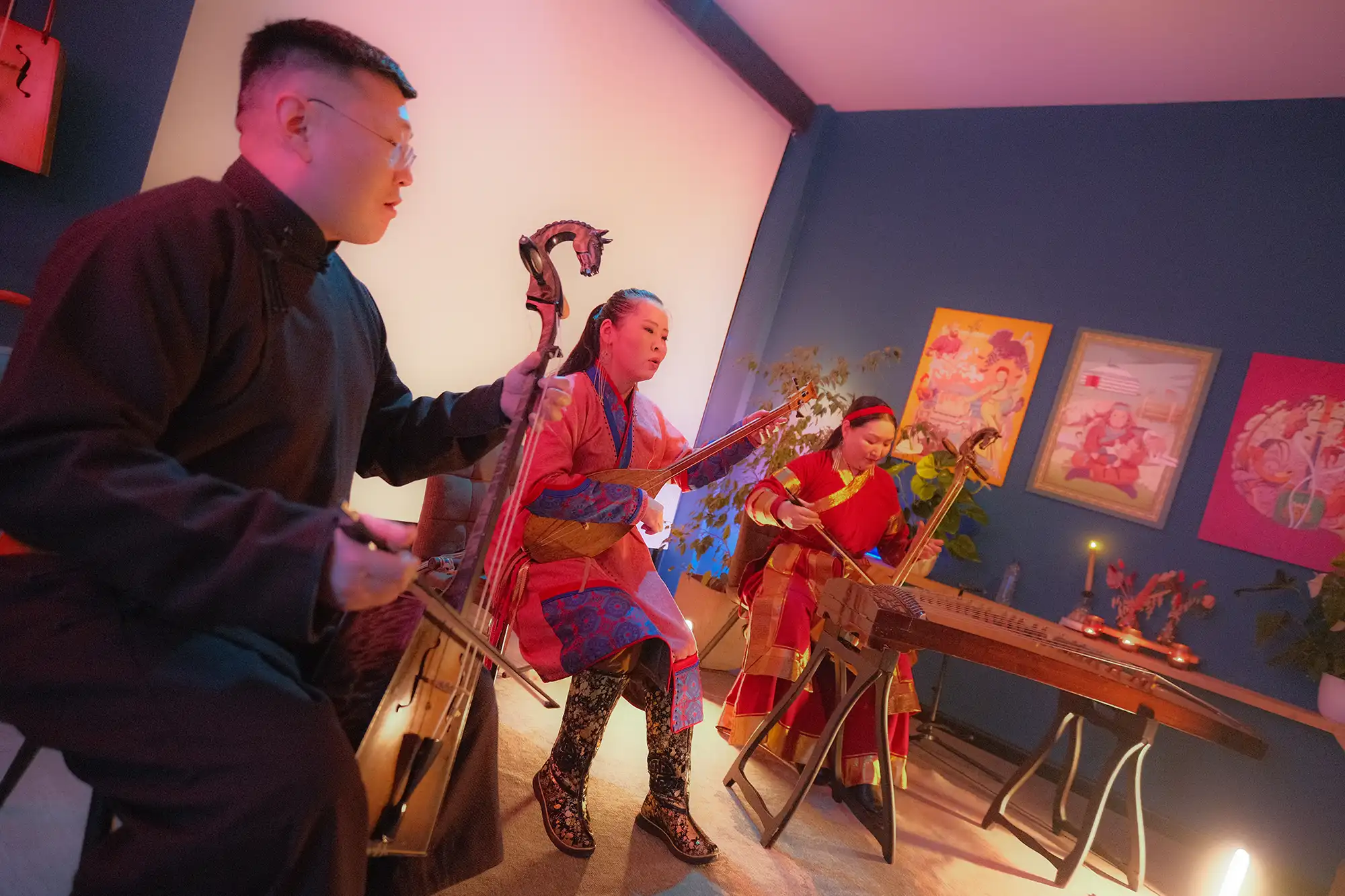
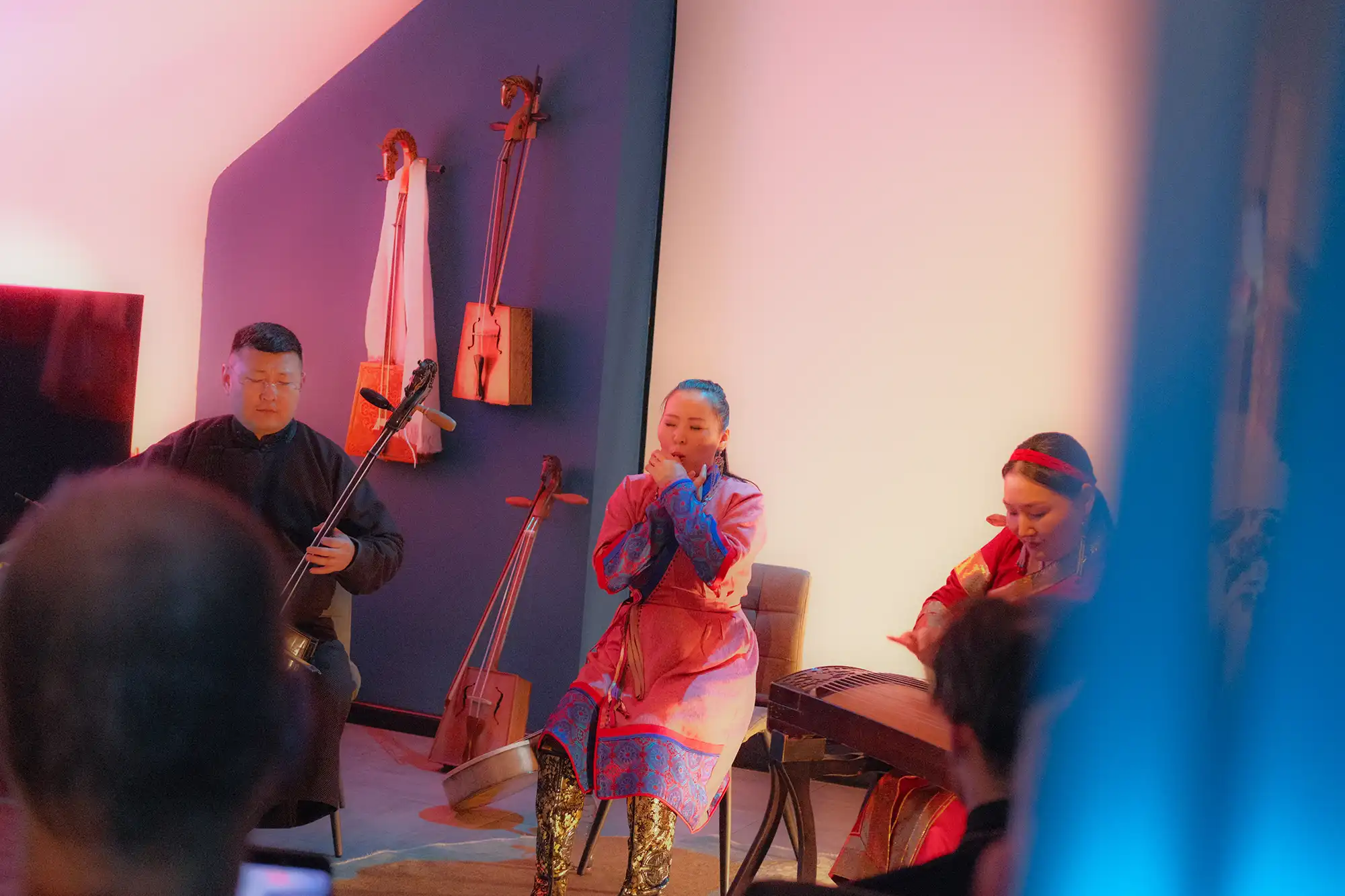
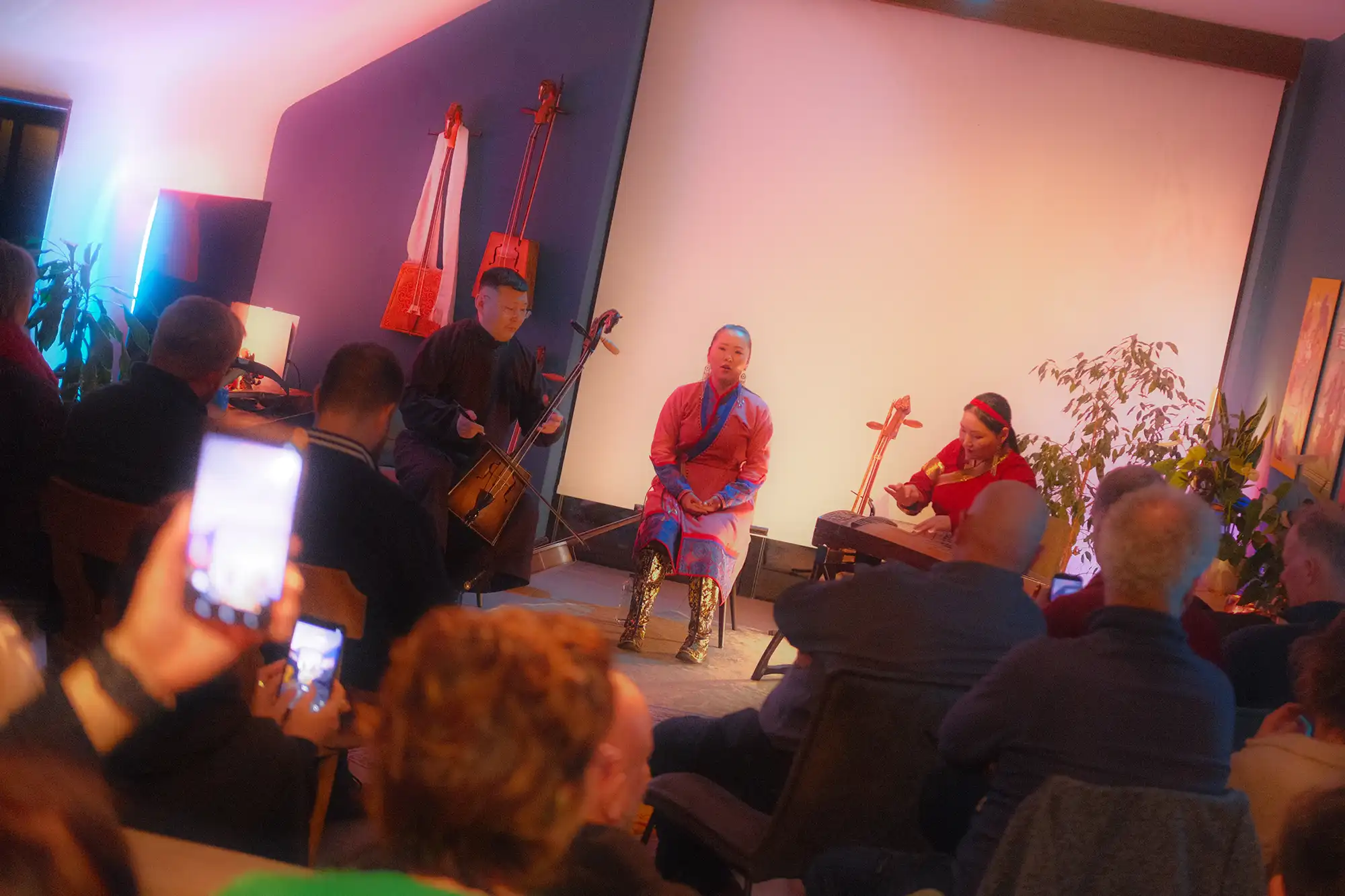
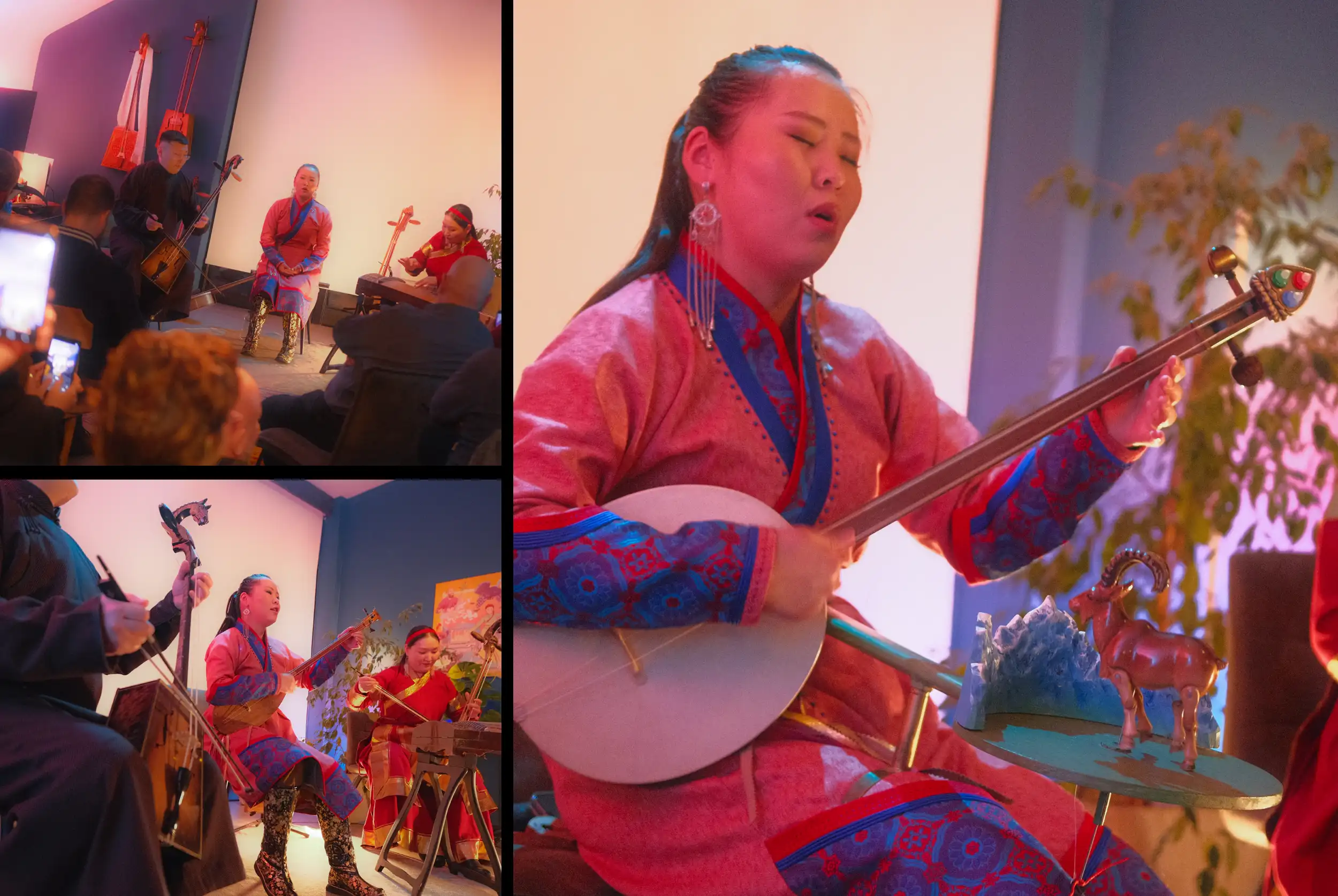
As the final part of the project, we organized a living room concert in our own home. We transformed the living room into an intimate setting and invited our dear friends Yesun and his wife Khulan to perform together with Zolzaya.
The most beautiful thing was this: musicians who had never met before put together a complete concert after just a few hours of rehearsal. That says everything about their experience and talent. Once again, the reactions were wonderful. One man said afterward: “I was listening with tears in my eyes.” Another said: “I’ve never heard female throat singing before. It’s powerful, but also soft and feminine. I actually find this even more beautiful than male throat singing.”
A special ending to a special project
A huge thank you to everyone who made this possible and who had faith in this project. This is our great passion, and I hope to be able to organize this many more times. Along the way, I continue to learn more and more, and little by little it will only get better.
- Saran, my wife: who supports and assists me like no one else can.
- Sauli Heikkilä (Finnish Throat Singing Association): an amazing man and a dear friend; hopefully we will do many more projects together.
- Lucas Vertesi (Henosis): colleague and good friend in Switzerland.
- Myadag: our close friend, who supported Saran wonderfully during the retreat.
- Association for the Development of Mongolian Women in Europe, and Da Sa, for helping organize a Mongolian–French translator—Oti Gerber-Jumdaan—during the day in Romainmôtier.
- And of course: Zolzaya, who accepted our invitation to share her story and music in Europe for the very first time.
This project was another step in which we realized our mission: sharing the unique culture and music of Mongolia in the Netherlands and Europe. We want to collaborate more and more with musicians from Mongolia. So stay tuned!